Get a Free Quote
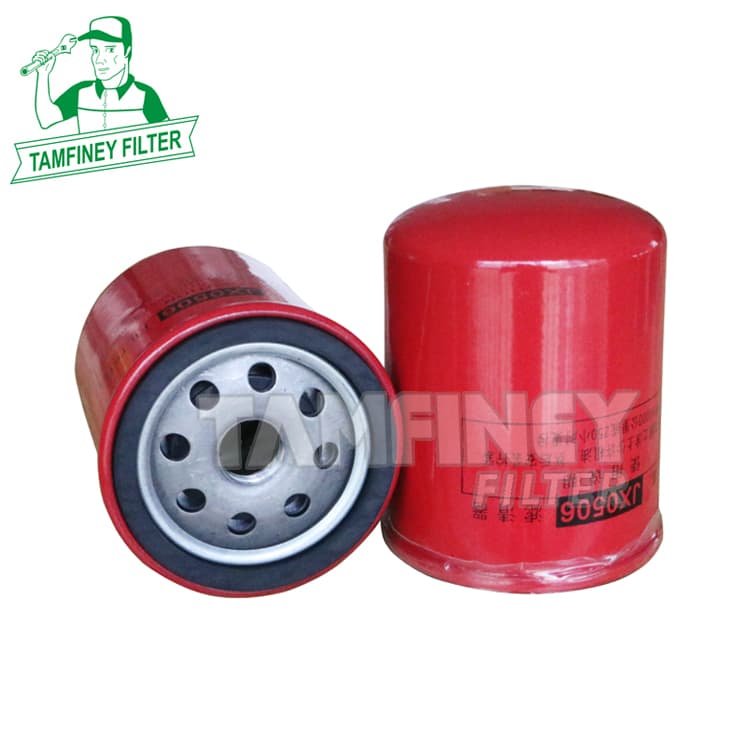
Professional Forklift Oil Filter JX0506
Your Best Forklift Oil Filter JX0506 Oil filter manufacturer in China.
Bengbu JX0506


| Oil Filter JX0506 Parameter: | |
| Part Number | JX0506 |
| Brand | Tamfiney |
| Weight | 243 g |
| Height | 80 mm |
| Outer Diameter | 68 mm |
| Inner Diameter/ Thread Size |
M16*1.5 |
| Minimum Order | 100 PCS |
| Place of Region: | Zhejiang, China |
| Payment Terms: | T/T |
| Price Terms: | FOB |
| Lead Time: | 30 to 50 days based on order quantities |
| Market Type: | After Market |
| Current Export Market: | Southeast Asian,North America, South America, Western Europe, Eastern Europe, Africa, Oceania |
Applications:
• Weichai Engine models,
Professional Forklift Oil Filter JX0506
Q: Why are forklift oil filters important?
• Filter impurities and protect the engine: It can effectively filter out harmful impurities such as metal shavings, dust, and carbon deposits in the engine oil, preventing these pollutants from entering the precision components of the engine (such as crankshafts and connecting rods), reducing wear, and ensuring stable operation of the lubrication system.
• Extend engine life: By keeping the oil clean, the oil filter helps the oil fully exert its lubrication, cooling, and cleaning functions, thereby reducing the wear and tear of engine components and significantly extending the overall service life.
• Ensuring forklift performance and reliability: As a key component of the forklift's "three filters" (air filter, oil filter, fuel filter), it works in conjunction with other filters to ensure efficient and stable engine operation under various working conditions, reducing the risk of failure.
• Cost effectiveness of maintenance: Regularly replacing the oil filter (usually synchronously with the oil) can avoid engine damage caused by impurity accumulation, reduce maintenance frequency, and long-term usage costs.
• Adapt to forklift working environment: Forklifts often operate in high load and dusty environments, and the efficient filtering ability of the oil filter is particularly important to cope with additional impurity challenges and maintain the optimal state of the engine.
In summary, the oil filter is an indispensable protective barrier for forklift engines, and its normal function directly affects the efficiency, durability, and economy of forklifts.
Q: How often should I change the oil filter?
The replacement cycle of the oil filter is not fixed and mainly depends on factors such as the type of oil, vehicle usage, and driving environment. The following are general suggestions for reference:
• Based on the type of engine oil:
Mineral engine oil: you can replace it every 3000-4000 kilometers or every 6 months.
Semi synthetic engine oil: can replace every 5000-7000 kilometers or every 6 months.
Fully synthetic engine oil: The longest replacement cycle can be every 8000-10000 kilometers or about 8 months.
• Comprehensive factor adjustment:
If the vehicle is frequently in harsh environments (such as high dust, poor road conditions, frequent traffic jams, or heavy loads), the cycle should be shorten, such as replacing it every 5000 kilometers or earlier.
If the oil quality is poor and there are many impurities, you can replace it every 20000 kilometers to avoid fuel system failures.
Even if the mileage does not meet the standard, it should be replaced after 6-12 months, as the performance of the filter element will decrease over time.
• Precautions:
When changing the oil, it is usually necessary to replace the oil filter simultaneously to ensure the filtering effect.
The engine design of different vehicle models may affect the cycle, and the most reliable way is to refer to the specific recommendations in the vehicle maintenance manual.
It is recommended to adjust flexibly according to the actual usage situation and regularly check the oil condition. If there is an oil pressure alarm or abnormal engine noise, the filter element should be checked immediately.
Q: How can I tell if my filter is failing?
To determine whether a vehicle filter (such as an oil filter) is faulty, a preliminary assessment can be made by observing the vehicle instrument panel, listening to the engine sound, checking the oil condition, and paying attention to changes in driving performance. Here are some common signs and practical inspection steps.
Pay attention to the instrument warning light and oil pressure: If the oil pressure warning light flashes or stays on, it may indicate that the oil filter is clogged and causing abnormal oil pressure. Meanwhile, observe the reading on the oil pressure gauge. If the pressure is too high or too low, it may also be due to a filter issue.
Check the color, texture, and consumption of the engine oil: Regularly check the oil condition through the dipstick. Normal engine oil should be light yellow or brown and clear; If it becomes dark, cloudy, or contains metal shavings, it may be due to filter failure and inability to effectively filter impurities. In addition, an abnormally fast oil consumption rate or signs of leakage at the bottom of the engine may indicate poor or damaged filter sealing.
Listen to the sound of the engine running and feel the driving performance:
If the engine produces abnormal knocking sounds, friction sounds, or runs unevenly with increased vibration, it may lead to insufficient lubrication due to filter failure, exacerbating component wear. If you feel a decrease in power, vehicle weakness, or idle shutdown while driving, it may also be related to filter blockage affecting oil supply.
Pay attention to appearance leaks and regular maintenance cycles: Check for oil leaks around the filter, especially if the sealing gasket is aging and cracking, which may cause oil leakage and affect engine heat dissipation. If the filter has exceeded the manufacturer's recommended replacement cycle (such as every 8000-12000 kilometers), even without obvious symptoms, the risk of damage will increase, and preventive replacement should be considered.
Perform a simple self check or professional diagnosis: For experienced car owners, a simple inspection can be attempted, such as observing whether the oil level on the filter housing is abnormally high (for plastic housing models), or conducting a blow test (for blocked air flow). A more accurate method is to use professional diagnostic tools to connect the vehicle system and comprehensively check the status of the filter.