
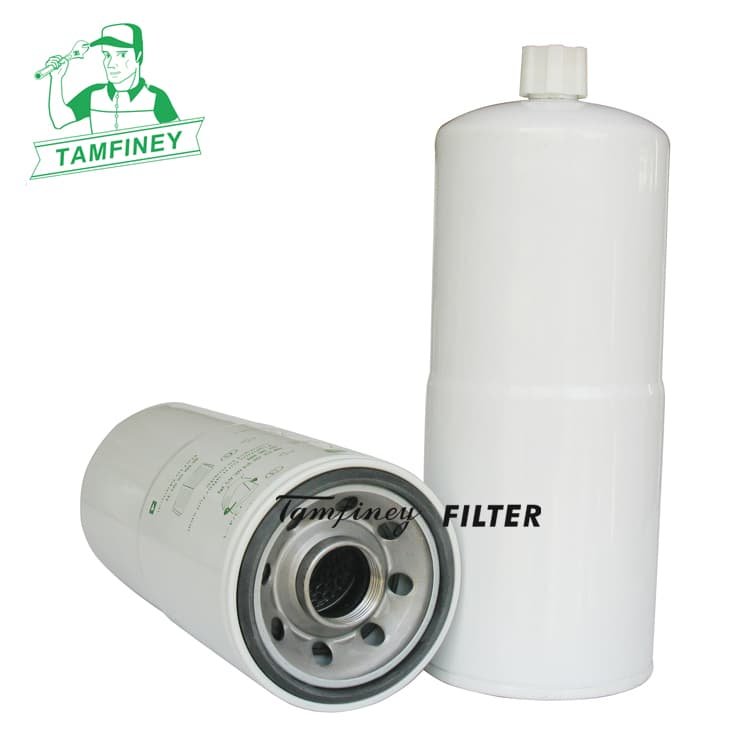


| Fuel Filter FS1216 4095189 4084262 3313304 3309437 3309437 Parameter: | |
| Part Number | FS1216 4095189 4084262 3313304 3309437 3309437 |
| Brand | Tamfiney |
| Weight | 1373g |
| Height | 313 mm |
| Outer Diameter | 120 mm |
| Inner Diameter/ Thread Size |
1 1/4" -12 |
| Minimum Order | 100 PCS |
| Place of Region: | Zhejiang, China |
| Payment Terms: | T/T |
| Price Terms: | FOB |
| Lead Time: | 30 to 50 days based on order quantities |
| Market Type: | After Market |
| Current Export Market: | Southeast Asian,North America, South America, Western Europe, Eastern Europe, Africa, Oceania |
Applications:
GOTTWALD HMK 280
HITACHI EX 2500EX 3500
INTERNATIONAL TRUCKS 9900i 9900i 9900ix
KOMATSU PC 3000-1 A
LIFTER PRAMAC GSW 815 PGSW 875 P
PERKINS 4006-23TAG4008 TAG4012-46TAG4012-46TW
TEREX 33100TR 100TR 100
WILSON P 1100P 1250P 1500P 800
Professional Fleetguard Fuel Water Separator Cummins FS1216 4095189 4084262 3313304 3309437 3309437
Q: What is the primary function of the FS1216?
In diesel filters, FS1216 acts as a fuel filter element. Its core purpose is to remove impurities and moisture from diesel. This ensures clean fuel reaches the engine. The filter achieves up to 3 microns accuracy. It effectively captures small particles in the fuel. Filtration efficiency reaches 98%, maintaining fuel system stability.
Composite fibers make up the material. They balance filtration area and service life well. This design suits diesel engines in construction machinery and generator sets.
For construction machinery components, FS1216 serves as a fuel water separator. It separates moisture from fuel to protect engine parts. Moisture removal prevents corrosion and boosts combustion efficiency.
The separator is commonly used in fuel treatment systems. It supports equipment like excavators for reliable operation.
Q: How often should I change the fuel water separator filter on my Cummins diesel?
The replacement cycle of the oil-water separator filter on Cummins diesel engines is usually based on the mileage or time interval, but the specific frequency needs to be flexibly adjusted according to the vehicle's usage conditions, fuel quality, and environmental factors.
The recommended replacement cycle is every 8000 to 10000 kilometers or approximately every six months. If high-quality diesel is used and the vehicle operates in a good environment, the cycle can be extended to 20000 kilometers or 30000 kilometers, but in harsh road conditions (such as deserts, construction sites) or frequent short distance driving, it needs to be shortened to every 20000 kilometers or earlier for replacement.
In practical operation, dynamic adjustments should be made based on the following factors:
• Fuel quality: Low quality or high moisture content diesel will accelerate filter saturation and require a shorter cycle.
• Operating environment: Areas with high dust, humidity, or large temperature differences require more frequent maintenance.
Vehicle status: If the mileage is low but the time exceeds six months, it is still recommended to replace the filter according to the time to avoid filter failure.
In addition, it is necessary to develop the habit of draining the accumulated water in the oil-water separator before daily use to reduce the burden on the filter and prevent engine failure.
Q: What happens if you don't change your fuel water separator?
Not replacing the fuel water separator can lead to fuel system contamination, decreased engine performance, and component damage, with specific impacts varying depending on the type of equipment.
In diesel generator sets or diesel vehicles, the failure of fuel water separators can cause impurities and moisture to enter the fuel system, leading to increased wear of precision components such as fuel injectors and plungers, and shortening the engine life; Moisture causes insufficient combustion, resulting in insufficient power, weak acceleration, emission of black or white smoke, and increased carbon deposition, leading to engine shaking, difficulty starting or stalling.
For automobiles (especially diesel engines), symptoms of malfunctions include unstable acceleration, abnormal idle, increased fuel consumption, and excessive exhaust emissions; Long term neglect may damage key components such as the high-pressure common rail system, leading to a significant increase in maintenance costs.


