Get a Free Quote

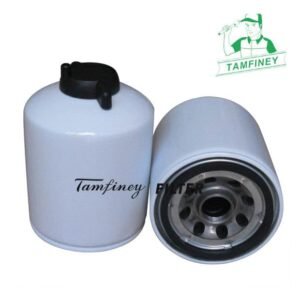
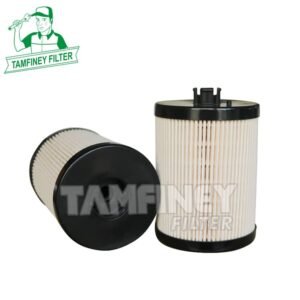
Fleetguard FS19591 Cross Reference Filter FS19590 FS19949 16403-NY000
Your best Fleetguard FS19591 Cross Reference Filter FS19590 FS19949 16403-NY000 Fuel filter manufacturer in China.
Racor R50407, R50417 FLEETGUARD-FS19590 ,FS19591 ,FS19949 NISSAN 16403-NY000 SAKURA-SFC55043 ; SANY-8976051180 XCMG RCL 02002


| Fuel Filter FS19591 Parameter: | |
| Part Number | FS19591 FS19590 FS19949 16403-NY000 |
| Brand | Tamfiney |
| Weight | 918g |
| Height | 230 mm |
| Outer Diameter | 108mm |
| Inner Diameter/ Thread Size |
1"-14 UN |
| Minimum Order | 100 PCS |
| Place of Region: | Zhejiang, China |
| Payment Terms: | T/T |
| Price Terms: | FOB |
| Lead Time: | 30 to 50 days based on order quantities |
| Market Type: | After Market |
| Current Export Market: | Southeast Asian,North America, South America, Western Europe, Eastern Europe, Africa, Oceania |
Applications:
MTU 4 R 10004R1000 T4
NEW HOLLAND E 385
PEGSON 1000 SR1100 X 8001412 TP
SANDVIK DI 400DI 500
SANY SY 75 C-9
SUMITOMO SH 700 LHD-3B
VERVAET 17 T INTEGRALEBEET EATER 617HYDRO TRIKEHYDRO TRIKEQ 616Q 621 Q 621
WIRTGEN W 50 DCWR 2000
XCMG XE 700
Professional Fleetguard FS19591 Cross Reference Filter FS19590 FS19949 16403-NY000
Q: Does FS19591 come with a bowl?
Yes, it is. There is open port in the head of filter. You must install the water bowl with suitable thread for using.
Q: How to drain diesel fuel water separator?
Operate according to the type of drain valve
Knob type drain valve:
1. Rotate counterclockwise with your hand or tool to open.
2. Wait for the liquid to flow out and observe the color and clarity: Initially, it is a turbid mixture of water and oil. When clear diesel (without obvious moisture) flows out, immediately turn it off.
3. Tighten the drain valve clockwise to ensure sealing.
Plug in drain valve:
1. Simply gently pull it out to drain.
2. Also observe the clarity of the liquid, confirm that it is completely drained, then insert it back into its original position and confirm that it is secure.
Some models require manual fuel pump operation
For certain car models (such as Oumaku, Ouling, etc.), manual fuel pumps are required to assist in drainage:
1. Place a container under the drain plug.
2. Loosen the drain plug counterclockwise for about 5 turns.
3. Operate the manual fuel transfer pump about 10 times until the oil-water separator is filled with fuel.
4. Tighten the drain plug clockwise and press the hand pump several times to remove air.
5. Start the engine, check for leaks, and confirm that the indicator light for the oil-water separator on the dashboard is off.
Suggestions for water release frequency
• Normal driving environment: Drain every 5000-10000 kilometers.
• Adverse environment (rainy, dusty, unstable diesel quality): Drain every 2000-5000 kilometers.
• When abnormal symptoms occur (decreased power, increased fuel consumption, engine shaking): immediate inspection and drainage should be carried out.
Q: How to tell if a fuel water separator is full?
The determination of whether the fuel water separator is full is mainly based on the signal that its accumulated water or oil has reached the set threshold. The core principle is consistent with comprehensive judgment through liquid level monitoring, indicator lights, observation windows, or water quality changes.
• Indicator light alarm
Most oil-water separators (especially in car diesel systems) are equipped with a drainage indicator light. When the internal water level reaches the set height, the indicator light will light up or flash, indicating the need for drainage. For example, the warning light for a car oil-water separator is often orange, with the icon representing water droplets under the fuel tank.
• Transparent observation window or bottom drain valve
Some devices are designed with transparent materials at the bottom, allowing for direct observation of water accumulation; Alternatively, water can be drained manually through a discharge valve. If a significant amount of water is discharged, it indicates that it is full and needs to be treated.
• Liquid level sensor or float device
The intelligent oil-water separator is equipped with a built-in liquid level sensor or a red plastic float, which monitors the liquid level in real time and automatically triggers an alarm when the alarm value is reached.
• Abnormal operation of equipment
If the following phenomena occur, it may indicate that the separator is full or close to full load:
Engine acceleration is weak, emitting black/white smoke, and idling is unstable (in car scenarios)
The effluent is turbid, with oil droplets and obvious odor (in industrial/catering scenarios)
Equipment operation noise increases and vibration intensifies
• Decreased processing effect
When the separation efficiency decreases, such as when the oil content in the effluent exceeds the standard (which can be verified by test paper or COD detector), it indicates that there is too much oil accumulation inside, affecting the separation ability.