Get a Free Quote

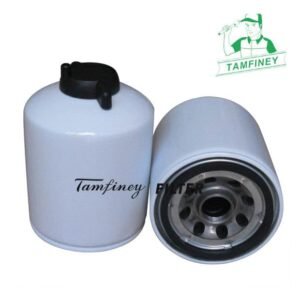
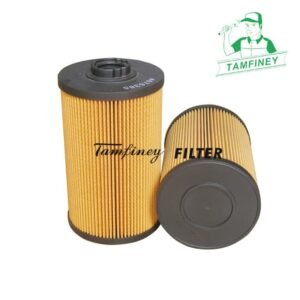
Fleetguard FS1242 Fuel Filter 11NA-71041 11NA-71040 11NA-71001 11NA71001
Your Best Fleetguard FS1242 Fuel Filter 11NA-71041 11NA-71040 11NA-71001 11NA71001 Fuel Filter manufacturer in China.
Fleetguard FS1242 Hyundai 11NA-71041 11NA-71040 11NA-71001 11NA71001 BOMAG-31701061 ,31701062 CATERPILLAR-1986378 9Y-4431 CUMMINS-3355903 DETROIT DIESEL-23530772 HAMM-1236385 LIEBHERR-7381816 ,7381820 MASSEY FERGUSON-108615W1 ; MORBARK-29331075


| Fuel Filter FS1242 11NA-71041 11NA-71040 11NA-71001 11NA71001 Parameter: | |
| Part Number | FS1242 11NA-71041 11NA-71040 11NA-71001 11NA71001 |
| Brand | Tamfiney |
| Weight | 569g |
| Height | 156 mm |
| Outer Diameter | 93 mm |
| Inner Diameter/ Thread Size |
1"-14 |
| Minimum Order | 100 PCS |
| Place of Region: | Zhejiang, China |
| Payment Terms: | T/T |
| Price Terms: | FOB |
| Lead Time: | 30 to 50 days based on order quantities |
| Market Type: | After Market |
| Current Export Market: | Southeast Asian,North America, South America, Western Europe, Eastern Europe, Africa, Oceania |
Applications:
BOBCAT E 85
BOMAG BF 300 CBF 300 C+S 340-2 TVBF 300 179 DH-4BW 179 DHC-4BW 179 PDH-3BW 179 PDH-4BW 179 PDHC-4BW 211 D-3BW 213 D-3BW 213 D-3BW 213 DH/PDH-3BW 213 PDH-3BW 214 DH-3BW 214 PDH-3BW 216 D/DH-3BW 219 DH-3BW 154 ACP-4vBW 154 ACP-4v AMBW 154
CASE QUADTRAC 485
DOOSAN DX 85 R-3
HAMM 2420 DH2520 D341215GRW 18GRW 18GRW 18.3GRW 21GRW 24HB 120V 5
HYUNDAI HL 740-7AHL 757-7AHL 210 W-9R 210 W-9 MHR 220 LC-9AR 220 NLC-9AR 235 LCR-9R 235 LCR-9AR 250 LC-7AR 250 LC-9R 260 LC-9AR 290 LC-7AR 290 LC-9R 290 LC-9 MHR 290 NLC-9R 300 LC-9AR 300 LC/NLC-9AR 320 LC-7AR 320 LC-9R 320 NLC-9R 330 LC-9AR 380 LC-9R 380 LC-9AR 430 LC-9A
JCM 907907 B907 D908 B908 C908 D913 B913 C913 D916 D921 B921 C922 C
Professional Fleetguard FS1242 Fuel Filter 11NA-71041 11NA-71040 11NA-71001 11NA71001
Fuel filters are the frontline defense for any diesel engine. Choosing the right fuel filter, like the Fleetguard FS1242, 11NA-71040, 11NA-71001, 11NA71001 or 11NA-71041, ensures optimal engine health. At TAMFINEY, we excel in providing high-quality fuel filtration and expert cross reference guidance. Let’s explore the features of these filters and see how TAMFINEY keeps your fleet running strong.
11NA-71041: Superior Protection for Sensitive Systems
Equally important, the 11NA-71041 fuel filter offers premium water separation capabilities. Its design keeps contaminants away from critical engine parts. Operators notice reduced fuel system troubles when they choose 11NA-71041. TAMFINEY supplies these filters to ensure your equipment meets or exceeds factory standards, no matter the environment.
FS1242 Cross Reference: Ensuring Rapid Replacement
When downtime isn't an option, having an updated FS1242 cross reference list is vital. These cross reference solutions let you quickly substitute filters for FS1242, preventing delays and reducing inventory costs. TAMFINEY maintains an up-to-date FS1242 cross reference database, so your operations experience minimal interruption. Our expertise in cross referencing means you always get the exact match needed.
FS1242 Filter: Engineered for Extended Life
The FS1242 filter stands apart for its robust construction and efficient contaminant capture. It is a favorite for both on-road and off-road applications. Routine use of the FS1242 filter safeguards injectors, maximizes fuel efficiency, and lowers maintenance expenses. TAMFINEY’s FS1242 filters are always tested to meet OEM levels, delivering performance fleet managers expect.
Why TAMFINEY is Your Preferred Filtration Partner
Choose TAMFINEY for all your filtration needs, from FS1242, 11NA-71041, 11NA-71040, 11NA-71001 to 11NA71001. Our commitment to quality, fast delivery, and knowledgeable assistance makes us the leader in fuel filtration. We help lower maintenance costs, reduce downtime, and protect your valuable equipment.
Conclusion
In essence, using the FS1242, 11NA-71041, 11NA-71040, 11NA-71001, 11NA71001 ensures outstanding fuel filtration. With TAMFINEY’s advanced cross reference and quality filters, your fleet always enjoys peak performance, efficiency, and protection. Trust TAMFINEY for every stage of your filter supply process.
Q: Can a bad fuel filter cause white smoke?
A bad fuel filter may indeed cause white smoke in the exhaust, but it is usually not the direct cause, but rather indirectly caused by triggering other faults.
The core function of a fuel filter is to filter impurities and moisture from the fuel, protecting precision components such as fuel injectors and fuel pumps.
When the filter is damaged or clogged, the following situations may occur:
Moisture entering the combustion chamber: If the filter element fails, it cannot effectively separate the moisture in the fuel. Moisture enters the cylinder with the fuel and vaporizes at high temperatures to form white water vapor, which appears as white smoke.
Poor fuel atomization: Impurities block the fuel injector, causing uneven fuel atomization and incomplete combustion of some fuel, resulting in white smoke.
Unstable fuel supply: Severe blockage of the filter can affect fuel pressure and flow, causing the mixture to be too lean or too rich, affecting combustion efficiency, and may also be accompanied by white smoke.
Typical manifestation
• White smoke often appears during cold start or acceleration, and may decrease after hot driving.
• If accompanied by a decrease in power, an increase in fuel consumption, or engine shaking, it is more likely to be a fuel system issue.
• It can be preliminarily judged by checking whether the fuel filter has turned black, clogged, or contains water.
Suggestion handling
1. Check and replace the fuel filter (especially if it has not been replaced after 20000 to 40000 kilometers).
2. Check the atomization effect of the fuel injector and the moisture content of the fuel.
If the white smoke continues to be thick, further investigation is needed to determine if there are leaks in the cylinder gasket, cooling system, or piston rings.
Q: How to bleed a fuel water separator?
To release air from the fuel water separator, follow the standard steps. The key is to loosen the release bolt and use manual pumps or other methods to release the air until there is no bubble free fuel flowing out, then tighten the bolt.
1. Preparation
Park the vehicle in a flat and safe area, turn off the engine, and tighten the handbrake. Prepare a wrench, oil container, and clean cloth to prevent fuel leakage, contamination, or potential safety hazards.
2. Find the location of the fuel water separator
Usually located in the engine compartment or near the chassis fuel lines, near the diesel filter. Some models (such as Jianghuai Shuai Ling) have fuel water separators with transparent oil storage cups for easy observation of the oil status. If the location is uncertain, it is recommended to refer to the vehicle maintenance manual.
3. Loosen the air release bolt
Use a wrench to slowly loosen the top vent bolt counterclockwise (usually an inner hexagon), do not completely remove it, it is advisable to hear a "hissing" exhaust sound. At this time, there may be a small amount of diesel with bubbles flowing out. Use a container to catch it and avoid dripping.
4. Pump oil exhaust
Find the manual pump (oil pump) next to the fuel water separator and press it slowly and evenly. After each press, wait for the pump body to rebound before proceeding to the next one. Continue operating for about 10-30 times until continuous, bubble free diesel flows out from the vent bolt.
5. Tighten the air release bolt
After confirming the absence of bubbles, quickly and carefully tighten the air release bolt clockwise with moderate force to avoid slipping or poor sealing. Press the hand oil pump again a few times and check for any leaks.
6. Start the engine for inspection
Start the engine and let it idle for 3-5 minutes. Observe if the dashboard malfunction light goes out and listen for the engine running smoothly. If it is still difficult to start or the power is insufficient, it may be necessary to repeat the exhaust or check whether the fuel water separator is blocked or damaged.
Q: Where does the water go in a fuel water separator?
The water in the car fuel water separator will eventually be discharged into the outside environment of the car through a drain valve or outlet, usually collected in a container or directly discharged to the ground (in compliance with environmental regulations). The specific process is as follows:
Moisture settles to the bottom inside the fuel water separator due to density differences and accumulates in the collection tank or sedimentation tank;
When the water level reaches a certain height, the sensor or float triggers a prompt (such as a warning light on the dashboard);
The driver needs to manually unscrew the bottom drain knob/plug to drain the water; Some car models are equipped with automatic drainage devices, which can automatically drain water;
The discharged water usually flows into the container below through a hose or direct opening, and is then disposed of at a suitable waste liquid treatment point. It should not be discharged into the rainwater pipe network or natural water bodies at will.