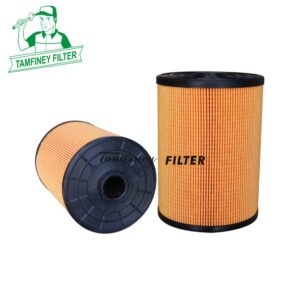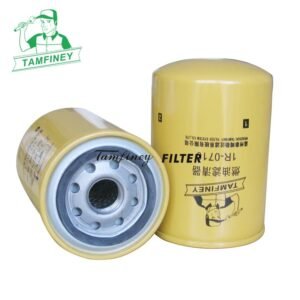

| Fuel Filter P557440 P551313 P550106 P551740 Parameter: | |
| Part Number | P557440 P551313 P550106 P551740 |
| Brand | Tamfiney |
| Weight | 621 g |
| Height | 176 mm |
| Outer Diameter | 94 mm |
| Inner Diameter/ Thread Size | 1-14 |
| Minimum Order | 100 PCS |
| Place of Region: | Zhejiang, China |
| Payment Terms: | T/T |
| Price Terms: | FOB |
| Lead Time: | 30 to 50 days based on order quantities |
| Market Type: | After Market |
| Current Export Market: | Southeast Asian,North America, South America, Western Europe, Eastern Europe, Africa, Oceania |
Application:
INGERSOLL RAND HP 1300 WCUHP 1300 WCULM 600 GP 1050 WCATP 600SP 56 HT 4 BHVHP 700 CATVHP 825 WPWP 900 WCATXHP 660XHP 750 SCATXHP 750 WCATXP 750 WACATXP 900 WCAT
KAWASAKI 80 Z 385 Z IV-288 Z II90 Z 3
KOMATSU WA 320-3WA 320-3 CSWA 380-3WA 380-5
LIUGONG CLG 842
NEW HOLLAND 1500TR 70TR 75TR 85TR 86TR 95TR 96
Professional Filter P557440 P551313 P550106 P551740 for Ingersoll Rand
Q: How often should diesel fuel filters be changed?
The replacement cycle of diesel filters is not a fixed value, usually between 5000 kilometers and 40000 kilometers, and it needs to base on the filter type, diesel quality, and vehicle manufacturer's recommendations.
Replacement cycle reference
1. By filter type: External diesel filters replace every 20000 kilometers due to exposure to the outside; Due to its good sealing performance, the built-in model can extend its cycle up to 40000 kilometers. three
2. According to diesel quality and environment: If using ordinary diesel with high impurities or working in harsh environments such as construction sites and mines, it is recommended to shorten the replacement time to 5000-10000 kilometers.
3. Trucks and construction machinery: The replacement cycle for heavy trucks can reach 30000-50000 kilometers, or every 500-1000 hours according to the working hours.
Signal replacement and suggestions
1. Observation status: If the color of the filter element noticeably turns black or there are a large number of impurities attached, it indicates saturation and needs to be replaced in a timely manner.
2. Vehicle performance: When there is a decrease in power, difficulty starting, or the dashboard filter indicator light is on, it should be checked immediately.
Q: Is an oil filter and fuel filter the same thing?
Oil filters are different from fuel filters, they are two independent components in the "three filters" of automobiles. The main differences are as follows:
• Different filtering objects: The oil filter filters impurities in the engine lubricating oil; The fuel filter filters impurities and moisture from gasoline or diesel.
• Different functions: The former protects the lubrication system and reduces engine wear; The latter protects the fuel system and prevents fuel injectors from clogging.
• Different replacement intervals: The oil filter is usually replaced with the oil (5000-10000 kilometers); The fuel filter cycle is relatively long (20000-80000 kilometers).
• Different installation locations: The oil filter is located in the engine lubrication system; Fuel filters are often located near the fuel tank or on the fuel pipeline.
Q: What to do after changing a diesel fuel filter?
Before replacing the fuel filter, the following key preparatory steps must be completed to ensure safe and smooth operation while avoiding damage to the vehicle or personal injury:
I. Safety and Environmental Preparation
• Disconnect the negative terminal of the battery: To prevent circuit short circuits or accidental fuel pump activation during operation.
• Release the fuel system pressure:
Remove the fuel pump fuse (usually labeled "FUEL PUMP"), start the engine to let it shut down naturally, and repeat 2–3 times to release residual pressure in the pipeline; a dedicated pressure relief valve may also be used (depending on the vehicle model).
• Ensure the engine is cold: The engine must be cooled to prevent high temperatures from causing fuel vapor combustion or burns.
• No smoking: Smoking, open flames, or non-explosion-proof lighting equipment are strictly prohibited during the entire replacement process.
• Adequate ventilation: Operate in open, well-ventilated areas to prevent the accumulation of gasoline vapors.
II. Tools and Materials Preparation
• Specialized tools: pipe wrench, torque wrench (accuracy ±1N•m), jack + safety stand (if vehicle lifting is required), oil collection cup, protective gloves, safety goggles.
• Cleaning supplies: dry towels, cotton cloth, oil-resistant containers (for collecting residual fuel).
• New Filter: Verify the model matches the vehicle, and prioritize genuine products certified by ISO/TS16949.