Get a Free Quote

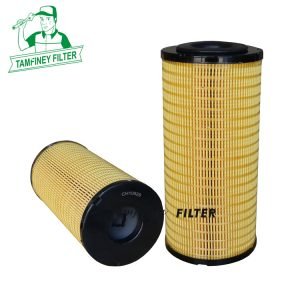
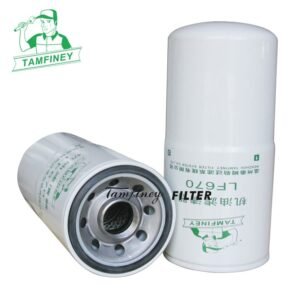
Premium Donaldson P553000 Cross Reference Filter 4228688 H300W03 C-5706 C-5707
Your Best Donaldson P553000 Cross Reference Filter 4228688 H300W03 C-5706 C-5707 Oil filter manufacturer in China.
Donaldson P553000 4228688 H300W03 C-5706 C-5707 KOMATSU 1295224-H1 6742-01-4120 6742-01-2430 LIEBHERR 5608835 MASSEY-FERGUSON 72 501 533 HENGST H300W03 H300W07 MAHLE OC482 0C304 OC1176 LIUGONG-851011975 ,53C0053 MANITOWOC-4136530 MANN WP12121 ,WP12300 MASSEY FERGUSON 1077749M1 MCCORMICK-707154A1 NAVISTAR-1294153H1 NEW HOLLAND-9703112 75285999 ,8900130271 ,8962110113 ,441703A1 ,L441703A1 ,NP441703A1



| Oil Filter P553000 4228688 H300W03 C-5706 C-5707 Parameter: | |
| Part Number | P553000 4228688 H300W03 C-5706 C-5707 |
| Brand | Tamfiney |
| Height | 302 MM |
| Outer Diameter | 118 MM |
| Inner Diameter/Thread Size | 2 1/4-12 UNS-2B |
| Minimum Order | 500 PCS |
| Place of Region: | Zhejiang, China |
| Payment Terms: | T/T |
| Price Terms: | FOB |
| Lead Time: | 30 to 50 days based on order quantities |
| Market Type: | After Market |
| Current Export Market: | North America, South America, Western Europe, Eastern Europe, Africa, Oceania |
What engines and vehicles is the Donaldson P553000 compatible with?
SAMSUNG SE 180-2 WSE 180 WSE 250SE 250-2SE 280 LCSE 280 LC 2SE 350 LCSE 350 LC 2SE 450 LC 2SL 150SL 180SL 180-2SL 250
SANY SPR 260SY 365TQ 200 A
SDMO CMS 255MS 150MS 180 S/SKMS 200MS 250
SHANTUI SD 22SD 32
SISU E 11.300E 11.340E 11.380E 11.405E 14.430E 14.480E 14.530
STALOWA WOLA D 15 ML 560TD 15 CTD 25 G
SULLAIR 550 RH600 RH600 XH750 H
TEREX 3066 C3345TA 25TA 30TR 60
TESMEC TRS 950 BTRS 950 B SLO
TIMBERJACK 1710 B
Premium Donaldson P553000 Cross Reference Filter 4228688 H300W03 C-5706 C-5707
Q: How should the filter P553000 be installed correctly?
Filter P553000 is an oil filter commonly used in construction machinery such as excavators. Proper installation is crucial to ensure its effective operation. The following steps are organized based on general installation principles:
Preparation before installation: Ensure that the work area is clean and stable, and equipped with necessary tools such as wrenches, raw tape (for thread sealing), and torque wrenches (if applicable). Turn off the device engine and wait for the oil to cool down, drain the old oil to avoid leakage. Check if the accessories of filter P553000 are complete, including the sealing ring, and confirm that it matches the equipment interface.
Installation steps:
1. Positioning and Cleaning: Place the filter in the designated location, ensuring that the installation surface is flat and free of debris. Clean the interface area to prevent particles from entering the system.
2. Sealing treatment: Wrap the raw material tape evenly on the threaded interface of the filter (usually 2-3 turns clockwise), or apply a special sealant to enhance the sealing performance. Be careful not to entangle excessively to prevent materials from entering the oil circuit.
3. Connection and fixation: Screw the filter into the interface, tighten it by hand until the sealing ring contacts, and then further tighten it with a wrench. The key point is to avoid over tightening. It is usually recommended to operate according to the manufacturer's specified torque (such as 5-8 N • m). If there is no torque requirement, an additional 1/4 turn of tightening is usually sufficient after tightening. After installation, check if the inlet and outlet directions are correct to prevent reverse installation.
Inspection and testing: Restart the device and run for a few minutes to check for leaks at the interface. If there is any leakage, the machine needs to be stopped to investigate the cause (such as misplaced or not tightened sealing rings).
Safety reminder: During installation, avoid tool collision with the filter housing to prevent damage to the internal structure. If the device is under warranty, non professional installation may affect the warranty terms.
Q: How to know if an oil filter is compatible?
To determine the compatibility of the oil filter, verify it based on vehicle information and filter parameters. The core principle is to strictly match the vehicle model with the engine model to avoid engine failure caused by misunderstandings of universality.
The reliable method to obtain accurate models: The preferred approach is to consult the vehicle user manual or maintenance manual, where the "Maintenance Specifications" section will clearly indicate the original oil filter model, which is the most authoritative reference. If the manual is missing, you can directly check the engraved identification on the old filter housing, or use the vehicle identification number (VIN code) to search for the compatible model on the brand's official website or legitimate accessory platform, with an accuracy rate of over 99%.
Key compatibility parameters and verification methods: Even for vehicles of the same brand and displacement, the interface size, thread specifications, and sealing ring parameters of the filter element may not be compatible due to differences in model year or engine version. The following parameters need to be carefully checked:
• Size matching: The diameter and height of the filter element must perfectly match the installation position of the engine to avoid installation interference.
• Thread specifications: The thread diameter and pitch must be consistent, otherwise it may lead to weak connection or sealing failure.
• Sealing gasket: The size and thickness of the gasket directly affect the sealing effect, and deviations can easily cause oil leakage.
• Filtering performance: The filtering accuracy, dust holding capacity, and bypass valve pressure value must meet the original factory standards, otherwise it may not be able to effectively intercept impurities or affect the lubrication system pressure.
Suggest comparing the appearance dimensions of the new and old filter cartridges, especially the thread and sealing ring parts, to ensure complete consistency.
Q: Why use an oil filter cross reference tool?
To ensure an oil filter is compatible with your vehicle, focus on these parameters:
- Size and Dimensions:
- Diameter and Height: Must match the engine’s installation space to avoid interference. For example, a filter too large may not fit, while one too small could leave gaps.
- Thread Specifications: The thread diameter and pitch (e.g., M20×1.5 or M18×1.5) must align with the engine’s design. Mismatched threads can cause weak connections or leaks.
- Sealing Gasket:
- The gasket’s size, thickness, and material must perfectly fit the filter housing. Deviations can lead to oil leaks, especially under high pressure.
- Bypass Valve Pressure:
- The valve’s opening pressure must meet the engine’s requirements. If too low, it may allow unfiltered oil to bypass during cold starts; if too high, it could restrict oil flow.
- Anti-Drainback Valve:
- Ensures oil doesn’t drain back when the engine is off, maintaining lubrication during startup. A faulty valve can cause dry starts and increased wear.
Verification Methods:
- Consult the vehicle’s user manual or maintenance guide for the original filter model.
- Check the old filter’s engraved identification or use the VIN (Vehicle Identification Number) on the manufacturer’s website or reputable platforms (e.g., Amazon, AutoZone).
- Compare the new filter’s physical dimensions (threads, gasket) with the old one before installation.
Performance Evaluation: Cross-Reference Tools
Cross-reference tools provide multidimensional comparisons to help users select optimal filters. Key aspects include:
- Filtration Efficiency:
- Measures the percentage of impurities removed. High-end filters (e.g., premium synthetic media) can capture over 90% of contaminants, while basic models may only achieve 60%.
- Example: A filter with 20-micron precision outperforms a 50-micron one in protecting turbocharged engines.
- Flow Resistance:
- Evaluates how much the filter restricts oil flow. Low resistance ensures adequate lubrication even under high RPMs.
- Tools highlight differences in filter media density and bypass valve responsiveness.
- Heat Resistance:
- Critical for turbocharged engines, which generate extreme temperatures. High-quality filters use heat-resistant materials to prevent degradation.
- Dust Holding Capacity:
- Indicates how much debris the filter can retain before clogging. Higher capacity extends replacement intervals.
Compatibility Adaptation:
- Cross-reference tools match filters to specific engine types (e.g., turbocharged vs. naturally aspirated). Turbo engines require high-temperature filters, while NA engines may prioritize cost efficiency.
- Example: A tool might recommend a specialized filter for a BMW turbocharged model but a standard one for a Honda Civic.
Cost-Benefit Analysis
- Initial vs. Long-Term Costs:
- Rotary filters offer superior sealing but are expensive upfront. Replaceable filters are cheaper but require more maintenance.
- Tools compare replacement cycles and filter life to help users balance investment and ongoing costs.
- Maintenance Optimization:
- Based on driving conditions (e.g., frequent short trips or high-temperature environments), tools suggest optimal replacement intervals.
- Example: A filter used in dusty areas may need more frequent changes than one in urban settings.
Practical Tips
- Avoid Universal Filters: Never assume a filter fits all vehicles; always verify compatibility.
- Check for Recalls: Some filters may have defects; cross-reference tools can alert users to potential issues.
- Professional Installation: If unsure, consult a mechanic to ensure proper fit and sealing.
By leveraging cross-reference tools and focusing on these parameters, users can select filters that maximize engine protection, minimize costs, and adapt to evolving technologies.