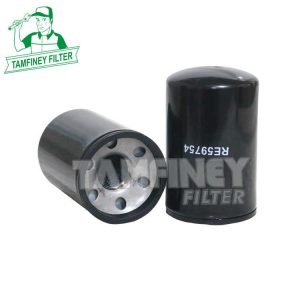

| Hydraulic Filter DBB8665 P568665 P173789 P179763 P564468 Parameter: | |
| Part Number | DBB8665 P568665 P173789 P179763 P564468 |
| Brand | Tamfiney |
| Weight | 2320 g |
| Height | 362 mm |
| Outer Diameter | 120 mm |
| Inner Diameter/ Thread Size | 1 3/4-12 UN |
| Material | Metal & Glassfiber |
| Filter Media | High-efficiency Glassfiber |
| Casing | Painted steel outer body with perforated steel internal support |
| Typical Working Pressure | Up to approx. 6–10 bar |
| Filtration | Approx. 5–10 micron |
| Temperature Rating | Up to approx. 100–120°C |
| Minimum Order | 100 PCS |
| Place of Region: | Zhejiang, China |
| Payment Terms: | T/T |
| Price Terms: | FOB |
| Lead Time: | 30 to 50 days based on order quantities |
| Market Type: | After Market |
| Current Export Market: | Southeast Asian,North America, South America, Western Europe, Eastern Europe, Africa, Oceania |
Compatibility
- Hydraulic and Transmission Systems: Used in mobile, stationary, and bulk storage tank setups to filter transmission and hydraulic oils, Ag Chem Equipment, Challenger, and Caterpillar systems
- Fluid Transfers & Polishing: Single-pass filtration for clean fluid transfers, high-efficiency kidney looping, inlet/outlet filtration at bulk storage tanks, and dispenser "polishing" filtration on fuel pumps and hose reels.
Professional Donaldson DBB8665 P568665 P173789 P179763 P564468 Lube Filter
Q: What is the difference between Donaldson Blue® lubricate oil filter and standard oil filter?
🔧 Core Performance Differences
- Filtration Efficiency: The Blue version can remove over 90% of 10-micron and larger impurities, while standard cellulose filter cartridges typically remove only 50% or less.
- Pollution Capacity: The Blue version has approximately *twice* the impurity retention capacity of standard cellulose filters, with significantly longer service life.
- Filter Media Technology: The Blue version employs Synteq™ synthetic fiber filter media, achieving a better balance between efficiency, capacity, and flow resistance; the standard version typically uses conventional cellulose filter media.
- Flow Resistance: The Blue version offers lower resistance, smoother oil flow, and more thorough lubrication.
- Seal: Blue version equipped with durable, long-life seals to support extended replacement intervals.
🔄 Replacement compatibility
Upgrading to the Blue version, allows direct replacement of standard filters without system modifications or special handling requirements simply.
Q: What is a full-flow spin-on design?
The design of a full-flow spin-on filter, in simple terms, is an oil filter solution that combines the "full flow" and "spin-on" structures together. It not only filters all the engine oil, but also adopts a structure of integral spinning replacement, balancing the filtering effect and replacement convenience
🔧 Design Core
- Full flow arrangement: The filter is connected in series with the engine main oil passage, and all oil flowing through the main oil passage must be filtered through it to ensure oil cleanliness and protect the engine from impurities and wear.
- Spiral installation structure: The filter cartridge is screwed onto the filter head through threads, with only one sealing point. It can be replaced as a whole without the need for special tools. Internally integrated check valve and bypass valve to prevent oil backflow during shutdown and ensure oil supply in case of filter blockage.
- Filter material selection: The filter element often uses microporous filter paper or glass fiber, with a typical filtration accuracy of 10 microns, which can effectively intercept impurity particles above 10 microns.
⚙️ key parameters
- Work pressure: Typically up to 10 bar, with a test pressure of up to 14.3 bar.
- Flow range: up to 180 L/min.
- Working temperature: -10 ° C to+110 ° C.
- The opening pressure difference of the bypass valve is about Δ p 2.0 bar for the pressure filter and about Δ p 0.28 bar for the suction filter.
📋 Design Highlights
- Check valve and bypass valve: Check valves prevent oil from flowing back from the filter after the engine is stopped; The bypass valve opens when the filter element is clogged or the oil is viscous, ensuring uninterrupted supply of lubricating oil.
- Sealing: There is only one sealing point, which is fewer than the sealing points of replaceable filters, greatly reducing the risk of missing parts or leakage.
- Replacement cycle: It is usually replaced synchronously with the engine oil. It is recommended to replace it every 5000 to 10000 kilometers or according to the vehicle maintenance manual, depending on the type of engine oil and the usage environment.