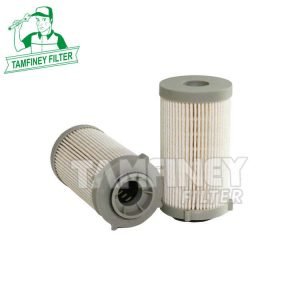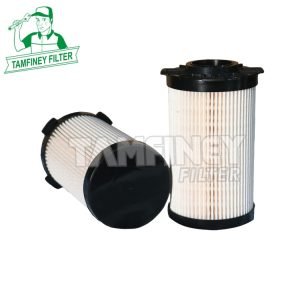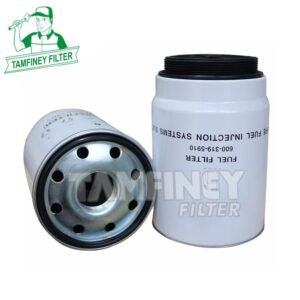


| Fuel Filter 91FG026 FS36247 5301449 Parameter: | |
| Part Number | 91FG026 FS36247 5301449 |
| Brand | Tamfiney |
| Weight | 895 g |
| Height | 190/205 mm |
| Outer Diameter | 111 mm |
| Inner Diameter/ Thread Size | 1"-14 |
| Minimum Order | 100 PCS |
| Place of Region: | Zhejiang, China |
| Payment Terms: | T/T |
| Price Terms: | FOB |
| Lead Time: | 30 to 50 days based on order quantities |
| Market Type: | After Market |
| Current Export Market: | Southeast Asian,North America, South America, Western Europe, Eastern Europe, Africa, Oceania |
Applications:
• SANY SCT 250SCT 500
Professional Diesel Water Separator Filter 91FG026 FS36247 5301449 for Cummins
Q: Can you reuse a water separator filter?
There is currently no direct public information regarding the reuse of automotiveand boat fuel water separator filters. The following provides reference based on common automotive maintenance knowledge.
Fuel water separator filters (usually used in diesel engines to separate moisture from fuel) are generally not recommended for reuse.
The reasons include:
Design features: These types of filters are mostly disposable, and the filter material (such as synthetic fiber) is prone to clogging after filtering moisture and impurities. Repeated use will reduce separation efficiency, resulting in residual moisture and affecting engine performance.
Pollution risk: Used filters may retain moisture, impurities, or microorganisms, which may contaminate clean fuel when reused, increasing the risk of engine wear or failure.
Sealing performance: The sealing components of the oil-water separator may deform after initial installation, making it difficult to ensure sealing effectiveness after repeated use, which may lead to fuel leakage.
Q: What is the lifespan of a water separator filter?
🚗 Automobile oil-water separator
Reference lifespan: typically between 8000 and 20000 kilometers, but this is not an absolute standard.• Influencing factors:
O Fuel quality: Excessive impurities and moisture can shorten the lifespan
O Operating environment: Adverse road conditions and extreme weather conditions have negative impacts
Maintenance status: It is recommended to check every 2000 kilometers and manually drain the water in a timely manner
💡 Suggestions for extending the service life
• Regular inspection and maintenance: Regularly check the equipment status, and some filter elements can be cleaned of impurities through backwashing to reduce replacement frequency
• Pay attention to the quality of the incoming water: the harder the water quality, the shorter the lifespan of the filter element, and the maintenance cycle needs to be adjusted according to the actual situation
• Choose high-quality products: Pay attention to the filter material and manufacturing process when purchasing, and avoid choosing products with low prices or inferior products
Q: How to drain water from a diesel separator?
Preparation
1. Safe Parking: Park the vehicle on a flat, secure surface, engage the parking brake, turn off the engine, and allow it to cool down (to prevent burns).
2. Prepare the tools: Gather a suitable container (such as a plastic bucket or oil basin) to collect the discharged water and diesel mixture; have a cloth ready for cleaning spills.
3. Locate the fuel water separator: It is typically positioned near the fuel line of the vehicle's chassis, appearing as a cylindrical tank (some models may have it inside the engine compartment). For precise location, refer to the vehicle manual.
Drainage steps
• Method 1: Directly open the drain valve (common in most vehicle models)
1. Locate the drain valve at the bottom of the oil-water separator (common types include knob-style or push-pull-style).
• Knob-type: Rotate counterclockwise by hand or with an appropriate tool (e.g., wrench) to open.
• Pluggable type: Simply pull the plug out gently.
2. Place the container under the drain valve, then slowly open the valve to allow water and impurities to flow out.
3. Observe the drainage state: Continue draining until the liquid flowing out becomes clear, with almost no visible moisture (at this point, it is primarily diesel).
4. Close the drain valve:
Rotary type: Tighten by turning clockwise.
• Pluggable: Reinsert into the original position and ensure it is securely fastened.
• Method 2: Bleeding through the diesel filter (applicable to some models)
1. Remove the oil outlet pipe of the diesel filter (the end connected to the engine) and close the filter cover.
2. Use a wrench to open the vent port at the top of the filter element to equalize the internal and external air pressure.
3. Open the waterproof valve of the filter, and water will naturally flow into the container.
4. After draining the water, close the exhaust port and cover, then reconnect the oil pipe.
Precautions
Drainage frequency: Under normal driving conditions, it is recommended to check every 5,000 to 10,000 kilometers. If frequently driven in damp or dusty environments or with unstable diesel quality, reduce the interval to 2,000 to 5,000 kilometers. Drain immediately when the dashboard warning light is activated.
Operational Details
Ensure the vehicle is turned off before draining to prevent fuel leaks that could cause a fire.
If the discharged water is dirty, flush the inner wall of the separator with clean water (requires professional operation) to prevent the accumulation of debris.
After drainage, check for leaks around the drain valve and ensure it is securely installed.
Special Note:
• In northern regions, it is recommended to use an oil-water separator with heating functionality to prevent water accumulation from freezing.
• If the vehicle exhibits abnormal conditions such as increased fuel consumption or engine vibration, even if the scheduled maintenance period has not arrived, the drainage inspection should be performed in advance.
Potential Demand Reminder
Regular drainage can effectively prevent moisture from entering the engine and extend the lifespan of the fuel system. If you are unsure about the specific model's operation or if the issue persists after drainage, it is recommended to consult a professional technician.