
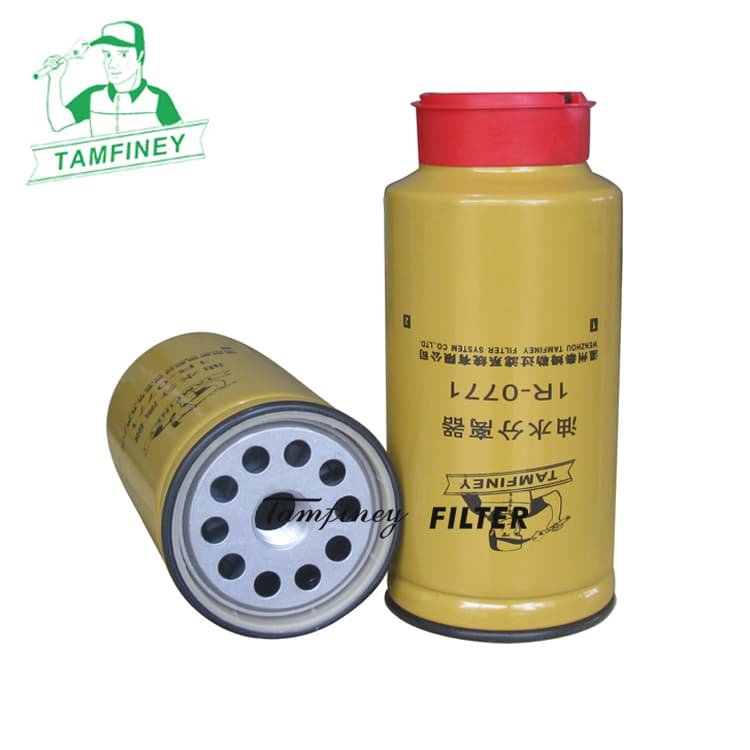


| Fuel Filter FS20007 FS19995 FS19843 Parameter: | |
| Part Number | FS20007 FS19995 FS19843 |
| Brand | Tamfiney |
| Weight | 835g |
| Height | 220 mm |
| Outer Diameter | 108 mm |
| Inner Diameter/ Thread Size | 1"-14 |
| Minimum Order | 100 PCS |
| Place of Region: | Zhejiang, China |
| Payment Terms: | T/T |
| Price Terms: | FOB |
| Lead Time: | 30 to 50 days based on order quantities |
| Market Type: | After Market |
| Current Export Market: | Southeast Asian,North America, South America, Western Europe, Eastern Europe, Africa, Oceania |
What does FS20007 fit?
CLAAS LEXION 620LEXION 630LEXION 650LEXION 670LEXION 670LEXION 670 TERRA TRACLEXION 740LEXION 740LEXION 740 TERRA TRACLEXION 750LEXION 750LEXION 750 TERRATRACLEXION 750 TERRATRACLEXION 760LEXION 760LEXION 760 TERRATRACLEXION 760 TERRA TRAC
HAMMEL NZS 700 DVB 750 BVB 750 DVB 750 DKVB 750 DKVB 850 DKVB 950 DK
INGERSOLL RAND 25.30025.330ECM 720XHP 1070 WCATXHP 1170 XCAT
KAESER M 500-2M 500-2
KOMPTECH AHWI RT 800CRAMBO 3400CRAMBO 3400CRAMBO 5000CRAMBO 5200 ECTERMINATOR 5000 STERMINATOR 6000
MOROOKA
MST 2200 VDMST 2200 VDR
NORDBERG LT 105LT 106LT 1110 SLT 1213LT 1213 SLT 1913LT 200LT 300 HP
SANDVIK D 45 KSD 50 KSDI 550DP 1100 ILéopard DI 650iQH 331QH 440QI 240QI 430QI 440QI 441QJ 330QJ 331QJ 340
SENNEBOGEN 22002200 E330055005500 E5500 E5500 HD-SL660 HD7700SR 48 BT
SULLAIR 1150 XHH CAT1300 XHH1525 XHDL900 XHH CAT
WIRTGEN W 2000W 2100W 210 FiW 210 FIWR 250WR 250i
Professional Diesel Fuel Water Filter FS20007 FS19995 FS19843
Q: How often should I drain my fuel water separator?
The draining frequency of water separator needs to be comprehensively judged based on the usage scenario, equipment type, driving mileage, environmental conditions, and water accumulation situation. The following are suggestions for different purposes:
Under normal operating conditions:
Empty the vehicle every 2000-3000 kilometers.
Or schedule once every 3 months (whichever comes first).
Special working conditions require a shortened cycle:
High frequency short distance cycling (single<10 kilometers) or rainy and humid areas: It is recommended to row every 1000-1500 kilometers.
Low temperature environment in winter: To prevent icing, check and even arrange 1-2 times a day.
If the moisture alarm light on the instrument panel lights up or the observation window shows excessive water accumulation, it should be immediately drained.
• Operation tips:
Most vehicles have transparent cups or observation windows at the bottom of the oil-water separator, which can visually determine the water accumulation situation.
Before draining, please turn off the engine and pull the handbrake to ensure safety.
Q: What happens if I don't use a water separator?
If a water separator is not used, especially for diesel engines or vehicles using high-pressure common rail fuel systems, it may cause a series of serious problems. The following are the main impacts:
• Decreased engine power: Moisture and impurities in the fuel can interfere with normal combustion, leading to reduced atomization effect of the fuel injector, decreased combustion efficiency, and noticeable weakness during acceleration, especially during heavy loads or uphill climbing.
• Difficulty starting and unstable idling: After water enters the fuel system, it affects ignition and combustion stability, which may result in multiple attempts to start, large speed fluctuations during idling, and even stalling.
• Abnormal exhaust:
Black smoke: Due to insufficient combustion, unburned fuel is discharged to form black smoke.
White smoke emitted: Moisture in the cylinder is heated and turns into steam, which appears as white smoke when discharged, and may damage the fuel injector in the long run.
• Increased carbon deposition: Moisture and impurities deposit in the intake valve, airway, and cylinder, forming hard carbon deposits, leading to problems such as difficulty starting, sudden refueling and backfire, and increased fuel consumption.
• Damage to fuel injector and high-pressure common rail system: The high-pressure common rail system of diesel vehicles requires extremely high fuel purity, and moisture can corrode and wear the precise fuel injector plunger components. In severe cases, it can cause the fuel injector to jam or strain, resulting in extremely high repair costs.
• Lubricating oil pollution: Moisture mixed into the engine oil reduces lubrication performance and exacerbates internal engine wear.
• Increased fuel consumption: Due to reduced combustion efficiency, more fuel is required to maintain the same power output.
• Excessive emissions: The increase of harmful substances in exhaust gas may trigger malfunction lights and violate environmental regulations.
Q: What are signs of a clogged separator?
When the water separator is clogged, it can affect the operation of the vehicle in various ways. The main signs include:
• Unstable or weak engine acceleration: Slow response and poor power output when stepping on the accelerator, especially during heavy loads or climbing.
• Difficulty starting: Especially in low-temperature environments, it may require multiple attempts to start.
• Unstable idle or stalling: The engine speed fluctuates greatly, and even stalls automatically.
• The exhaust pipe emits black or white smoke:
Black smoke: Due to insufficient fuel combustion, unburned carbon particles are emitted;
White smoke: The moisture in the fuel is not separated and is converted into water vapor in the combustion chamber before being discharged.
• Increased fuel consumption: Decreased combustion efficiency leads to an increase in fuel consumption per unit mileage.
• Fault light on: Modern vehicle ECU detects abnormal fuel water content, which will trigger the engine fault light or special oil-water separator warning light.
• Abnormal operation of fuel injector: Long term blockage may cause corrosion, wear, and even jamming of the fuel injector.


