Get a Free Quote
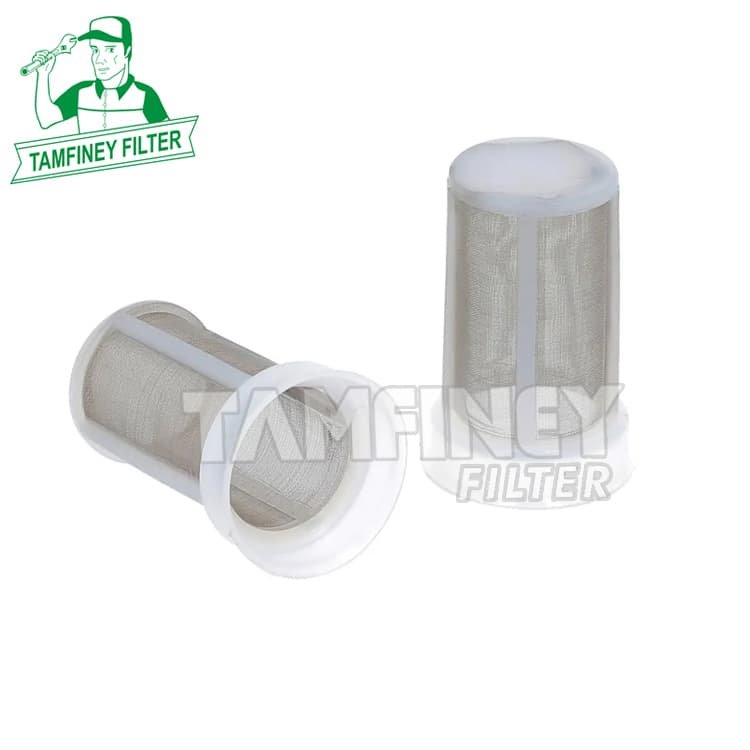
Professional Diesel Fuel Strainer 130306360 10000-06412 276-1806 1000006412 2761806 332145579
Your Best Diesel Fuel Strainer 130306360 10000-06412 276-1806 1000006412 2761806 332145579 Fuel filter manufacturer in China.
FG Wilson 10000-06412 1000006412 Perkins 130306360 CATERPILLAR 2761806 276-1806 BOMAG 332145579 JLG-INDUSTRIES 70002377 PRAMAC PEP00081 PEP130306360


| Fuel Filter 130306360 10000-06412 276-1806 1000006412 2761806 332145579 Parameter: | |
| Part Number | 130306360 10000-06412 276-1806 1000006412 2761806 332145579 |
| Brand | Tamfiney |
| Weight | 30g |
| Height | 40mm |
| Outer Diameter | 20mm |
| Inner Diameter/ Thread Size |
|
| Minimum Order | 100 PCS |
| Place of Region: | Zhejiang, China |
| Payment Terms: | T/T |
| Price Terms: | FOB |
| Lead Time: | 30 to 50 days based on order quantities |
| Market Type: | After Market |
| Current Export Market: | Southeast Asian,North America, South America, Western Europe, Eastern Europe, Africa, Oceania |
Applications:
MECALAC MCL 8
ROTAIR MDVN 52 APG
WACKER NEUSON EW 65
WILSON P 110-2 50 HZ
Professional Diesel Fuel Strainer 130306360 10000-06412 276-1806 1000006412 2761806 332145579
Q: What is the purpose of a fuel strainer?
The fuel filter is vital in the automotive fuel system. It filters impurities to ensure pure fuel reaches the engine.
Its functions include acting as a primary filter. This pre filter blocks pollutants like particulate matter, moisture, and dust. It stops impurities from entering the combustion chamber. This prevents nozzle blockage and fuel system wear or failure. It ensures smooth fuel supply and efficient combustion.
It also reduces friction caused by impurities on precision parts. This helps extend the life of components like fuel pumps and injectors. It improves engine operation stability and reliability.
Fuel filters connect in series between the fuel pump and inlet. They serve as the first defense before fuel enters the engine. Some vehicles have built-in filters in their fuel pumps. Others use external filters needing regular maintenance.
For maintenance, the replacement cycle varies by vehicle design and usage. Experts recommend checking or replacing it every 20,000 to 50,000 kilometers. A clogged filter may cause insufficient fuel supply. It can lead to decreased power or engine abnormalities. Timely action is necessary to address these issues.
Q: How important is a diesel fuel filter?
The diesel filter is the core component of the fuel system in diesel engines, and its importance is reflected in its impact on engine operating efficiency, lifespan, and reliability.
The core function of a diesel filter is to filter impurities and separate moisture, physically intercepting and removing solid particles (such as metal debris, dust) and moisture from diesel, preventing these pollutants from entering precision components such as high-pressure fuel pumps and fuel injectors. If the filter fails, impurities can cause wear and tear of the fuel injection pump components, blockage of the fuel injector nozzle, and water may react with sulfur to produce corrosive hydrochloric acid, accelerating the wear and tear of internal engine parts.
Improper maintenance can lead to a series of serious consequences, including:
• Decreased power and increased fuel consumption: Blockage in the oil circuit leads to insufficient fuel supply pressure, affecting combustion efficiency and resulting in weak engine acceleration and unstable idle.
• Engine wear and failure risk: Unfiltered impurities can damage the lubrication effect, increase the wear of components such as cylinder liners and piston rings, and may lead to major repairs in the long run.
• Emission issues and rising operating costs: clogged particulate filters (DPF) require cleaning or replacement (costing thousands to tens of thousands of yuan), and poor quality fuel or untimely maintenance can exacerbate post-treatment system failures.
Regular replacement is the key to ensuring its efficiency. It is recommended to check and replace it every 5000 to 10000 kilometers or 100 to 200 hours of cumulative operation. The cycle should be shortened in harsh environments. The lifespan of diesel fuel filters is usually one-third of that of gasoline vehicles, and maintenance costs are higher, such as shorter oil change cycles and a 50% higher frequency of air filter replacement. These factors together highlight the fundamental role of filters in maintaining fuel system cleanliness and long-term stable engine operation.
Q: When to change fuel strainer?
The replacement cycle of the fuel strainer varies depending on the vehicle model and usage. It can replace every 40000 to 100000 kilometers. Please refer to the following suggestions for details:
Replacement cycle reference
1. External filter screen
Regular cycle: 15000-30000 kilometers or 1-2 years (whichever comes first).
Special operating conditions: If you frequently use inferior fuel or drive on dusty roads, it is recommended to shorten the distance to 10000-12000 kilometers.
Proper maintenance: If the oil is of high quality and well maintained, it can be extended to 70000-80000 kilometers, but not exceeding 100000 kilometers.
2. Built in filter screen
Regular cycle: 40000 to 100000 kilometers or 2-3 years (refer to the vehicle maintenance manual for details).
Special operating conditions: If the fuel quality is poor or the driving environment is harsh, it is recommended to shorten it to 30000 to 40000 kilometers.
Proper maintenance: can be extended to 80000 to 100000 kilometers, but not exceeding 100000 kilometers.
Timing judgment for replacement
• Symptom tip: If the vehicle experiences weak acceleration, difficulty starting, idle shaking, or increased fuel consumption, it may be due to clogged filters and needs to be checked in advance.
• Regular inspection: It is recommended to check the condition of the filter screen every 10000 kilometers, check for deformation, cracks, or leakage in the housing, and check for discoloration or blockage in the filter element.