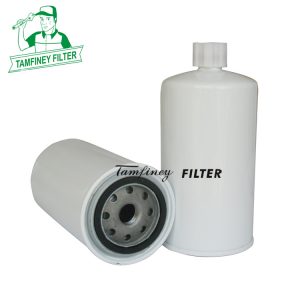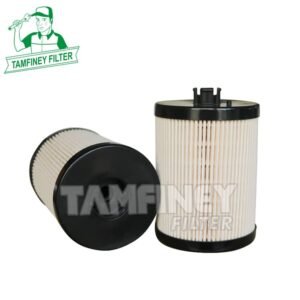


| Fuel Filter FS20123 FS36275 5405295 5364946 Parameter: | |
| Part Number | FS20123 FS36275 5405295 5364946 |
| Brand | Tamfiney |
| Weight | 895 g |
| Height | 190/205 mm |
| Outer Diameter | 111 mm |
| Inner Diameter/ Thread Size | 1"-14 |
| Minimum Order | 100 PCS |
| Place of Region: | Zhejiang, China |
| Payment Terms: | T/T |
| Price Terms: | FOB |
| Lead Time: | 30 to 50 days based on order quantities |
| Market Type: | After Market |
| Current Export Market: | Southeast Asian,North America, South America, Western Europe, Eastern Europe, Africa, Oceania |
Applications:
- KAMAZ 605106520
• MINSK AUTOMOBILE PLANT MAZ 60511
Professional Diesel Fuel Separator FS20123 FS36275 5405295 5364946
Q: Why do diesels need a fuel water separator?
The use of fuel water separators in diesel engines is mainly to remove moisture and impurities from the fuel, to protect the precision components of the engine and ensure efficient operation. Diesel fuel is prone to moisture during storage and transportation, and if not separated, it can seriously damage the engine.
Core protective function
1. Prevent component wear: Moisture entering the fuel injector can cause wear, jamming, and even corrosion, and oil-water separators can reduce the probability of such failures.
2. Avoid abnormal combustion: Moisture affects the fuel atomization effect, leading to unstable combustion and decreased power. Separating moisture can ensure sufficient combustion.
3. Extend service life: By providing clean fuel, reducing carbon buildup and internal wear, the engine maintenance cycle and lifespan can be extended.
Special requirements for high-pressure common rail system
1. High purity requirements: Modern high-pressure common rail systems have injection pressures of over 1600 bar and are highly sensitive to fuel cleanliness.
2. Precise gap protection: The gap between the fuel injector is only 2-3 μ m, and small amounts of moisture or impurities can cause damage. The separator is a necessary protective barrier.
Working principle and function
1. Physical separation: Utilizing the density difference between water and diesel (water, heavy oil, light oil), water is settled and discharged through gravity.
2. Impurity filtration: The internal filter and diffusion cone can intercept solid particles larger than 5 μ m, preventing blockage of the oil circuit.
Low temperature protection: Some models have preheating function to prevent diesel from waxing at low temperatures, ensuring smooth start-up in cold weather.
Q: What happens when a fuel separator fails?
The function of the fuel water separator is to remove moisture from the fuel and prevent it from entering the engine combustion system. Once damaged, the following problems may occur:
• Difficulty starting the engine: Moisture reduces fuel combustion efficiency, especially in low-temperature environments.
• Unstable idle or shaking: The combustion process is disturbed, causing fluctuations in speed, and in severe cases, the engine malfunction light may turn on.
• Decreased power, weak acceleration: Insufficient combustion, reduced output power, noticeable when overtaking or climbing hills.
• Abnormal exhaust emissions:
• Emit black smoke (incomplete combustion);
White smoke (water vaporizes at high temperatures to form water vapor).
Corrosion of fuel system components: Long term presence of moisture can corrode fuel injectors, fuel pumps, etc., increasing maintenance costs.
• Risk of brake system (rare but serious): Moisture may seep into the brake assist system, causing brake shaking or abnormal noise.
⚠️ If the alarm light of the fuel water separator lights up, it needs to be dealt with in a timely manner, otherwise it may cause engine carbon deposition, fuel injector failure, or even more serious damage.
Q: What are signs of a bad separator?
1. Difficulty starting: Especially in low-temperature environments, ignition is difficult due to the presence of water in the fuel.
2. Unstable idle or weak acceleration: insufficient combustion, slow power response.
3. White smoke: Water vapor is generated by the combustion of water in the fuel, and white smoke is emitted from the exhaust pipe.
4. Abnormal exhaust: may emit black smoke (incomplete combustion) or be accompanied by a pungent odor.
5. Corrosion of fuel system: Long term moisture erosion can damage components such as fuel injectors and fuel pumps.