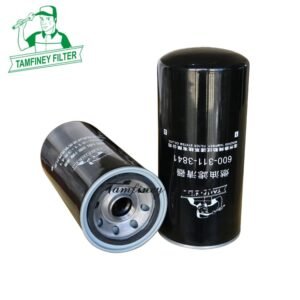

Fuel Filter BF7866 P550839 20430640 P990 Parameter: | |
| Part Number | BF7866 P550839 20430640 P990 |
| Brand | Tamfiney |
| Weight | 26 g |
| Height | 102 mm |
| Outer Diameter | 43/54 mm |
| Inner Diameter/ Thread Size | 8 mm |
| Minimum Order | 100 PCS |
| Place of Region: | Zhejiang, China |
| Payment Terms: | T/T |
| Price Terms: | FOB |
| Lead Time: | 30 to 50 days based on order quantities |
| Market Type: | After Market |
| Current Export Market: | Southeast Asian,North America, South America, Western Europe, Eastern Europe, Africa, Oceania |
Application:
ATLAS AB 1004AB 1204AB 1204AB 1302AB 1304AB 1404AB 1404AB 1504AB 1604AB 1604 LCAB 1704AB 1704AB 1804AB 1804AB 2004AR 95
ATLAS COPCO 352 S BOOMER353 ES BOOMERL 2 C BOOMERMUSTANG S 52 CDBPTHS 1200 DDPTS 1200 DDPTS 1500 DDROC 642 HCROC 742 HCROC 830 HROC F 7S1L BOOMERXAHS 350XAHS 365 MDXAS 350 DDXR 350 DDXRH 350 DXRHS 350XRHS 385 MDXRS 350
BOBCAT 442442 COM I444
BOMAG BM 2000/50 TIER IIBM 2000/50 TIER IIBM 2000/60 TIER IIBM 2000/60 TIER II
CLAAS ATLES 926ATLES 936 RZATLES 946
DEUTZ 1130 AGROTRON TTV1145 AGROTRON TTV1160 AGROTRON TTV120 AGROTRON MK III135 AGROVECTORBF 4 M 1012 FBF 4 M 1013 FCBF 6 M 1013BF 6 M 1013 FC
DYNAPAC CA 252 DCA 252 PDCA 252 STDCA 301 PDCA 302 DCA 302 PDCA 402 DF 151 CF 8 C
FARESIN HANDLERS 6.286.28FH 14.35FH 14.35FH 14.42FH 14.42FH 17.40FH 17.40FH 3000/07 FAFH 3000/07
KALMAR DCE 100-6DCE 120DCE 140-6DCE 150-12DCE 160-6DCE 90DCE 9 D
LAMBORGHINI R 6-165.7R 7-175R 7-190R 7-200R 8-215
LIEBHERR A 310 BA 310 BA 312A 314 LITRONICA 316A 316A 316 LITRONICA 900 BA 900 BA 900 B LITRONICA 900 B LITRONICA 900 LITRONICA 900 ZWMK 110MK 80MK 88R 310 BR 310 BR 900 BR 900 BR 900 B LITRONICR 900 B LITRONICR 900 LITRONIC
LIFTER PRAMAC GBL 30GSL 40GSW 110 DGSW 135GSW 145GSW 150 DGSW 160GSW 170 DGSW 195 DGSW 220 DGSW 80 D
LINDE H 50-03 DH 60H 60-03 DH 70H 70H 70-03 DH 80-02 DH 80-03 D
MERLO DBM 3500 EVP 101.10 KP 101.10 KP 28.8 TOPP 28.8 TOPP 29.6P 29.6P 32.6 TOPP 32.6 TOPP 34.10P 34.7 TOPP 34.7 TOPP 38.10 TP 38.10 TP 38.7P
RENAULT AGRI ATLES 915 RZATLES 925 RZATLES 926 RZATLES 935 RZATLES 936 RZ
VOLVO TAD 532 GETAD 730 GETAD 731 GETAD 731 GETAD 732 GETAD 733 GETD 520 GE
WIRTGEN KMA 150SP 150W 1000 FW 1000 FW 1000 LW 1200 FW 1200 FW 1300 FW 1300 FW 600 DC
Professional Diesel Fuel Filter Elements BF7866 P550839 20430640 P990
Q: How Diesel Fuel Filters REALLY Work?
The diesel filter purifies diesel by removing impurities and separating water to safeguard engine components like fuel pumps and injectors. It ensures stable and efficient engine operation by maintaining fuel cleanliness.
Its functioning depends on physical blocking, impact forces, and gravity settling.
Diesel first flows through a primary layer (typically dense paper) that traps particles larger than 10 microns. Next, it enters a secondary layer (such as felt or polymer), where tiny particles collide and adhere due to Brownian motion, enhancing filtration. For water separation, the filter material leverages oil-water affinity differences: oil passes through, while small water droplets merge into larger ones and settle into a collection cup.
Modern filters often integrate sensors that monitor water accumulation in real time. If water levels exceed limits, an alarm triggers, prompting timely drainage. This multi-layer design, combined with sealed structures, effectively cleans diesel and ensures the fuel system’s reliability.
Q: What do diesel fuel filters do?
The diesel fuel filter is the core component of the fuel system in diesel engines, and its main functions include:
Filter impurities: Remove solid particles such as iron oxide and dust from diesel to prevent clogging of fuel injectors and wear of precision components such as cylinder liners.
Separation of moisture:
By utilizing the "oleophilic and hydrophobic" properties of the filter element, moisture in diesel is separated to prevent it from reducing lubrication efficiency or reacting with sulfur to produce sulfuric acid that can corrode the engine.
Protecting the engine: Ensuring sufficient fuel combustion, reducing wear, and extending engine life, especially for the protection of fuel injectors in common rail diesel engines, is crucial.
The filter element is mostly made of filter paper, felt or polymer materials, and some models integrate moisture sensors and heating devices. It needs to be maintained every 5000-10000 kilometers to ensure efficient operation of the engine.
Q: How often should a diesel fuel filter be changed?
Diesel fuel filter replacement interval:
1. To ensure the effective protection of the diesel filter, it is generally necessary to replace it approximately every 5,000 kilometers of driving.
2. The decision should also be based on the actual situation. When the color of the filter element inside is visibly darkened, it indicates that the diesel fuel filter has been severely contaminated by harmful substances. A new filter must be replaced promptly to ensure the cleanliness of the fuel.
3. Replace the filter element every 5,000 kilometers according to standard practice.
While not replacing it in hot weather may not have significant effects, cold weather imposes higher requirements on the air and diesel filters. The filter must be replaced within a maximum of 5,000 kilometers to avoid compromising the vehicle's lifespan. Additionally, usage conditions, road quality, and environmental factors must be considered. Under favorable conditions, the filters may last up to 20,000 kilometers or one to two years. In poor road and environmental conditions, the service interval may be reduced to just 3,000–5,000 kilometers, potentially lasting only a few months.