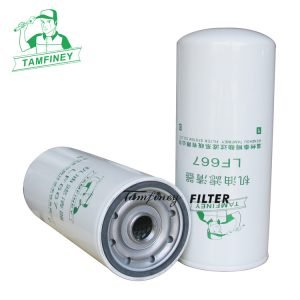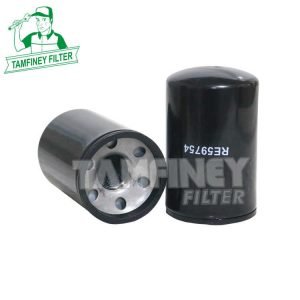

| Oil Filter LF16352 2P0115403 B40050 5262313 5283170 Parameter: | |
| Part Number | LF16352 2P0115403 B40050 5262313 5283170 |
| Brand | Tamfiney |
| Weight | 500 g |
| Height | 176 mm |
| Outer Diameter | 102 mm |
| Inner Diameter/ Thread Size | M27 X 26H INT |
| Minimum Order | 100 PCS |
| Place of Region: | Zhejiang, China |
| Payment Terms: | T/T |
| Price Terms: | FOB |
| Lead Time: | 30 to 50 days based on order quantities |
| Market Type: | After Market |
| Current Export Market: | North America, South America, Western Europe, Eastern Europe, Africa, Oceania |
What engines does the LF16352 fit?
• CUMMINS ISF 3.8QSF 3.8
• FOTON AUMARK 4000AUMARK 5000AUMARK 6000AUMARK 7000BJ 1051BJ 1089BJ 1133
Best Diesel Engine Oil Filter LF16352 2P0115403 B40050 5262313 5283170
Q: What is the LF16352 filter?
The LF16352 filter is an oil filter for specific engine models. It filters impurities in engine oil to protect the engine.
This product is an oil filter, often called a "machine filter." It is a key part of the engine lubrication system. Its main job is to remove metal debris, carbon deposits, gum, and moisture from oil. It keeps the oil clean and reduces engine part wear.
It fits light trucks with Cummins 3.8L engines. Models include Foton Ouling CTX, Ouma Ke, and Jianghuai Shuai Ling. It also works with Cummins 5262313 and similar engines.
Key features include high filtration efficiency. It uses precision filter paper or multi-layer fiber structures. These can trap micron-sized particles, reaching a 30 μm filtration level.
Sealing and installation are strong points. High-temperature resistant rubber seals ensure no leaks. The design matches original factory standards, preventing oil loss or looseness during use. Some versions have hexagonal wrench positions for easy handling.
Regular replacement boosts engine performance. It improves power response and reduces noise. Idle stability increases, and fuel consumption may optimize indirectly.
Q: How often should you change a diesel oil filter?
The recommended replacement cycle for the diesel oil filter is as follows:
General recommendation: It usually changes the engine oil every 5000-10000 kilometers or every six months to one year, depending on the type of oil and the driving environment.
The influence of oil type:
Use mineral oil: It is recommended to replace it every 3000-4000 kilometers or six months.
Using fully synthetic engine oil: can be extended to 8000-10000 kilometers or 8-12 months.
Special driving environment: If the vehicle is driven in harsh environments such as dusty areas, mining areas, and construction sites for a long time, or if the engine has water in the oil pan or undergoes major repairs, the oil filter element should be replaced in advance.
Low mileage vehicles: Even if the driving mileage does not meet the standard, it is recommended to replace it every 12 months because the oil will oxidize over time and the filter performance will also deteriorate.
Important reminder: When replacing the oil filter, the oil should be replaced at the same time, and ensure that the new filter model matches the vehicle. Before installation, a small amount of new engine oil should be applied to the sealing ring to enhance its sealing performance.
Q: Are synthetic oil filters better for diesel?
Synthetic oil filters are better for diesel engines.
The synthetic oil filter is designed specifically for diesel engines and uses high-performance fully synthetic filter media, which has the following advantages:
Efficient filtration: The spiral flow guide design increases the contact area and time between the engine oil and the filter medium, effectively filtering out impurities such as metal particles and carbon deposits, and improving filtration efficiency.
• Extend engine life: Maintain oil cleanliness, reduce internal wear and friction of the engine, lower energy loss, and thus extend the service life of engine components.
• Improve fuel economy: Good lubrication effect makes the engine burn more fully, improves fuel utilization, and has been tested to reduce diesel fuel consumption by about 10%.
• High temperature resistance and corrosion resistance: Fully synthetic materials maintain stable performance in harsh working environments, with good compression resistance and sealing of the shell to prevent leakage.
Diesel engines have stricter requirements for oil cleanliness due to high working pressure and temperature, and synthetic oil filters can better meet these needs.