
Get a Free Quote
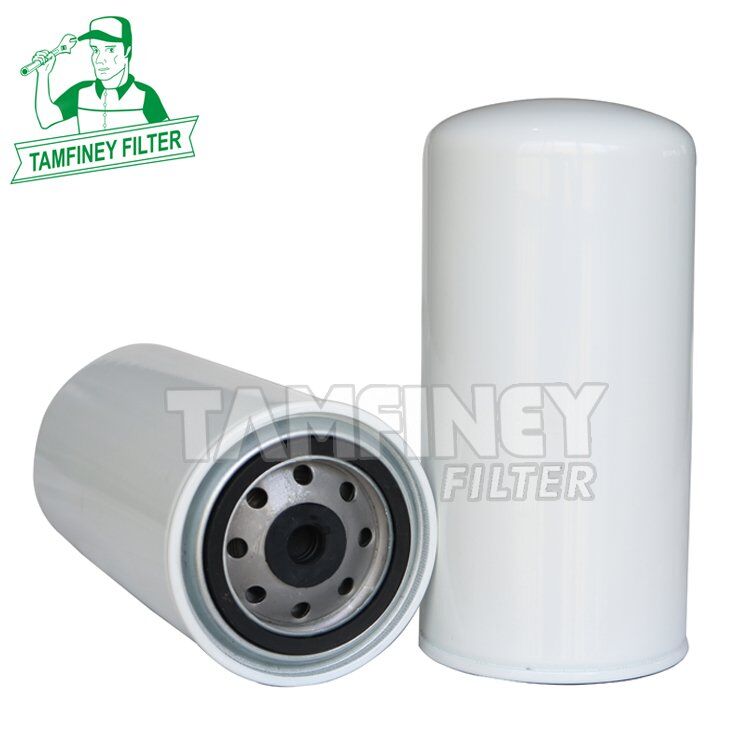
WF2076 Cross Reference Coolant Filter BW5076 WF2055 WA956/2 P552055
Your best WF2076 Cross Reference Coolant Filter BW5076 WF2055 WA956/2 P552055 Coolant filter manufacturer in China.
FLEETGUARD WF2098 WF2055 WF2076 WF2056 WF2091 WF2014 WF2056, WF2066, WF2145 KOBELCO LV52V01002P1 General Motors 23507189, 23508426, 6439696, 6439700 Komatsu 600-411-1030, 600-411-1160, 6004111161, 600-411-1161, 6004111171, 600-411-1171 600-411-1420 600-411-1170 600-411-1040 600-411-1581 Luberfiner LFW2055, LFW4013, LFW5870, PW4013, Motorcraft FW8, Orenstein and Koppel 1413608, 4799646 Purolator Facet PW4455, W64455 Renault 5000808720, 5000808722 Volvo 207015007, 79286795 8228959

| Coolant Filter WF2076 BW5076 WF2055 WA956/2 P552055 Parameter: | |
| Part Number | WF2076 BW5076 WF2055 WA956/2 P552055 |
| Brand | Tamfiney |
| Height | 190 mm |
| Outer Diameter | 94 mm |
| Inner Diameter/Thread Size | 11/16-16 UN |
| Minimum Order | 100 pcs |
| Place of Region: | Zhejiang, China |
| Payment Terms: | T/T |
| Price Terms: | FOB |
| Lead Time: | 30 to 50 days based on order quantities |
| Market Type: | After Market |
| Current Export Market: | North America, South America, Western Europe, Eastern Europe, Africa, Oceania |
What engines or trucks is WF2076 compatible with?
• CUMMINS
K 19K 38K 50KTA 19 M-3KTA 19 M-4KTA 38-G3KTA 50-G3KTA 50 M-1N 14 MN 14 SERIESN 855 CCECNT 855 MNT 855 M240NTA 855-G4NTA 855 MQSK 19QSK 19 MQSK 19 M TIER IIQSK 23QSK23-G3QSK 78 SERIE-APP.CONSTR.QSL 9-G5QSL 9 TIER IVQST 30QST 30-1000QST 30-1050QST 30-1100QST 30-1200QST 30-760QST 30-850QST 30-900QST 30-950
• CUMMINS POWER GENERATION C 1250 D2RC 1400 D5C 250 D6EC 275 D5C 300 D6C 300 D6EC 350 D6C 400 D6C 400 D6FC 600 D6CF 700 D2R
• DEMAG H 65
Professional WF2076 Cross Reference Coolant Filter BW5076 WF2055 WA956/2 P552055
The Cummins QSK19 engine demands effective coolant filtration, and the WF2076 coolant filter delivers. Not only does it remove particles, but it also prevents corrosion within your system. Therefore, Tamfiney recommends the coolant filter for consistent engine performance.
WF2076: Engineered for Heavy-Duty Use
The WF2076 is specifically designed for robust environments. Additionally, it ensures reliable coolant circulation, which keeps the Cummins QSK19 engine running efficiently. By trapping harmful contaminants, it helps extend system longevity.
WF2076 Cross Reference Options for Maintenance Flexibility
When searching for alternatives, the filter cross reference list provides value. For instance, BW5076 offers compatible filtration for similar engine models. So, if WF2076 is out of stock, BW5076 is a practical solution. Moreover, these options guarantee seamless performance.
Easy Replacement and Hassle-Free Installation
Swapping your WF2076 coolant filter is quick with Tamfiney support. As a result, regular maintenance is convenient, minimizing engine downtime. Furthermore, BW5076’s design matches the original filter, so there’s no risk of installation errors.
Tamfiney: Your Reliable Source for Coolant Filters
Although various brands compete, Tamfiney stands out with authentic WF2076 coolant filters. Besides WF2076, you also find premium cross references like BW5076 in our inventory. Additionally, our experts offer guidance and fast shipping for every order.
Choose Tamfiney for Engine Protection
Whenever you need reliable coolant filtration for Cummins QSK19 engines, trust Tamfiney. Whether it’s WF2076, BW5076, or another equivalent, you’re assured of quality. Order today to protect your engine and enhance its operational lifespan.
FAQ
Q: Does the WF2076 have DCA4+ additive?
Yes, the Fleetguard WF2076 water filter is pre-charged with DCA4+ (Diesel Coolant Additive) in pellet form. It is designed to provide immediate release of 23 units of DCA4+ to protect cooling systems, specifically for Cummins
Q: How to install a coolant filter?
The installation of coolant filter (also known as water filter) needs to be operated according to the specific vehicle model and filter type, but the core steps are common. The installation process is as follows:
Pre-installation preparation
Ensure safety: Turn off the engine and disconnect the power supply, wait for the engine to completely cool down, and prevent high-temperature coolant from splashing and injuring people.
• Drain the old coolant: Open the drain plug of the water tank and the drain plug of the engine body to completely drain the old coolant; Rinse the cooling system with clean water if necessary.
• Close the shut-off valve: If the vehicle is equipped with an inlet and outlet shut-off valve, it needs to be closed first to avoid leakage.
Installation steps
1. Clean the installation seat: Wipe the sealing surface of the filter base with a clean cloth to ensure that there are no impurities.
2. Check the new filter: Confirm that the sealing ring is intact and undamaged, and replace it if damaged; A thin layer of clean engine oil can be applied to the sealing ring to enhance the seal.
3. Install the filter:
For spin-on filters: align the threads, manually tighten until the filter element contacts the gasket, and then tighten by 1/2 to 3/4 turn according to the filter element icon instructions.
For bypass filters (such as coolant filtration systems): they need to be connected to the outlet of the coolant pump (high-pressure side) and the return pipe (low-pressure side) to ensure that the pipeline is not twisted and the interface is sealed.
4. Add coolant: Pour new coolant into the overflow hole of the filter or the filling port of the water tank (pay attention to diluting according to the required ratio of the vehicle).
Start the engine and let it idle, observe if there is any exhaust until the coolant flows steadily out from the exhaust port.
5. Check for leaks: After running for 5-10 minutes, check for leaks in the filter and all interfaces.
Reset and test: Close the water tank cover, confirm again that the fluid level is between "MIN-MAX", and test run the vehicle to ensure that the system is functioning properly.
Q: Can a clogged coolant filter affect engine performance?
A clogged coolant filter can indeed affect engine performance. If there is a blockage in the cooling system (including the filter structure), it can affect engine performance in the following ways:
• Engine overheating: The circulation of coolant is blocked, and heat cannot be effectively dissipated, resulting in a sharp rise in water temperature and triggering the engine's high-temperature protection mechanism, reducing output power to avoid damage.
• Decreased power and slow acceleration: Under high temperature conditions, the ECU (Engine Control Unit) will limit the fuel injection amount or ignition timing, causing phenomena such as "weak power" and "weak acceleration".
• Decreased combustion efficiency: High temperature environments result in incomplete combustion of the mixture, further exacerbating fuel consumption and excessive emissions.
• Indirect damage to the lubrication system: If high temperatures persist, the viscosity of the engine oil decreases, oxidation accelerates, the lubrication effect weakens, and the risk of engine wear increases.
• Poor air conditioning cooling: Some car models share cooling modules with the air conditioning system, and blocked waterways can affect air conditioning efficiency

