Get a Free Quote
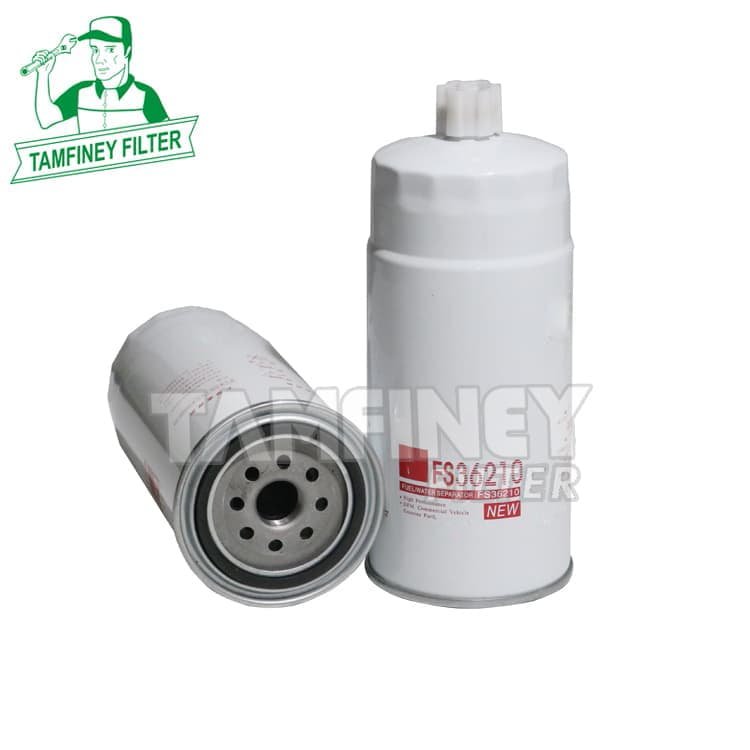
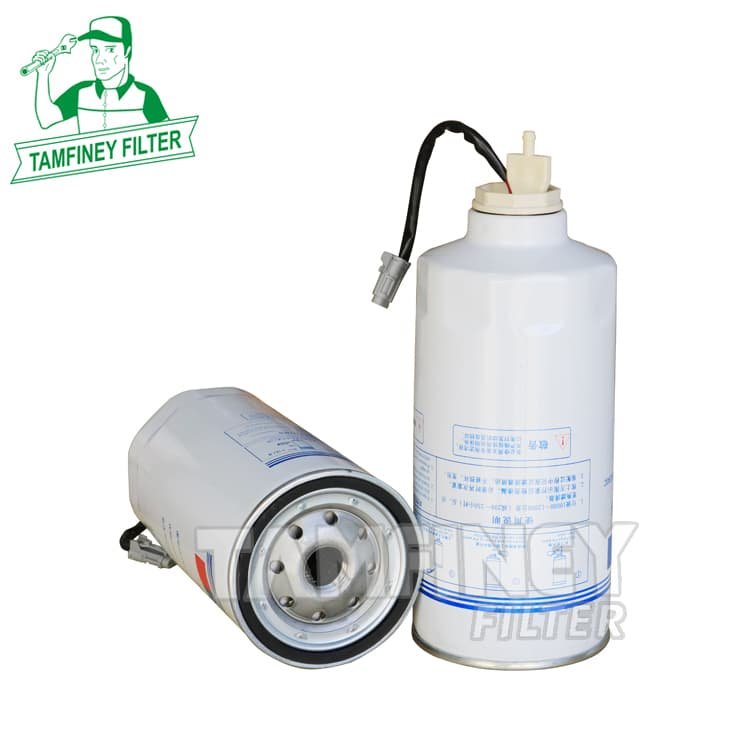
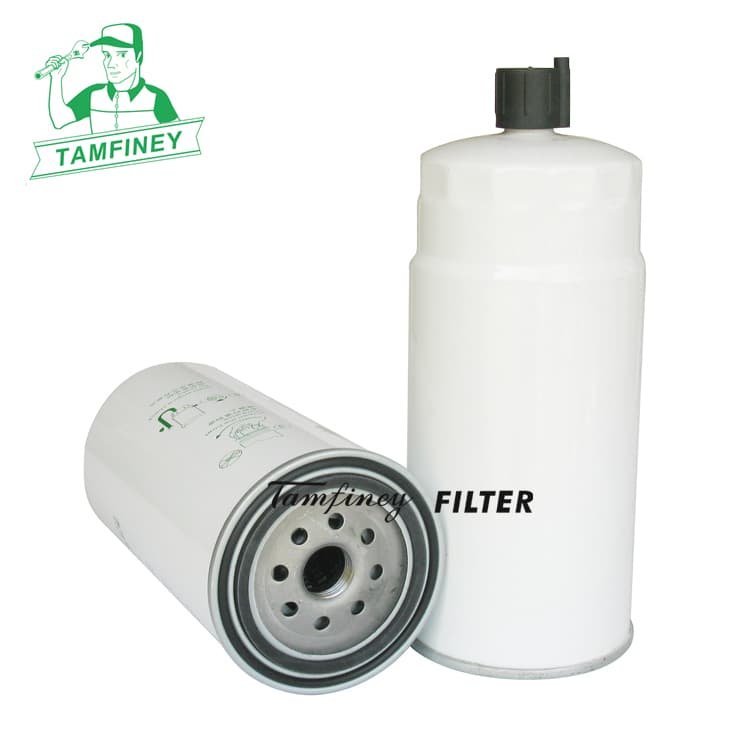
Professional Cummins ISX Fuel Water Separator Filter FS36210 R90T-PHC-B1 5402705 G5800-1105240
Your Best Cummins ISX Fuel Water Separator Filter FS36210 R90T-PHC-B1 5402705 G5800-1105240 Fuel filter manufacturer in China.
Weichai 612630080203 DONALDSON P551746 R010042 CHINA LOCAL CX1016E4 BAUDOUIN 16225030C FOTON L0110210035A0 Cummins 5402705 Alliance ABP/N122-R50422 Baldwin BF1375 BF1283 FLEETGUARD FS36210, Racor R50422, R90T-PHC-B1 YUCHAI G58001105240, G5800-1105240 LUBERFINER LFF5406


| Fuel Filter FS36210 R90T-PHC-B1 5402705 G5800-1105240 Parameter: | |
| Part Number | FS36210 R90T-PHC-B1 5402705 G5800-1105240 |
| Brand | Tamfiney |
| Weight | 1165 g |
| Height | 275 mm |
| Outer Diameter | 108 mm |
| Inner Diameter/ Thread Size |
1"-14 |
| Minimum Order | 100 PCS |
| Place of Region: | Zhejiang, China |
| Payment Terms: | T/T |
| Price Terms: | FOB |
| Lead Time: | 30 to 50 days based on order quantities |
| Market Type: | After Market |
| Current Export Market: | Southeast Asian,North America, South America, Western Europe, Eastern Europe, Africa, Oceania |
Applications:
• BAUDOUIN 12 M 3312M55-G2750/516 M 556 M 26
• KJ Power KJB 2750
• SANY STR 100 C-8 CSTR 130 C-8 C
Professional Cummins ISX Fuel Water Separator Filter FS36210 R90T-PHC-B1 5402705 G5800-1105240
The FS36210 is renowned as an essential filter for Cummins ISX engines. It’s specifically designed to separate water and contaminants from fuel. Because of this, FS36210 protects sensitive fuel injectors and ensures reliable engine operation. Furthermore, its high-efficiency media increases fuel purity, directly enhancing performance. Regular use of FS36210 also extends engine service intervals and reduces the risk of costly breakdowns. That’s why many fleet owners trust genuine FS36210 for their trucks.
FS36210 Filter: Advanced Engine Protection
The fs36210 filter offers advanced technology to defend against water, dirt, and harmful debris. Notably, it performs exceptionally well in harsh or unpredictable environments. With innovative filtration media, the fs36210 filter helps maintain factory-level engine efficiency. As a result, your Cummins ISX engine can run cleaner with lower emissions. Many technicians also remark on its straightforward installation and long operating life. Clearly, every detail of the fs36210 filter aims to maximize your vehicle’s reliability.
Cummins ISX Fuel Water Separator Filter: Tailored for Heavy-Duty Use
When selecting a Cummins ISX Fuel Water Separator Filter, you need proven performance. This filter type meets the rigorous demands of modern trucks. It is specialized for removing both free and emulsified water, reducing engine stalling or injector damage. Additionally, it prevents rust and corrosion throughout the fuel system. Using a Cummins ISX Fuel Water Separator Filter, operators enjoy improved power output and smoother fuel delivery. For fleets running long distances, this filtration is absolutely essential.
R90T-PHC-B1: Trusted Cross Reference and Performance
The R90T-PHC-B1 acts as a strong cross reference for FS36210. It fits perfectly and delivers excellent filtration efficiency. Furthermore, the R90T-PHC-B1 is manufactured for tough, high-mileage environments. Fleet managers appreciate its durability and consistent flow. By choosing R90T-PHC-B1, you keep maintenance schedules on track without sacrificing quality. Furthermore, its cost-effective replacement makes it popular with budget-conscious operators.
5402705: Consistent Results in Every Application
For those considering alternatives, the 5402705 stands out with its reliable performance. It integrates smoothly into Cummins ISX fuel systems as a cross reference. Additionally, 5402705 provides similar water-separation benefits as FS36210. Its robust design endures heavy loads and frequent use over long distances. Many operators choose 5402705 for its long-lasting construction and proven contaminant control.
G5800-1105240: Dependable Filtration for Extended Engine Life
The G5800-1105240 is engineered to deliver effective water and particle separation. Compatible as a substitute for FS36210, it ensures minimal fuel flow restriction. Further, G5800-1105240 helps maintain optimal combustion conditions in Cummins ISX engines. By reducing fuel injector issues, it increases vehicle uptime and reduces emergency repairs. Therefore, fleet supervisors turn to G5800-1105240 for consistent, trouble-free performance.
TAMFINEY: Your Professional Filtration Partner
TAMFINEY specializes in genuine and cross reference filters for heavy-duty engines. Whether you need FS36210, R90T-PHC-B1, 5402705, or G5800-1105240, our team offers expert support and fast delivery. Moreover, every filter is quality-assured, ensuring peace of mind and maximum engine protection. Choose TAMFINEY for the best Cummins ISX Fuel Water Separator Filters and unmatched customer service. Protect your fleet’s productivity with solutions trusted by industry leaders.
Q: How often should you change fuel water separator filter?
The recommended replacement cycle for the fuel water separator filter is usually once every 10000 kilometers of driving. However, this is not fixed and the actual replacement time needs to be flexibly adjusted based on various factors to ensure the optimal performance and lifespan of the engine.
🔧 Key factors affecting replacement cycle
• Fuel quality: If using high-quality fuel (with less impurities and moisture), the replacement cycle can be appropriately extended to 12000 to 15000 kilometers; If the fuel quality is average or low-quality oil is frequently added, it needs to be shortened to 8000 kilometers or even shorter.
• Operating environment: In humid areas (such as the southern coast), dusty environments (such as construction sites, sand and dust areas), or cold regions, moisture and impurities in the air can accelerate the loss of fuel water separators. It is recommended to shorten the cycle to around 9000 kilometers.
• Vehicle usage frequency: For vehicles that are frequently used (such as taxis and logistics vehicles), due to their high workload, they may need to be replaced within 10000 kilometers; If the mileage of a private car increases slowly, it is recommended to check it at least once a year.
• Filter quality: High quality brand fuel water separators have better durability and the cycle can be appropriately extended; On the contrary, low-quality products may need to be replaced in advance.
💡 Practical suggestions and precautions
• Regular inspection: Pay attention to the fuel water separator fault warning light on the dashboard (usually displayed as a conical icon with water droplets), and once it lights up, it should be repaired in a timely manner.
• Combined with other maintenance: It is recommended to check or replace the fuel water separator synchronously every time the oil and oil filter are changed (usually 8000-10000 kilometers) to ensure the overall cleanliness of the fuel system.
• Extreme situation handling: If the vehicle has been fueled with poor quality fuel or has been in harsh road conditions for a long time, the replacement cycle may need to be shortened to 5000-6000 kilometers.
In short, 10000 kilometers is a universal reference value, but the best strategy is to dynamically adjust based on your actual driving situation (such as fuel quality, environment, driving habits). Regular maintenance can effectively reduce fuel injector failures and extend engine lifespan.
Q: What happens if you don't drain your fuel water separator?
If the fuel water separator is not emptied in a timely manner, it can lead to the accumulation of fuel water mixture in the separator, which can cause a series of problems. The specific impact varies depending on the application scenario, and the following is a summary of common consequences:
The impact on car performance
• Decreased power output: Failure of the fuel
water separator can cause moisture and impurities to enter the fuel system, resulting in incomplete combustion, manifested as weak acceleration and driving.
• Abnormal engine operation: Moisture entering the engine may cause rusting and increased wear of components, leading to engine shaking, difficulty starting, or sudden shutdown, which affects driving safety.
• Abnormal emissions: When combustion is insufficient, the exhaust may emit black smoke (incomplete combustion of fuel) or white smoke (evaporation of water), which not only pollutes the environment but also indicates deterioration of engine operating conditions.
• Fuel system damage: Impurities block fuel injectors and other components, causing uneven fuel injection, increasing fuel consumption, and potentially leading to increased carbon buildup and brake system malfunctions (such as brake tremors).
Damage to equipment and pipelines
• Compressor liquid hammer risk: In equipment such as air compressors, if fuel water mixture enters the cylinder, it may cause liquid hammer phenomenon, leading to mechanical damage to the compressor.
• Pipeline blockage and equipment failure: When the treatment effect of the fuel water separator decreases, grease and impurities will accumulate in the drainage pipeline, causing pipeline blockage and even damaging subsequent sewage treatment equipment.
Safety and environmental risks
• Safety hazards: Accumulation of fuel water mixture may breed bacteria, produce odors, or cause a decrease in braking performance due to water entering the brake system, increasing the risk of accidents.
• Environmental pollution: If the fuel water separator is used for the treatment of catering wastewater, failure to drain it in a timely manner can lead to the direct discharge of oil and fat into the water body, forming an oil film that hinders oxygen dissolution and disrupts aquatic ecological balance.
suggestion
To avoid the above problems, the fuel water separator should be emptied regularly according to the frequency of equipment use (such as daily or weekly inspections), and the accumulated fuel water mixture should be cleaned up in a timely manner. If the vehicle experiences symptoms such as weak acceleration, smoking, or shaking, it is necessary to inspect the fuel water separator as soon as possible.
Q: How to tell if a fuel water separator is bad?
To determine whether the fuel water separator is damaged, the main observation is the abnormal performance of the equipment or vehicle during operation. The fault symptoms vary greatly in different scenarios and require targeted inspections.
Symptoms of malfunction of automobile fuel water separator
1. Engine abnormalities: weak acceleration, shaking, or unstable idle, and in severe cases, black smoke (fuel impurities blocking fuel injectors) or white smoke (water vapor produced by water combustion) is emitted.
2. Charcoal problem: Difficulty starting, increased fuel consumption, and the formation of carbon deposits in the engine due to moisture and impurities.
3. Decreased power: When climbing or accelerating, the power is significantly reduced, and long-term maintenance may damage the engine.