Get a Free Quote
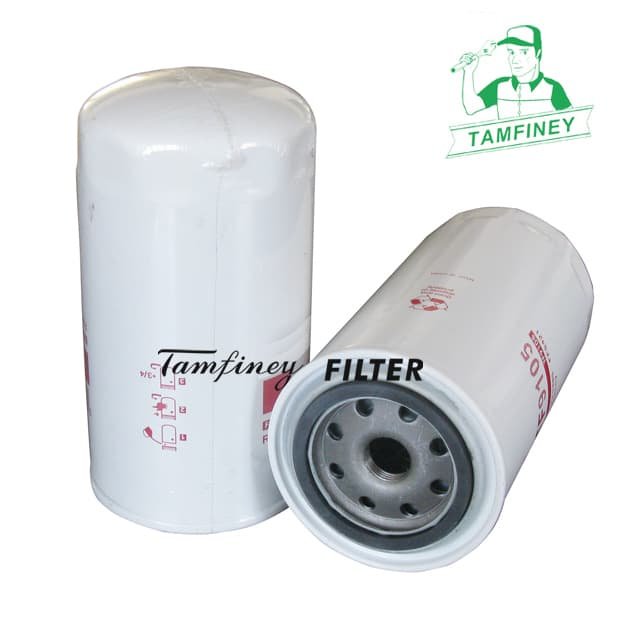
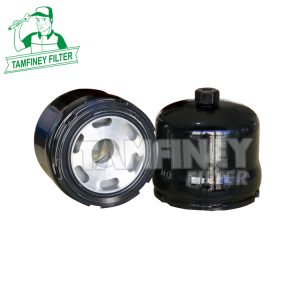
Professional CNH Fuel Filter FF5612 84167233 WK929 Fleetguard Filtro
Your Best CNH Fuel Filter FF5612 84167233 WK929 Fleetguard Filtro Fuel Filter Fuel filter manufacturer in China.
FLEETGUARD-FF165 ,FF5420 FF5632 ,FF5612 GROVE-941410755 ,9414101755 HITACHI-263F107071 ; IVECO-2992241 ,504033400 ; JCB-32/925932 LIUGONG-53C0303


| Fuel Filter FF5612 84167233 WK929 Parameter: | |
| Part Number | FF5612 84167233 WK929 |
| Brand | Tamfiney |
| Weight | 734g |
| Height | 170 mm |
| Outer Diameter | 94 mm |
| Inner Diameter/ Thread Size |
M20×1.5 |
| Minimum Order | 100 PCS |
| Place of Region: | Zhejiang, China |
| Payment Terms: | T/T |
| Price Terms: | FOB |
| Lead Time: | 30 to 50 days based on order quantities |
| Market Type: | After Market |
| Current Export Market: | Southeast Asian,North America, South America, Western Europe, Eastern Europe, Africa, Oceania |
Application:
• CASE 1121 G121 F121 F121 F-ZB1850 K21 F21 F221 F221 F321 F321 F521 E T3521 F580 SR 3580 SR 4 PT580 ST580 ST580 SV580 SV STV590 SR 2/3590 ST590 SV6150 T3621 E621 F621 G TIER 4B695 SR695 ST695
• CLAAS ARION 230ARION 410ARION 410ARION 420ARION 420 M T4ARION 430ARION 440ARION 450ARION 460AXION
• COMETRAC C 1J 6
• CUMMINS QSB 4.5QSB 4.5 TIER III
• DOOSAN DAEWOO 12/2057/205DL 06DL 06 KDL 06 PDL 06 SDL 160DL 200DL 200-3DL 250DL 250-5DX 140 LCDX 140 LC-3DX 140 LCRDX 140 LCR-3DX 140 RDX 140 WDX 140 W-3DX 140 W-5DX
• DYNAPAC CA 2500CA 2800 DCA 3500 D/PDCA 4000CA 4000 DCA 402 DCA 602CC 242 HFCC 4200CC 4200CC 424 HFCC 5200 CCC 524 HFCC 7200CC 722CP 2700F 161-8WF 181
Professional CNH Fuel Filter FF5612 84167233 WK929 Fleetguard Filtro
Welcome to Wenzhou Tamfiney Filter System Co., Limited, a professional high-quality filters manufacturer from China. We specialize in producing a wide range of filters, including air filters, fuel filters, and hydraulic filters. Our CNH Fuel Filter FF5612 84167233 WK929 Fleetguard Filtro is designed to meet the highest standards of performance and reliability. Whether you are a wholesaler, a retailer, an aftermarket service provider, or a filter store owner, this fuel filter is the perfect choice for your needs.
Features
- High-Quality Material:Made from durable and reliable materials, ensuring long-lasting performance.
- Precise Specifications:100% same as the original sample. Can 100% match with your machine.
- Efficient Filtration:Provides excellent filtration to remove impurities and contaminants from fuel, ensuring smooth engine operation.
Advantages
- Enhanced Engine Protection:By removing harmful particles from fuel, this filter helps protect your engine from damage, leading to longer engine life.
- Improved Fuel Efficiency:Clean fuel means better combustion, resulting in improved fuel efficiency and reduced operating costs.
- Easy Installation:Designed for easy installation and replacement, saving you time and effort.
Benefits
- Reliable Performance:Our fuel filter is tested and proven to provide consistent and reliable performance, ensuring your engine runs smoothly.
- Cost-Effective:By improving fuel efficiency and reducing engine wear, this filter helps you save money in the long run.
- Wide Compatibility:Suitable for various engines, making it a versatile choice for different applications.
Contact Us
For any inquiries or to place an order, please feel free to contact us through the following channels:
- WhatsApp/Wechat:+86 13958849389
- Email:Sales@filtersmfg.com
At Wenzhou Tamfiney Filter System Co., Limited , we are committed to providing high-quality CNH Fuel Filter FF5612 84167233 WK929 Fleetguard Filtro and exceptional customer service. Order your engine filters today and experience the difference in performance and reliability!
Q: Is there a wrong way to put on a fuel filter?
Yes, there are multiple incorrect installation methods for fuel filters, which may stem from misunderstandings of installation steps, direction, or position. Here are some common mistakes and their consequences, based on general principles for different types of fuel filters (such as gasoline and diesel).
• Incorrect filling of oil inside the filter:
The practice of filling the filter with oil before installation may be acceptable in oil filters, but for gasoline or diesel filters, especially diesel filters, this approach carries higher risks. Unfiltered oil may contain particulate impurities, which can directly enter the filter chamber and cause wear or blockage of the fuel injector. The correct approach is to exhaust through the exhaust valve after installation to ensure that there are no bubbles in the oil circuit.
• Incorrect installation direction (such as reverse installation):
Fuel filters are usually designed as one-way filters, and installation must strictly follow the flow arrow. If installed in reverse, fuel will enter directly from the outlet and cannot pass through the filter element, causing impurities to enter the fuel system. This can cause a decrease in oil pressure, weak acceleration, increased fuel consumption, and even engine shaking or stalling. Long term use can also shorten the lifespan of the filter.
• Improper position or pipeline layout:
Installing the filter in the wrong position, such as winding a long distance, installing it in the return pipe or high-pressure area, can cause air tightness, pressure loss or safety hazards in the oil circuit. For example, when installed in the return pipe, it is equivalent to unpurified fuel, and impurities enter the engine; Installation in high-pressure areas may cause oil leakage or pipe bursting. The correct approach is to install it near the high-pressure oil pump on the main inlet line, ensuring a short path and few joints.
• Poor sealing or failure to check installation:
Loose interface clamps and exhaust valve screws can cause oil leakage and air intake, resulting in poor oil supply. Failure to conduct stress testing or trial operation after installation may result in minor issues accumulating into malfunctions. Ensure that the installation is securely fastened in place and check for any leaks at all connections.
• Improper selection or maintenance:
Using mismatched filter models, failure to replace filter elements in a timely manner, or ignoring the inlet/outlet markings on the filter can all affect purification efficiency. For example, after the filter element becomes clogged, impurities may break through the filter element, causing high engine temperature or wear. Regularly replacing the filter element and referring to the manufacturer's instructions is key.
Q: What happens if I put my fuel filter in backwards?
The fuel filter is a one-way filtering device designed with a specific installation direction. If installed in reverse (i.e. 'backwards'), it will disrupt its normal workflow and cause a series of problems.
The main phenomena and consequences include:
• Decreased power performance: Reverse installation can lead to poor fuel circulation, especially during acceleration when there is insufficient fuel supply. The engine cannot obtain enough fuel, resulting in slow acceleration, reduced power, and significantly worse driving experience.
• Filter function failure: The filter medium cannot effectively intercept impurities and moisture, resulting in fuel system pollution. Impurities may clog fuel injectors or wear engine components, exacerbating internal wear and shortening their lifespan over time.
• Abnormal oil pressure and increased fuel consumption: Reverse installation may cause uneven or decreased oil pressure distribution, leading to unstable operation of the fuel system. To maintain operation, the fuel injector may spray more fuel, resulting in an increase in fuel consumption.
• Engine operation failure: Insufficient fuel supply and interference from impurities may cause difficulty starting, idle shaking, or sudden stall during driving, affecting vehicle stability, especially in complex road conditions where the risk is higher.
• Shortened filter life: Reverse installation can accelerate filter clogging or structural damage, causing it to fail faster than normal, increasing replacement frequency and maintenance costs.
Fuel filters usually have arrow markings indicating the direction of fuel flow, and installation must strictly follow the direction. If the installation has been reversed, it is recommended to correct it as soon as possible to avoid cumulative damage to the vehicle.
Q: What are the symptoms of having air in the fuel line?
After air enters the fuel pipeline, it will disrupt the continuous delivery of fuel and cause a series of operational abnormalities. The compressibility of air is the core reason, which can cause fluctuations and interruptions in fuel supply pressure.
Difficulty or inability to start is a common symptom. Air occupies the pipeline, obstructing fuel from reaching the combustion chamber, manifested as no signs of ignition, abnormal noise during startup, or immediate shutdown after brief operation.
Unstable operation includes fluctuations in idle speed (idle), sudden drops in power during loading, body shaking, and intermittent white or black smoke from the exhaust. These are caused by uneven fuel supply pressure leading to discontinuous combustion.
In severe cases, it may trigger a protective shutdown or cause wear and damage to the fuel injector and fuel pump due to lack of lubrication, further leading to component failure.