Get a Free Quote
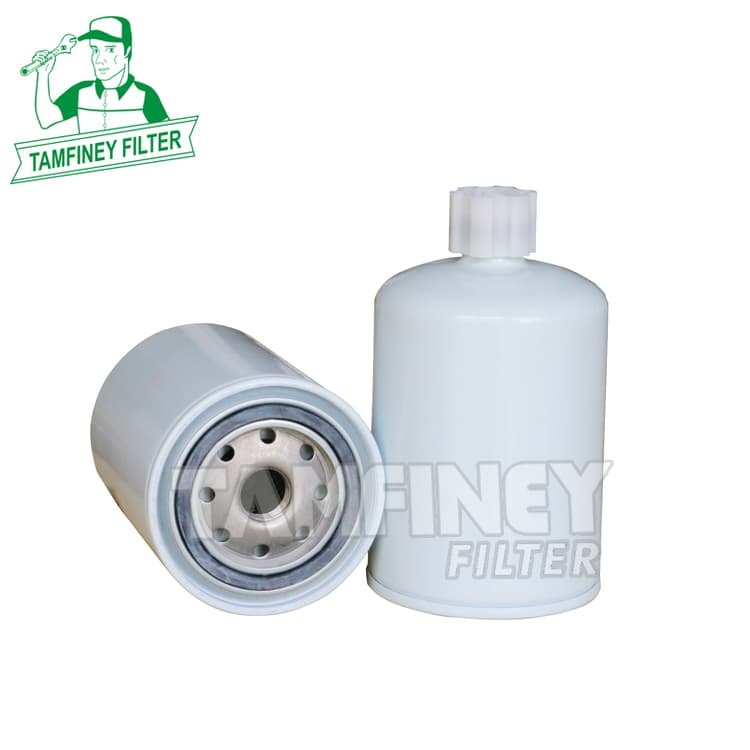
Professional Chinese Fuel Filter P551329 Fleetguard FS1275 Cross Reference
Your Best Chinese Fuel Filter P551329 Fleetguard FS1275 Cross Reference Fuel Filter manufacturer in China.
DONALDSON P551329 P550439 P172654, P550438, P551176, LONGGONG 60101100909 YUTONG 1125-00007 CASE IH J930942 A77470 CUMMINS 5296139 5268934 3890063 ,3890706 ,3903410 ,3925274 ,3930942 ,3935274


| Fuel Filter P551329 FS1275 Parameter: | |
| Part Number | P551329 FS1275 |
| Brand | Tamfiney |
| Weight | 644g |
| Height | 168 mm |
| Outer Diameter | 93 mm |
| Thread | 13/16-18 UNS-2B |
| Minimum Order | 100 PCS |
| Place of Region: | Zhejiang, China |
| Payment Terms: | T/T |
| Price Terms: | FOB |
| Lead Time: | 30 to 50 days based on order quantities |
| Market Type: | After Market |
| Current Export Market: | Southeast Asian,North America, South America, Western Europe, Eastern Europe, Africa, Oceania |
Applications:
• FOTON AUMAN CONCRETE MIXERAUMAN CONCRETE MIXERAUMAN ETX INTERCONTINENTALAUMAN ETX SHENZHOUBJ 1141BJ 1141BJ 1208BJ 1208BJ 1241BJ 3208BJ 3208BJ 3228BJ 3241BJ 3268BJ 4141BJ 4141BJ 4171BJ 4208BJ 4208BJ 4241BJ 5141BJ 5141BJ 5188FR 618FS 818 D
• FURUKAWA 335345345 SERIE II355355365510 C515 C520 C530 C540540 C659 T740 II745 IIF 659 THCR 1200 EDHCR 1500 EDHCR 900 ED
• HYUNDAI HL 17HL 25HL 730-3HL 730 TM-3HL 740-3HL 740 TM-3HL 750HL 750 TMHL 760R 120 WR 120 W-3R 130 LCR 130 LC-3R 130 WR 130 W 3R 140 LCR 140 LC-7R 140 W-7R 160 LC-3R 170 W-3R 180 LC-3R 200 LCR 200 NLC-3R 200 NLC-3HR 200 WR 200
• JCB 432 ZX456456 HT714718FASTRAC 185 TFASTRAC 3185JS 140JS 205
• KALMAR ET 120
• KAWASAKI 50 Z IV50 Z IV-260 Z IV-265 TMV65 Z IV-265 ZV
• KOBELCO SK 110 IVSK 130 LC IVSK 160 IV LC
Professional Chinese Fuel Filter P551329 Fleetguard FS1275 Cross Reference
Welcome to Wenzhou Tamfiney Filter System Co., Limited, a professional high-quality filters manufacturer from China. We specialize in producing a wide range of filters, including air filters, fuel filters, and hydraulic filters. Our Chinese Fuel Filter P551329 Fleetguard FS1275 is designed to meet the highest standards of performance and reliability. Whether you are a wholesaler, a retailer, an aftermarket service provider, or a filter store owner, this fuel filter is the perfect choice for your needs.
Features
- High-Quality Material:Made from durable and reliable materials, ensuring long-lasting performance.
- Precise Specifications:100% same as the original sample. Can 100% match with your machine.
- Efficient Filtration:Provides excellent filtration to remove impurities and contaminants from fuel, ensuring smooth engine operation.
Advantages
- Enhanced Engine Protection:By removing harmful particles from fuel, this filter helps protect your engine from damage, leading to longer engine life.
- Improved Fuel Efficiency:Clean fuel means better combustion, resulting in improved fuel efficiency and reduced operating costs.
- Easy Installation:Designed for easy installation and replacement, saving you time and effort.
Benefits
- Reliable Performance:Our fuel filter is tested and proven to provide consistent and reliable performance, ensuring your engine runs smoothly.
- Cost-Effective:By improving fuel efficiency and reducing engine wear, this filter helps you save money in the long run.
- Wide Compatibility:Suitable for various engines, making it a versatile choice for different applications.
Contact Us
For any inquiries or to place an order, please feel free to contact us through the following channels:
- WhatsApp/Wechat:+86 13958849389
- Email:Sales@filtersmfg.com
At Wenzhou Tamfiney Filter System Co., Limited , we are committed to providing high-quality Chinese Fuel Filter P551329 Fleetguard FS1275 and exceptional customer service. Order your engine filters today and experience the difference in performance and reliability!
Q: What is the difference between cheap and expensive fuel filters?
The fuel filter is a critical component in the automotive fuel system, used to filter impurities in the fuel and protect the fuel injectors and engine. There are differences between cheap and expensive fuel filters in multiple aspects, mainly reflected in materials, filtration efficiency, durability, and applicability.
* Materials and Manufacturing Processes
Cheap fuel filters typically use low-cost materials such as regular filter paper and plastic casing, with relatively simple manufacturing processes that may result in insufficient filtration accuracy or poor sealing. Expensive fuel filters often use high-performance filter materials (such as composite fiber filter paper) and metal or reinforced plastic shells, with more precise manufacturing processes that can better withstand high pressure and high temperature environments.
* Filtering effect and efficiency
Filtering efficiency is the core difference. Cheap filters may not be able to effectively intercept small particles (such as dust or metal shavings), and long-term use can easily lead to clogged fuel injectors or engine carbon deposits; Expensive filters typically have multi-layer filtering structures and higher precision (such as filtering accuracy of 5-10 microns), which can more thoroughly purify fuel, improve combustion efficiency and engine response.
* Durability and lifespan
In terms of durability, cheap filters have a shorter lifespan (possibly only 5000-10000 kilometers) due to material limitations and require frequent replacement; Expensive filters are made of corrosion-resistant materials and optimized design, with a lifespan of over 20000 kilometers, making them more economical and reliable in the long run.
* Adaptability and safety
Expensive brands such as Bosch and MAN often provide more precise vehicle adaptation solutions and reduce installation risks through strict certification (such as ISO standards); Cheap filters may have size deviations or compatibility issues, affecting sealing and even causing fuel leaks.
* Price and cost-effectiveness
The price difference directly reflects the above-mentioned differences. Cheap filters (such as 20-50 yuan) are suitable for vehicles with limited budgets or infrequent use; Expensive filters (such as those priced over 100 yuan) are more suitable for high-performance engines or harsh driving conditions, and can reduce long-term maintenance costs.
Summary and Suggestions
When choosing, it is necessary to weigh budget and demand: daily commuting vehicles can prioritize cost-effective options, while high-performance or old vehicles are recommended to invest in high-quality filters to extend engine life. Regular replacement (usually every 20000 to 40000 kilometers) is key to avoiding major losses due to minor issues.
Q: Which filter cleans more diesel, 1 micron or 10 micron?
A 1-micron filter can clean more diesel because it can filter out smaller impurity particles, providing a more thorough purification effect. The filtration accuracy is measured in micrometers, and the smaller the value, the finer the particles that can be captured. Therefore, the cleaning ability of a 1-micron filter is better than that of a 10 micron filter.
In the field of diesel filtration, filtration accuracy directly affects cleaning efficiency. For example, high-pressure common rail diesel engines typically require a filtration accuracy of 5-10 microns to ensure system stability, while a filter with a precision of 1 micron can further improve cleanliness and reduce wear on precision components. However, higher precision filters may require more frequent maintenance or replacement to balance efficiency and cost.
Q: Are all fuel filters the same?
Not all fuel filters are the same. The fuel system design of each vehicle model is unique, and there are differences in the specifications, size, interface, filtration flow rate, working principle, and adapted fuel pressure of the fuel filter.
Specifically, different vehicles have different fuel pressure requirements, which may result in differences in the structure of filters: for example, some filters are only equipped with inlet and outlet pipes, while others add return pipes to adapt to the oil pressure regulator.
Even if the appearance is similar, details such as the inner diameter and screw height of the filter may differ, making it impossible to exchange.
In addition, gasoline filters and diesel filters are usually not interchangeable due to differences in fuel characteristics and system requirements.
Therefore, when replacing the fuel filter, it is necessary to strictly match the specific specifications according to the vehicle model to ensure the normal operation of the fuel system.