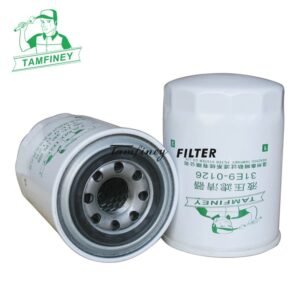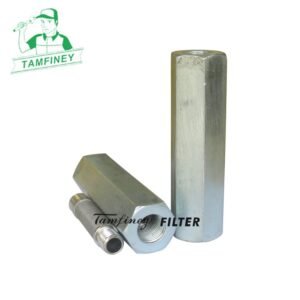


| Hydraulic Filter 5I-8670 5I-8670X BT9464 Parameter: | |
| Part Number | 5I-8670 5I-8670X BT9464 |
| Brand | Tamfiney |
| Weight | 950 g |
| Height | 155mm |
| Outer Diameter | 82mm |
| Inner Diameter/ Thread Size | M45X2.0-6H |
| Minimum Order | 100 PCS |
| Place of Region: | Zhejiang, China |
| Payment Terms: | T/T |
| Price Terms: | FOB |
| Lead Time: | 30 to 50 days based on order quantities |
| Market Type: | After Market |
| Current Export Market: | Southeast Asian,North America, South America, Western Europe, Eastern Europe, Africa, Oceania |
Applications:
CATERPILLAR 323 F323 FLN323 F SA324 D324 DL/LN324 E/LN325 C325 CNL325 D325 F326 FL328 D-LCR328 D-LCR329 D L/LN329 D LN329 E-LN330 C330 D L/LN330 F L/LN330 F L/LN335 F336 D336 D LN336 E336 E L336 F L340 F345 C349 F L XE352 F541541 SERIE II904CAT 318 F LEL 320 RRM 315 FLM 315 FLM 325 CM 325
YANMAR SA 221SA 424SA 424 DHXYT 235-QYT 235-RYT 347YT 347-QYT 347-RYT 359YT 359-QYT 359-R
HITACHI ZX 350 LC/LCN ZAXIS
Professional 25 Micron Hydraulic Filter 5I-8670 5I-8670X BT9464
Q: How does a hydraulic filter work?
Hydraulic filters use physical interception and adsorption of filter elements. They trap solid particles and gum impurities as oil flows through micropores. This purifies the oil and protects system components effectively.
Core Working Mechanism
- Contaminated oil enters the housing inlet first. It usually flows from the outer to inner side of the filter element. Clean oil flows out through the central hole smoothly. Impurities stay on or inside the filter layer.
- Filter materials like filter paper and metal mesh have tiny gaps. Impurities larger than the pore size get trapped on the surface.
- Tiny particles are caught in the fiber maze via depth filtration. Magnetic filter elements use magnets to adsorb iron scraps. Some composite filters contain activated carbon to trap polar pollutants.
- When the filter clogs, pressure difference rises sharply. The built-in bypass valve opens automatically at set threshold. This prevents filter rupture and pump empty suction reliably. Unfiltered oil still circulates through the system at this moment.
Key Process Features
- Pressure difference between inlet and outlet rises as impurities pile up. It triggers an alarm or reminds users to replace the filter element. High-quality filters use gradient density structures to maximize dirt holding capacity. This extends the service life of the filter significantly.
- Without check valves or bypass designs, severe clogging causes sharp flow drop. It leads to component cavitation or filter element breakdown easily.
Comparison of main filtering types
Surface type (mesh type, Suction Strainer): Impurities stop on the surface of the filter material, with low accuracy but high flux, easy to clean, commonly used in oil suction ports.
Deep type (Return Filter, Hydraulic Transmission filter,Pilot filter): Impurities penetrate into the interior of the filter layer, with high precision and large capacity for dirt, but you cannot clean and needs to replace. You can use these filters for high pressure or fine filtration.
Magnetic type: specializing in ferromagnetic particles, often used as an auxiliary means in conjunction with other filter cartridges.
About 75% of hydraulic system failures are the reason of oil contamination. Filters maintain oil cleanliness by continuously removing wear debris, seal residue, and external intruders to ensure that component clearances (micrometer level) are not stuck or worn.
Q: How to change hydraulic filter?
The core steps for replacing the hydraulic filter are: stop the machine to release pressure → drain residual oil → remove the old core → clean the housing → install a new core (replace the seal) → leak test. You are strictly ask to operate under pressure and the filter element model must match the seal.
Standard Operating Procedure
- Safety preparation and pressure relief: Park the equipment on a level surface, turn off the engine and power off; Operate the joystick multiple times to release residual pressure in the pipeline, confirm that the pressure gauge is reset to zero, and if necessary, open the exhaust valve or loosen the connector to release a small amount of air until no oil mist sprays out.
- Drain residual oil and disassemble: Place an oil pan under the filter, unscrew the bottom drain plug or filter bottle; Unscrew the filter housing counterclockwise/loosen the fixing bolts, carefully remove the old filter element, and be careful not to let impurities fall into the interior of the housing.
- Cleaning and inspection: Use a clean cloth to wipe the inside of the filter housing and sealing groove, and check the contamination of the old filter element (if there is metal powder, check the system wear); It is strictly prohibited to clean disposable filter cartridges and reuse them.
- Install new filter element: Apply a small amount of clean hydraulic oil on the sealing ring of the new filter element, manually screw in or insert the new filter element, and ensure that it is installed in place; Tighten the filter housing bolts or filter bottles in diagonal order to the specified torque, and replace aging or damaged O-rings.
- Reset and test: Clean up the site, start the equipment to run at low speed, and observe whether there is any leakage in the filter area; After running for a few minutes, check the fastening situation again to confirm that the system pressure is normal and there is no abnormal noise.
Key precautions
- Model matching: Check the complete code of the filter element (including accuracy, size, material suffix). High pressure, return oil, and suction filter elements cannot be mixed. Incorrect installation can cause seal failure or filter element collapse.
- Replacement timing: Usually, the oil suction filter should be replaced every 2000 hours, the return filter should be replaced every 500 hours after the first 250 hours, or immediately when the pressure difference indicator alarms/turns red; Severe working conditions require a shortened cycle.
- Anti pollution measures: Clean the outside of the filter bottle before opening the box, avoid dust from entering during installation, and filter the new oil before filling to prevent secondary pollution.
The structure of different equipment (such as excavators and hydraulic stations) may vary slightly. Please refer to the original equipment maintenance manual for specific locations and torque parameters. If high-pressure pipeline filter elements are involved, they must be operated by professionals to prevent high-pressure spray injuries.