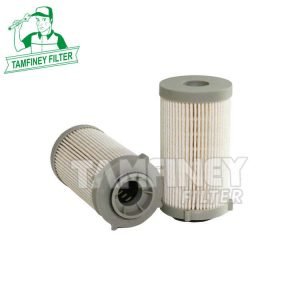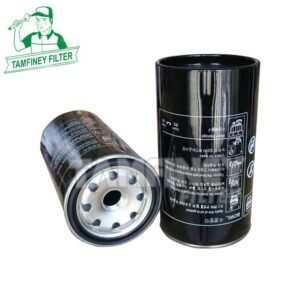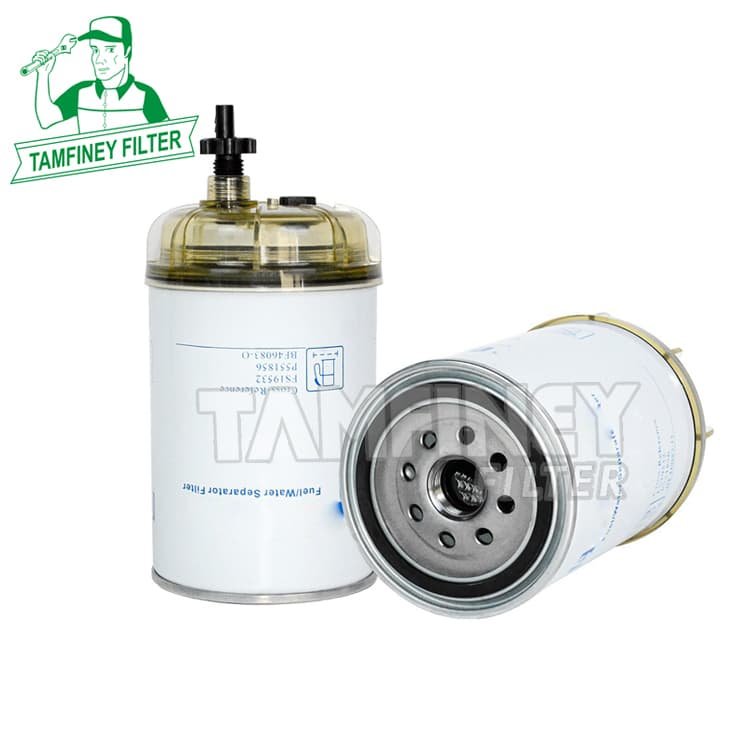



| Fuel Filter AT433550 RE500186 BF1349 BF1390-O Parameter: | |
| Part Number | AT433550 RE500186 BF1349 BF1390-O |
| Brand | Tamfiney |
| Weight | 845g |
| Height | 155mm |
| Outer Diameter | 108mm |
| Inner Diameter/ Thread Size | 1-14 3 3/4-10 BUTT |
| Minimum Order | 100 PCS |
| Place of Region: | Zhejiang, China |
| Payment Terms: | T/T |
| Price Terms: | FOB |
| Lead Time: | 30 to 50 days based on order quantities |
| Market Type: | After Market |
| Current Export Market: | Southeast Asian,North America, South America, Western Europe, Eastern Europe, Africa, Oceania |
Applications:
INGERSOLL RAND G 440SD 122 DXSD 160 DX
JENZ AZ 660 DAZ 660 DBA 720BA 725 DHEM 561 DKHEM 700 DNZ 1600 DNZ 1600 DTREX 5000TREX 5000
JOHN DEERE 6125 A6125 H
KLEEMANN REINER MC 110 Zi EVOMC 120 MOBICATMF 14MOBICAT MC 125 ZMR 100 RMR 100 ZMR 110 Z EVOMR 110 Z EVOMR 122 RRMR 122 ZMR 122 ZMR 130 ZMR 130 ZHMR 130 ZS EVOMR 130 ZS EVO 1MRB 122MRB 1302 V
Professional AT433550 Fuel Filter RE500186 BF1349 BF1390-O for John Deere
Q: What machines use the AT433550 filter?
AT433550 is used in various John Deere equipment, including:
- Excavators: 130G, 130GLC, 160G, 160GLC, 180GLC, 200G, 210G, 210GLC, 250GLC, 350GLC.
- Backhoe Loaders: 310K, 310L.
- Engines: 4045, 6068, 6090.
Q: Are expensive fuel filters worth it?
Whether it is worth purchasing an expensive fuel filter depends on a comprehensive judgment of the vehicle model positioning, usage environment, oil quality, and long-term cost-effectiveness.
1. Advantages of high-price filters
• Higher filtration accuracy: As demonstrated in the disassembly case of Truck Home, the thousand-yuan diesel filter utilizes composite filter paper, achieving a coarse filtration accuracy of 10 microns and a fine filtration accuracy of 4 microns, effectively intercepting tiny impurities.
• High durability: The high-end filter element features a stronger structure (such as a metal braided layer), which maintains its toughness even after 100,000 kilometers of use, making it suitable for high loads or harsh working conditions.
• Brand assurance: Filters from original manufacturers or renowned brands undergo stricter quality control, reducing the risk of counterfeit goods.
II. Limitations of high-priced filters
• Low cost-effectiveness: When ordinary family cars use regular gasoline from official gas stations (such as PetroChina and Sinopec) that meets the National VI standard, the impurity content is relatively low, and a low-priced external filter (priced between $8 and $30) can already meet the demand.
• Over-design exists: Some high-priced filters (such as a $250 diesel filter) have excellent performance, but they are designed for heavy-duty trucks or special operating conditions, and their use in ordinary cars is a waste.
• Built-in filter element does not require frequent replacement: If the vehicle has a built-in filter (integrated into the fuel tank), its design life is usually 80,000 to 100,000 kilometers. The replacement cost is high (US$150-250), but there is no need to replace it prematurely due to its high cost.
III. Practical Suggestions
1. Ordinary family car:
o Prefer external filters, priced between $10 and $20, and replace them every 20,000 to 40,000 kilometers.
If refueling is done at a regular gas station for a long period of time, the interval can be appropriately extended to 50,000 kilometers.
2. High-end models or diesel vehicles:
If the manufacturer recommends the use of a specific high-priced filter (such as $30-80), it is recommended to replace it according to specifications to protect the precision fuel injection system.
3. Be wary of excessive maintenance:
If the built-in filter does not exhibit symptoms such as reduced power or difficulty starting, and the mileage has not reached 80,000 to 100,000 kilometers, there is no need to replace it prematurely.
Avoid being lured by 4S shops into believing that "it must be changed every 10,000 kilometers".
Q: Which is better, 5 micron or 20 micron?
In fuel filters, whether 5 micron or 20 micron is better depends on the vehicle type, engine technology, and usage environment. The two are not absolutely superior or inferior, but rather differ in their applicable scenarios:
• 5 micron filter
o Advantages: It can intercept finer impurities (such as metal debris, colloids, etc.), protecting precision components such as high-pressure common rail systems and direct injection nozzles in the cylinder.
o Applicable scenarios:
High-performance gasoline engines (such as turbocharged direct injection models)
High-pressure common rail diesel engines (requiring filtration of ≥3–5 micron particles)
Areas with poor fuel quality or harsh road conditions
• 20 micron filter
o Advantages: Less filtration resistance, good fuel flowability, suitable for daily driving; typically lower cost.
o Applicable scenarios:
Ordinary family cars (multi-point electronic fuel injection, non-direct injection)
Old engines with fuel systems that have a high tolerance for impurities