Get a Free Quote

Premium Agco Oil Filter 837079728 V837079728 WL10346 837081317
Your best Agco Oil Filter 837079728 V837079728 WL10346 837081317 Oil filter manufacturer in China.
MASSEY FERGUSON 837081317 837079728 V837079728 V837081317 837086176 V837086176 Donaldson P959219 Wix WL10346 P96074 Agco 837079728 Amazon B0CWGLZHS6 Iseki BC8370813170


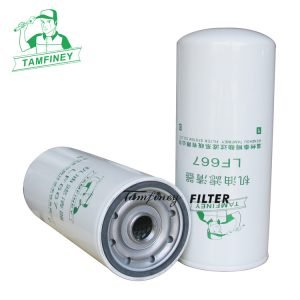
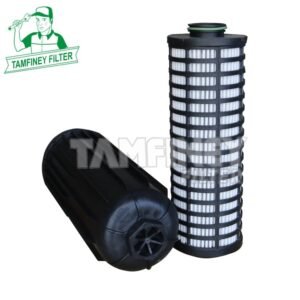
| Oil Filter 837079728 V837079728 WL10346 837081317 Parameter: | |
| Part Number | 837079728 V837079728 WL10346 837081317 |
| Brand | Tamfiney |
| Height | 125 mm |
| Outer Diameter | 112 mm |
| Inner Diameter/Thread Size | M22 x 1.5 |
| Minimum Order | 100 pcs |
| Place of Region: | Zhejiang, China |
| Payment Terms: | T/T |
| Price Terms: | FOB |
| Lead Time: | 30 to 50 days based on order quantities |
| Market Type: | After Market |
| Current Export Market: | North America, South America, Western Europe, Eastern Europe, Africa, Oceania |
Application:
• AGCO POWER 44 MBTN
• ISEKI TJA 8080TJA 8090TJA 8100
• MASSEY FERGUSON DYNA 45611 DYNA 45611 DYNA 65612 DYNA5612 DYNA 45612 DYNA 65613 DYNA 45613 DYNA 657095709 S Dyna-45709 SL Dyna-457105710 S Dyna-4
• SISU ECO 33 AWIC
• VALTRA A 104G 105G 105 VersuG 115 VersuG 125G 125 E-VersuG 135G 135 Versu
Premium Agco Oil Filter 837079728 V837079728 WL10346 837081317
Unmatched Protection with Agco Oil Filters
Maintaining peak engine condition demands consistent oil filtration. Because dirty oil undermines machinery, the Agco Oil Filter 837079728 has become a preferred choice among farmers and technicians. Furthermore, this core filter keeps engines performing smoothly throughout challenging tasks. Instead of risking expensive engine issues, investing in high-quality filtration saves time and money. Moreover, reliable oil filters enhance operational efficiency and help extend machinery lifespans.
Comprehensive Compatibility Solutions for Agco Equipment
Although 837079728 leads the market, several alternatives suit varying engine specifications. For instance, V837079728 serves specific models that require extra filtration strength. Additionally, WL10346 is highly valued for its durability in demanding conditions. Besides that, 837081317 provides seamless performance with older Agco engines. As the needs of your operation shift, choosing the right Agco Oil Filter guarantees consistent results. Consequently, TAMFINEY’s product range offers ideal compatibility for every Agco application.
The Importance of Advanced Oil Filtration Technology
Oil impurities pose a critical threat to engine components. However, Agco Oil Filters efficiently trap harmful particles before they cause damage. Furthermore, switching to 837079728 or V837079728 minimizes engine wear by maintaining cleaner oil flow. In addition, using filters such as WL10346 supports lower maintenance costs and extends service intervals. Ultimately, instead of enduring repeated breakdowns, proactive filtration safeguards engines for the long term.
Why TAMFINEY Excels in Oil Filter Innovation
At TAMFINEY, product reliability remains the highest priority. Because every Agco Oil Filter is rigorously tested, confidence in filtration quality is assured. Besides manufacturing to global standards, TAMFINEY filters—like 837079728 and 837081317—are built for endurance and precise fit. Moreover, our dedicated support team helps customers match the right filter for their machinery. Instead of uncertainty, TAMFINEY ensures expert care with comprehensive aftersales solutions.
Easy Installation for Quick Maintenance Turnaround
Oil filter replacement should never be a complex process. First, stop the engine and let it cool before beginning. Next, carefully remove the old filter, avoiding spillage and contaminants. Afterward, install the new Agco Oil Filter 837079728, securing it tightly for leak-free operation. Additionally, always check for leaks and run the engine to verify installation success. As a result, TAMFINEY’s filters streamline maintenance, allowing operators to resume work swiftly.
Sustainable Choices with Comprehensive Customer Support
Because sustainability shapes TAMFINEY’s business, our oil filters use environmentally-friendly materials and manufacturing methods. Furthermore, choosing compatible filters—such as WL10346 or 837081317—reduces waste and improves resource management. In addition, TAMFINEY’s expert staff assist customers in selecting ideal filters for unique requirements. Instead of generic replies, clients receive timely, specialized advice and dependable service throughout their ownership experience.
Enjoy Long-Lasting Engine Protection with TAMFINEY Filters
In summary, routine oil filtration is essential for reliable engine function and longevity. Whether your fleet demands 837079728, V837079728, WL10346, or 837081317, TAMFINEY delivers proven products to meet every need. Because our company emphasizes quality, compatibility, and total support, Agco machinery benefits from reduced downtime and superior protection. Instead of encountering unexpected failures, trust TAMFINEY Oil Filters to keep your engines running strong through every high-pressure job and demanding season.
Q: How long does the average oil filter last?
The average lifespan of an oil filter is not fixed and depends mainly on factors such as the type of oil, driving environment, and engine type. Overall, its replacement cycle is usually synchronized with the oil change cycle, but the specific differences are significant.
The following is a summary based on common situations:
• Classified by oil type:
Mineral engine oil: It is recommended to replace it every 3000-5000 kilometers or every 6 months.
• O Semi synthetic engine oil: It is recommended to replace it every 5000-7000 kilometers or every 6 months.
• Fully synthetic engine oil: It is recommended to replace it every 8000-10000 kilometers or every 8-9 months.
According to general maintenance experience, many sources indicate that the replacement cycle of the oil filter is approximately 1 year or 10000 kilometers.
Special attention should be paid to the following situations:
If your vehicle is frequently driven in harsh environments, such as frequent traffic jams, sandstorms, or in high temperature and cold areas, the oil filter will accumulate impurities faster. It is recommended to shorten the replacement cycle appropriately, such as replacing it after driving 5000-8000 kilometers.
Important Notice:
The oil filter is used in conjunction with the engine oil. It is recommended to replace the oil filter every time the oil is changed to ensure the cleanliness of the new oil and fully utilize its protective effect on the engine. Even if the mileage has not reached the replacement standard, if the recommended cycle (such as six months) has been exceeded, replacement should still be carried out.
The most reliable way to obtain the most accurate advice is to consult your vehicle user manual, as different brands and models of vehicles may have different requirements for oil filter replacement.
Q: Can I use the same oil filter twice?
It is not recommended that you reuse the same oil filter. Every time the oil is changed, a new oil filter should be replaced at the same time.
Why can't the oil filter be reused?
The main function of an oil filter is to filter impurities, metal shavings, and dust from the engine oil to protect its normal operation. If reused, it will bring the following main problems:
• Decreased filtration efficiency: Used filters can accumulate a large amount of pollutants, leading to clogged filter media and increased resistance. This will cause poor oil circulation, decrease lubrication effect, and instead increase the risk of engine wear.
• Pollution of new engine oil: The residual pollutants in the old filter will mix into the newly replaced engine oil, causing the new engine oil to quickly fail and unable to provide optimal protection.
• Sealing performance failure: The sealing ring on the filter will be compressed during the first installation to form a tight seal. After repeated use, the elasticity of the sealing ring may be lost, which may lead to oil leakage.
• Potential engine damage: Taking into account the above factors, repeated use of the filter may cause high engine temperatures, decreased power, and even more severe mechanical damage. Ultimately, the repair cost will be much higher than replacing the filter itself.
Q: How tight should an oil filter be?
The tightening degree of the oil filter is crucial to ensure sealing and prevent oil leakage, while also avoiding excessive tightening that may cause damage. The following are comprehensive recommendations:
General tightening method
General operating steps: First, tighten the oil filter by hand until the sealing ring contacts and preliminarily adheres to the installation surface; Then use a wrench to tighten an additional three-quarters of a turn (approximately 135 degrees). This method is applicable to most car models and can balance sealing and safety.
• Torque reference: The recommended torque range for some models (such as Mitsubishi Jinxuan) is 20-25 Nm. If your vehicle has specific torque requirements, it is recommended to prioritize referring to the vehicle manual.
Key precautions
1. Avoid excessive tightening:
Tightly tightening may damage the sealing ring, cause the filter housing to rupture, and instead lead to oil leakage or engine damage.
If tightened too loosely, an effective seal cannot be formed and oil may leak out.
2. Preparation before installation:
Ensure that the installation surface is clean and free of impurities to avoid foreign objects affecting the seal.
Apply a small amount of fresh engine oil on the sealing ring of the new filter to enhance sealing and smooth installation. five
3. Inspection and verification:
After installation, start the engine and check for signs of oil leakage. If there are any problems, stop the machine immediately for troubleshooting.
Special case handling
If there is no torque wrench, one can rely on the empirical method of "hand tightening+three-quarters turn of wrench", but it is necessary to maintain even force.
Different vehicle models may have differences, and if the vehicle manual has clear torque values (such as certain German or Japanese cars), the manual should prevail. Proper installation can extend the life of the engine. If oil leakage occurs due to improper operation, it is necessary to check whether the sealing ring is damaged or whether the installation is in place