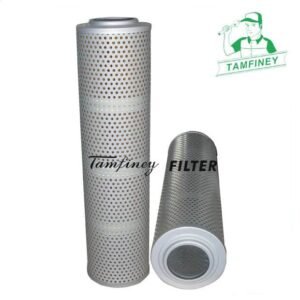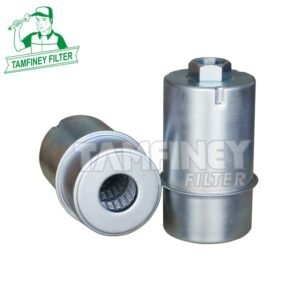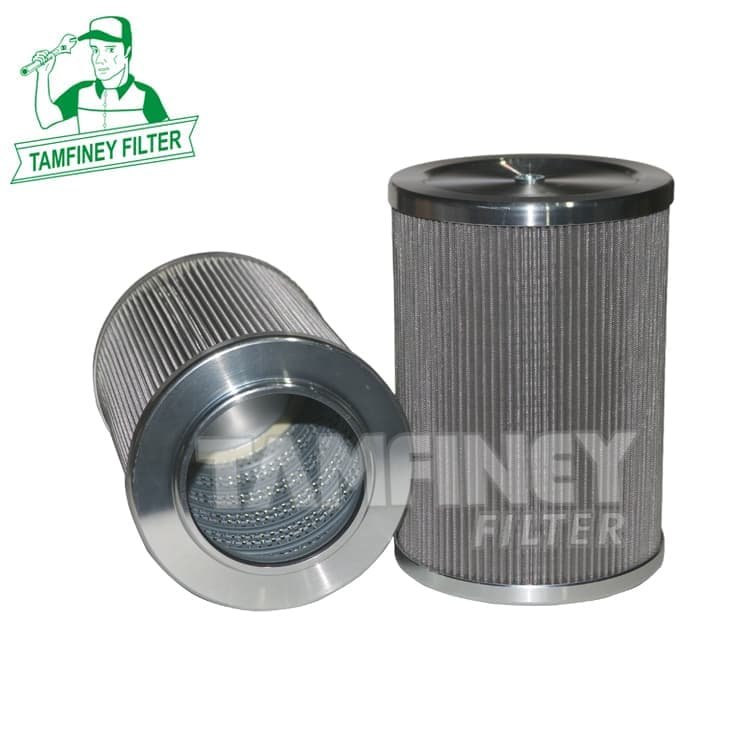



| Hydraulic Filter 53C0658 SH85905 Parameter: | |
| Part Number | 53C0658 SH85905 |
| Brand | Tamfiney |
| Weight | 1880 g |
| Height | 240/245 mm |
| Outer Diameter | 168 mm |
| Inner Diameter | 104/M10*1.5 |
| Material | Metal & Strainless Steel |
| Filter Media | Strainless Steel cloth with Strainless steel blend |
| Typical Working Pressure | Up to approx. 6–10 bar |
| Filtration | Approx. 5–10 micron |
| Temperature Rating | Up to approx. 100–120°C |
| Minimum Order | 100 PCS |
| Place of Region: | Zhejiang, China |
| Payment Terms: | T/T |
| Price Terms: | FOB |
| Lead Time: | 30 to 50 days based on order quantities |
| Market Type: | After Market |
| Current Export Market: | Southeast Asian,North America, South America, Western Europe, Eastern Europe, Africa, Oceania |
Applications:
LiuGong CLG930E, 933E, 936E, 948, 950, 952, and 956
Professional 53C0658 Low Pressure Filters SH85905
Q: How does a pressure filter work?
The principle of a pressure filter is to use the pressure difference to remove impurities from liquids or gases. It uses the pressure difference on both sides of the filter medium as a driving force to make the fluid flow from the high pressure side to the low pressure side. Solid particles or impurities are intercepted by the filter screen,or filter material, and clean fluid.
🔧 Basic workflow
- Feed: Liquid with impurities enters the closed tank or pipeline of the filter under the action of pump or system pressure.
- Interception and filtration: The fluid passes through the internal filtering medium (such as quartz sand, activated carbon, filter screen, filter cloth, etc.), and impurities are trapped on the surface or inside of the medium. The clean fluid flows out from the outlet.
- Discharge/cleaning: As impurities accumulate, the pressure difference between the inlet and outlet will increase. At this time, cleaning is needed - some directly disassemble the filter cartridge for cleaning, some use backwashing to wash away impurities, and some have automatic drainage.
⚠️ Places to pay attention to
- Pressure difference is the key to check the time of cleaning: when the inlet and outlet pressure difference reaches the set value, it indicates that the filter element or filter material is severely clogged and needs to be cleaned or replaced in a timely manner, otherwise it will affect the flow rate and protection effect.
- The higher the pressure, the better: Increasing the pressure appropriately can accelerate filtration, but excessive pressure may damage the filter cloth or push impurities into the deep layers of the medium, which in turn affects the effectiveness.
- Maintenance frequency depends on operating conditions: the higher the filtration accuracy and the more impurities, the more frequent the cleaning. Regularly check the breathability and integrity of the filter material to ensure stable operation.
Q: What are the different types of pressure filters?
Pressure filters can be classified into different types based on three dimensions: filling medium, working pressure, and structural function, covering various industrial scenarios such as water treatment and hydraulic systems.
Divided by work pressure level
- Low pressure filter: Representative models, with a maximum pressure tolerance of 60bar, suitable for low-pressure fluid filtration scenarios. Such as Suction strainer and Renturn filters.
- Medium pressure filter: representative, with a maximum withstand pressure of up to 210 bar, commonly used in conventional industrial hydraulic systems.
- High pressure filter: representative, with a maximum pressure tolerance of 450 bar, suitable for hydraulic and fluid conveying systems under high-pressure conditions. Such as Pilot filters.