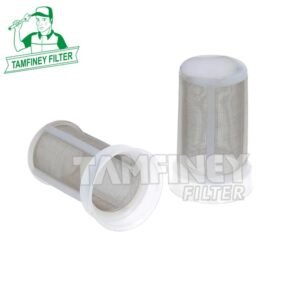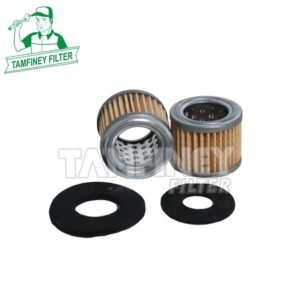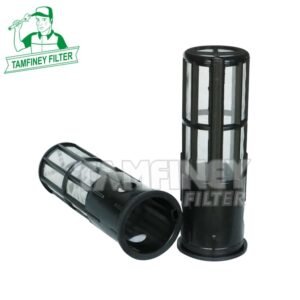

| Fuel Strainer 471-00105A 2471-9046 801140321 Parameter: | |
| Part Number | 471-00105A 2471-9046 801140321 |
| Brand | Tamfiney |
| Weight | 168g |
| Height | 167 mm |
| Outer Diameter | 84 mm |
| Inner Diameter/ Thread Size | 67 mm |
| Minimum Order | 100 PCS |
| Place of Region: | Zhejiang, China |
| Payment Terms: | T/T |
| Price Terms: | FOB |
| Lead Time: | 30 to 50 days based on order quantities |
| Market Type: | After Market |
| Current Export Market: | Southeast Asian,North America, South America, Western Europe, Eastern Europe, Africa, Oceania |
Applications:
BOBCAT E 62E 62E 63E 63E 85E 85
DEVELON DX 62 R-3DX 63-3DX 85 R-3
DOOSAN DX 62 R-3DX 62 R-3DX 63-3DX 85 R-3
DOOSAN DAEWOO DX 55 W-5DX 57 W-5SOLAR 340 LC-V
JOHN DEERE 210 P Gen A250 P Gen A776081008200844 JCP 770T5 400T5 500T5 600T5 700T6 500T6 600T6 700T6 800W 200 MW 235 MW 235 RW 260 MW 260 R
Professional 471-00105A Fuel Tank Fuel Filter 2471-9046 801140321
Q: Do In-Tank Fuel Filters Need to be Replaced?
Yes, you do. The in-tank fuel filter needs to be replaced, and there is no true "lifetime maintenance free" policy, but the replacement cycle is relatively long (usually 60000 to 100000 kilometers).
• Must be replaced: Although the built-in filter element has a long service life, the accumulation of impurities can lead to increased filtering resistance, insufficient fuel supply pressure, difficulty starting, decreased power, stalling, and even damage to the high-pressure fuel pump/injector.
• Cycle reference: You can inspect or replace after 60000 to 80000 kilometers; Some models with good fuel quality and good road conditions can be 100000 kilometers; If you frequently add low-quality oil or direct injection engines it may require 40000 to 60000 kilometers of advance treatment.
Misunderstanding of "maintenance free": The manufacturer's so-called "lifetime maintenance free" usually refers to "no need to replace the fuel pump within its service life", rather than permanently not replacing it; If the oil pump is good but the filter element is blocked, you still need to replac separately or together with the pump assembly.
Q: How do u do the fuel filter testing?
Fuel filter testing can be laboratory performance testing (requiring a professional bench) and on-board fault diagnosis (maintenance scenario), with the core being to determine the status by measuring the inlet and outlet pressure difference, filtration efficiency, and sealing; Private cars cannot reproduce laboratory standard tests, and are mainly indirectly judged for blockage through fuel pressure testing.
Car mounted simple diagnostic process (determine if there is blockage/replacement required)
1. System pressure relief: Turn off the ignition switch, unplug the fuel pump fuse or relay, start the engine until the engine is turned off to release the residual pressure in the pipeline.
2. Connect the pressure gauge: Find the test interface (Schrader valve) near the fuel rail or filter, install the fuel pressure gauge, and ensure that the connection is sealed.
3. Measure dynamic pressure: Start the engine to normal operating temperature, record the fuel pressure values at idle and acceleration, and compare them with the standard range in the maintenance manual (usually 250-350kPa for gasoline vehicles, depending on the model).
4. Measuring pressure difference (key): If conditions permit, connect gauges at the inlet and outlet of the filter separately. Normally, the pressure difference of a brand new filter is extremely small (usually<20kPa); If the pressure difference is significantly too large or the total system pressure is low and the oil pump fault is out, it indicates that your filter is dirty.
5. Pressure holding test: After turning off the engine, observe the pressure holding situation. If the pressure drops too quickly, it may involve fuel injector leakage or one-way valve failure, and a comprehensive judgment should base on the pressure difference.
6. Appearance inspection: Check whether the filter housing is bad or leaking, and whether the bottom sedimentation cup (if any) has a large amount of impurities or moisture.
Professional laboratory testing projects (executed by manufacturers/quality inspection agencies)
• Filtration efficiency: Inject fuel containing standard particle size impurities and measure interception rate using a particle counter.
• Pollutant holding capacity: Continuously introduce fuel containing impurities until the pressure difference reaches the limit, and calculate the total mass of impurities held.
• Original resistance: Measure the inlet and outlet pressure difference of the clean filter at standard flow rate (such as rated flow rate) and temperature (25 ± 2 ° C).
• Sealing and pressure resistance: Conduct air tightness and burst pressure tests to ensure no leakage and that the shell strength meets the standard.
• Pulse fatigue: Simulate engine operating conditions and apply periodic pressure changes to test the ability to resist fatigue cracks.