
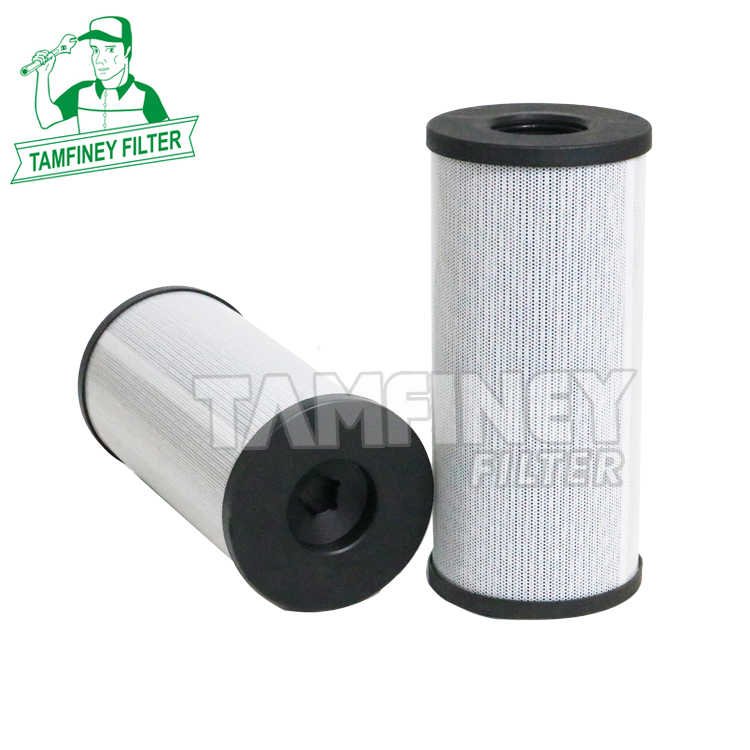



| Hydraulic Filter 3283655 P573354 PT9429MPG WL10009 Parameter: | |
| Part Number | 3283655 P573354 PT9429MPG WL10009 |
| Brand | Tamfiney |
| Weight | 1348 g |
| Height | 266 mm |
| Outer Diameter | 125 mm |
| Inner Diameter/ Thread Size | 51 mm |
| Minimum Order | 100 PCS |
| Place of Region: | Zhejiang, China |
| Payment Terms: | T/T |
| Price Terms: | FOB |
| Lead Time: | 30 to 50 days based on order quantities |
| Market Type: | After Market |
| Current Export Market: | Southeast Asian,North America, South America, Western Europe, Eastern Europe, Africa, Oceania |
Applications:
- Track-Type Tractors & Pipelayers: D6N, D6R, D6T, D7R II, D8T, D9T, D10T, 583T, 587T, 587R, 572R II
- Off-Highway Trucks: 773F, 775F, 777F, 793F, 797F
- Motor Graders: 12H, 120H, 135H, 143H, 163H, 12K, 120K, 140K, 160H, 14M, 160K
- Wheel Loaders: 966H, 972H, 980H
Professional 3283655 Hydraulic Oil Filter Cartridge P573354 PT9429MPG WL10009
Q: How often should you change a hydraulic filter?
Hydraulic filters do not have a fixed uniform cycle and need to be judged comprehensively based on the type of filter element, working hours, and pressure difference alarm; The regular oil return filter element must be replaced after 250 hours of initial replacement, and every 500 hours thereafter. The oil suction filter element must be replaced every 2000 hours. If the pressure difference exceeds 0.35 MPa or the oil is changed, it must be replaced immediately.
Core replacement standard
- Return filter element: Replace it after the first 250 hours of operation of the new machine or cleaning, and then replace it every 500 hours thereafter.
- Suction Strainer: usually replaced every 2000 hours of operation .
- Pilot/high-pressure filter element: It is recommended to check or replace it every 100-250 hours under harsh working conditions.
- Mandatory replacement triggering conditions: differential pressure indicator alarm (usually>0.35MPa), abnormal noise/slow operation of the system during hydraulic oil replacement, and excessive cleanliness of the oil detection.
Key factors affecting the cycle
- Working environment: With high dust and heavy loads (in mines and steel mills), it is necessary to shorten the cycle and rely on oil sampling and testing to determine; The clean environment can be appropriately extended.
- Synchronization principle: When replacing hydraulic oil, all filter elements (suction, return, pilot) must be replaced synchronously, and it is strictly prohibited to mix old and new filter elements.
- Monitoring method: prioritize according to the equipment manual specifications; When there is no clear data, make a scientific decision based on the readings of the differential pressure gauge and regular oil contamination testing.
Do not estimate based solely on "month/year" time, it must be based on working hours and actual blockage conditions, otherwise it is highly likely to cause pump body wear or system failure
Q: Can you use a regular automotive oil filter for a hydraulic system?
Regular automotive oil filters cannot be used in hydraulic systems, as there are essential differences in design standards, pressure resistance, filtration accuracy, and material compatibility between the two. Mixing them can cause filter element rupture, system blockage, or seal damage.
- Different pressure resistance levels: Automotive oil filters are usually designed for engine lubrication systems (pressure generally<0.5MPa, bypass valve opening pressure is lower); The working pressure of hydraulic systems is often between 10-35MPa or even higher, and ordinary filter housings are prone to bursting or sealing failure.
- Mismatch between filtration accuracy and characteristics: Hydraulic oil requires extremely high cleanliness (often 3-15 μ m accuracy), and it is necessary to prevent small particles from jamming the valve core; Machine filters focus on intercepting larger impurities and tolerate a certain bypass flow rate, but cannot provide the stable high-precision filtration required by hydraulic systems.
- Material compatibility issue: The hydraulic oil additive system is different from engine oil, and the filter paper and rubber seal ring may not be resistant to hydraulic oil corrosion, leading to swelling, aging, or filter material detachment and contamination of the system.
- Structural and functional deficiencies: Hydraulic filter cartridges often require anti pulse fatigue, specific flow direction identification, and blockage indication functions. Mechanical filters lack corresponding design, and reverse installation or blockage may cause pump suction or overload.


