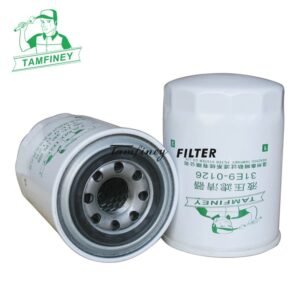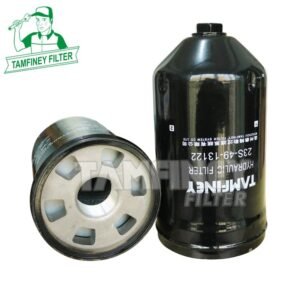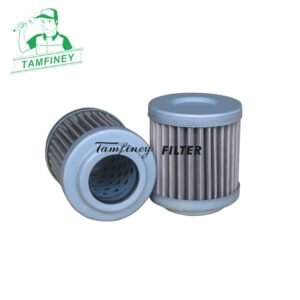


| Hydraulic Filter 31Q6-01280 31Q601280 R010109 SFH1280 Parameter: | |
| Part Number | 31Q6-01280 31Q601280 R010109 SFH1280 |
| Brand | Tamfiney |
| Weight | 2965g |
| Height | 445 mm |
| Outer Diameter | 150 mm |
| Inner Diameter/ Thread Size | 83 mm |
| Minimum Order | 100 PCS |
| Place of Region: | Zhejiang, China |
| Payment Terms: | T/T |
| Price Terms: | FOB |
| Lead Time: | 30 to 50 days based on order quantities |
| Market Type: | After Market |
| Current Export Market: | Southeast Asian,North America, South America, Western Europe, Eastern Europe, Africa, Oceania |
Applications:
HYUNDAI HL 770-9R 110-7R 110-7AR 110 D-7R 140 LC-7R 140 LC-7AR 140 LC-9AR 280 LCR 290 LC-9R 290 LC-9 MHR 290 NLC-9R 300 LC-9SR 320 LC-9R 320 NLC-9R 330 LC-9AR 330 LC-9S
Professional 31Q6-01280 Hydraulic Tank Return Filter 31Q601280 R010109 SFH1280
Q: What is the function of the return line filter?
The function of the return oil filter is to intercept pollutants (metal particles, rubber impurities, etc.) in the hydraulic system's return oil, prevent them from returning to the oil tank, thereby keeping the oil clean, protecting precision components, and extending the system's lifespan.
The specific functions include:
- Filter out wear products: Capture metal debris generated during the operation of hydraulic pumps, cylinders, valves, and other components, as well as rubber particles from seal detachment;
- Maintain the cleanliness of the oil: Ensure that the oil flowing back to the tank meets the cleaning standards and avoids the circulation of pollutants that can exacerbate wear and tear;
- Protect key components: prevent impurities from entering the fuel tank and being sucked back into the pump or blocking precision components such as servo/proportional valves;
- Auxiliary system stability: Some models integrate bypass valves (to prevent blockage and pressure build-up), check valves (to prevent core replacement and oil leakage), magnets (to adsorb iron filings), and diffusers (to reduce bubbles) to improve operational reliability.
This equipment is usually installed at the end of the return oil pipeline or at the top/inside of the oil tank, with a low working pressure (generally ≤ 1.6MPa) and a filtration accuracy of 3-30 μ m. It needs to be regularly maintained and replaced with a pressure differential transmitter.
Q: How much pressure is on a hydraulic return line?
The pressure of the hydraulic return pipe is usually 0.03~0.35 MPa (about 0.3~3.5 bar), and the ideal design value is often controlled below 0.1 MPa, depending on the system back pressure, filter resistance, and pipeline layout.
Core pressure range and causes
- Normal operating conditions: Most industrial hydraulic systems are designed with a return oil back pressure of 0.03~0.1 MPa, which is only used to overcome losses along the pipeline, local losses at bends, and resistance from return oil filters.
- Upper limit threshold: If equipped with a return oil filter, its rated working pressure can reach 2.5 MPa, but the actual operating back pressure usually does not exceed 0.35 MPa; Exceeding this value may indicate blockage or design defects.
- Special scenario: The pressure of some car fuel return systems (non pure hydraulic transmission) can reach 0.25~0.35 MPa, but traditional hydraulic transmission return oil is strictly prohibited from high pressure, otherwise it will cause seal failure or cavitation.
Key factors affecting stress
- Return oil filter: Blockage of the filter element is the main cause of abnormal pressure increase. The pressure drop of the new filter element is usually less than 0.05 MPa, and it can soar to over 0.2 MPa after being clogged.
- Pipeline resistance: Too small a pipe diameter, too fast a flow velocity (>2 m/s), too many bends, or too long a pipeline can significantly increase pressure loss along the way and locally.
- Installation height: If the actuator is higher than the fuel tank, it needs to overcome the static pressure of the liquid column (about 0.01 MPa/m), which may generate additional back pressure.
- Valve status: Failure of the balance valve, stuck one-way valve, or incorrect pipeline connection can cause obstruction of oil return and abnormal pressure increase.