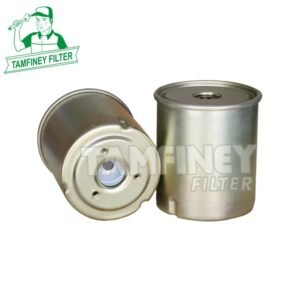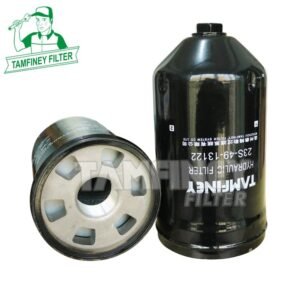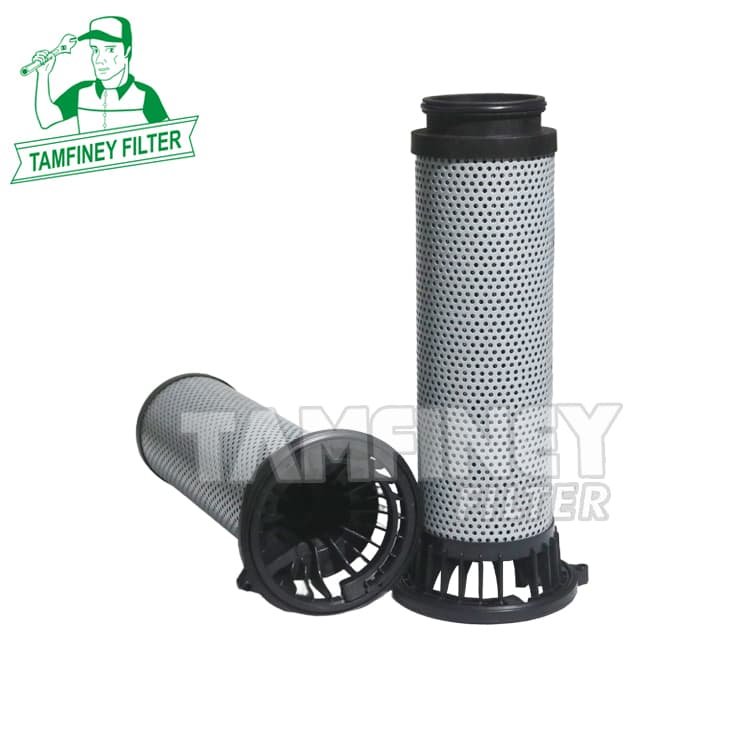



| Hydraulic Filter 519-9926 5199926 Parameter: | |
| Part Number | 519-9926 5199926 |
| Brand | Tamfiney |
| Weight | 1280g |
| Height | 295/358 mm |
| Outer Diameter | 147/101 mm |
| Inner Diameter/ Thread Size | 25mm |
| Minimum Order | 100 PCS |
| Place of Region: | Zhejiang, China |
| Payment Terms: | T/T |
| Price Terms: | FOB |
| Lead Time: | 30 to 50 days based on order quantities |
| Market Type: | After Market |
| Current Export Market: | Southeast Asian,North America, South America, Western Europe, Eastern Europe, Africa, Oceania |
Applications:
CATERPILLAR
307.5308.5308 CR308 CR VAB309309 CR309 CR309 CR VAB310310 FB
Premium 25 Micron Hydraulic Oil Filter 519-9926 5199926
Q: What micron size should a hydraulic filter be?
Hydraulic filters do not have a single fixed micron value and need to be matched with the accuracy of protective components according to their installation position: suction port 100-180 μm, pressure pipeline 5-10 μm, return oil circuit 10-20 μm, and front 3-5 μm of servo/proportional valve.
Core selection comparison
- Oil Suction Strainer filter: 100-180 μm (coarse filter, anti pump suction of large particles, low pressure loss)
- Pressure pipeline filter: 5-10 μm (protective valve group and actuator, high pressure resistance)
- Return oil filter: 10-20 μ m (removes wear particles and maintains tank cleanliness)
- High precision/servo system: 3-5 μm (even 1 μm, used for precision components such as servo valves and proportional valves)
Offline cyclic filtration: 3-10 μm (to enhance cleanliness, used for adding new oil or maintenance)
Key principles for selection
- Matching component clearance: Servo valves should be ≤ 3 μ m, proportional valves should be ≤ 5 μ m, and ordinary hydraulic components should be around 10 μ m; High precision is prone to clogging and pressure drop, while low precision exacerbates wear.
- Distinguish between nominal and absolute accuracy: The nominal value is mostly the nominal accuracy at β=10 or β=20, and key operating conditions need to refer to the β value (such as β ≥ 200 for high efficiency) and absolute filtering accuracy.
- System cleanliness goal: Based on ISO 4406 or NAS 1638 levels, deduce the required accuracy, rather than blindly choosing "the smaller the better".
- Pressure drop and flow balance: The oil suction port must have a low pressure loss (<0.02MPa), and a bypass anti blockage should be installed in the high-pressure circuit.
Q: What's better for hydraulic filter, 10 or 25 micron?
There is no absolute "better" between 10 microns and 25 microns, depending on the sensitivity of the protected components, system cleanliness goals, and operating conditions: precision valves/servo systems must choose 10 μ m, while ordinary gear pumps/coarse filter return oil can choose 25 μ m.
Core selection logic
- Advantages of 10 μm: Effectively intercepting particles ≥ 10 μ m (including wear causing 5-15 μ m particles), suitable for precision components such as servo valves, proportional valves, high-pressure plunger pumps, etc., and can achieve ISO 4406 16/14/11 or higher cleanliness; Disadvantages: Rapid increase in pressure difference, relatively low pollutant capacity, frequent replacement, high cost.
- Advantages of 25 μm: low oil resistance, large dirt holding capacity, long maintenance cycle, low cost, suitable for oil return pipelines, suction ports, or rough filtration scenarios that only protect ordinary gear pumps/actuators; Disadvantage: Unable to block abrasive particles of 10-25 μ m, long-term use in precision systems may cause valve core jamming or abnormal wear.
- Key misconception: Microns only represent the "nominal retention size", and the effectiveness needs to be evaluated in conjunction with the filtration ratio (β value) (such as β ₁₀ ≥ 200 represents an efficiency of 99.5% for 10 μ m particles). Simply looking at the numerical value can easily lead to misjudgment.
Combination strategy: The common solution is to use 25 μ m for oil suction/return and 10 μ m for pressure pipelines, balancing protection and economy. If specific system pressure, component type, and target cleanliness level are not provided, it is impossible to determine the superiority or inferiority; Blindly selecting 10 μ m may lead to frequent blockages, while blindly using 25 μ m may result in insufficient protection.