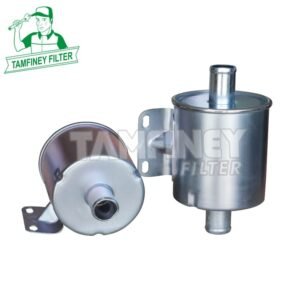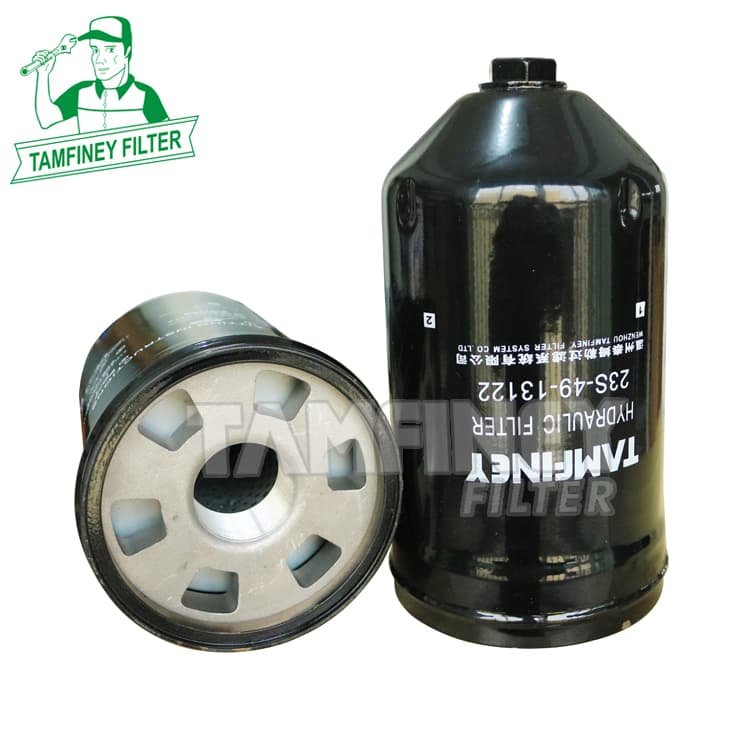



| Hydraulic Filter 23S-49-13122 23S-49-13120 23S-49-13121 Parameter: | |
| Part Number | 23S-49-13122 23S-49-13120 23S-49-13121 |
| Brand | Tamfiney |
| Weight | 1531 g |
| Height | 203 mm |
| Outer Diameter | 108 mm |
| Inner Diameter/ Thread Size | 1 1/2"x16 |
| Material | Metal & Paper |
| Filter Media | Multi-layer cellulose blend |
| Casing | Painted steel outer body with perforated steel internal support |
| Typical Working Pressure | Up to approx. 6–10 bar |
| Filtration | Approx. 5–10 micron |
| Temperature Rating | Up to approx. 100–120°C |
| Minimum Order | 100 PCS |
| Place of Region: | Zhejiang, China |
| Payment Terms: | T/T |
| Price Terms: | FOB |
| Lead Time: | 30 to 50 days based on order quantities |
| Market Type: | After Market |
| Current Export Market: | Southeast Asian,North America, South America, Western Europe, Eastern Europe, Africa, Oceania |
Applications:
KOMATSU D 41 E-6D 41 P-6GD 661 A-1GD 705 A-4A
Premium 23S-49-13122 Hydraulic Filter 23S-49-13120 23S-49-13121
Q: What's the best way to clean a hydraulic filter?
The majority of modern hydraulic oil filters (made of fiberglass, filter paper, and synthetic materials) cannot be cleaned and must be replaced directly after contamination; Only a few specific types (such as stainless steel woven mesh, sintered mesh oil absorbing filter cartridge) can be cleaned to a limited extent with explicit permission.
First, determine if it can be cleaned
- Non washable (mainstream): Fiberglass, filter paper, and composite filter cartridges used in high-pressure/return oil circuits - pollutants are embedded in deep structures, and forced cleaning will damage the fibers and cause accuracy failure. Continued use will accelerate pump valve wear.
- Cautious cleaning (limited to): Metal mesh/copper mesh/stainless steel sintered filter element used for coarse filtration of oil suction port, and the product manual indicates "reusable".
If it is confirmed that it can be cleaned, standardize the operation steps
Safety preparation: Stop the machine to release pressure → Drain residual oil → Avoid impurities from falling into the system during disassembly.
Cleaning method:
- Soaking: Soak in kerosene or specialized neutral cleaning agent (gasoline, strong acid and alkali, high-pressure water gun are prohibited);
- Rinse: Blow with low pressure from inside out or gently wipe with a soft bristled brush (wire brush is prohibited);
- Drying: Natural air drying or low-pressure compressed air blowing, high temperature baking is strictly prohibited.
- Inspection and verification: Use a 30x magnifying glass to check the integrity of the filter material, deformation of the support frame, and aging of the sealing ring; Damaged and scrapped.
- Reinstall test: replace the new sealing ring → assemble in the original order → exhaust the system → pressure leak detection → test run to monitor the pressure difference.
Q: How many hours should you change a hydraulic filter?
If 'how many hours' refers to the time required for replacement work, it usually takes 0.5-2 hours (depending on the equipment type, filter position, and whether pressure relief/oil discharge is needed); If referring to the replacement cycle (service life), there is no unified fixed value, and it needs to be determined according to the type and working conditions of the filter element:
Recommended replacement cycle for common hydraulic filter elements (based on working hours)
Suction strainer: about 2000 hours (some models can extend to 3000 hours, which needs to be combined with oil inspection)
Return oil filter: 250 hours for the first time, every 500 hours thereafter
Pilot/high-pressure circuit filter: conventional 500-1000 hours; Heavy load conditions (such as breaking hammers and vibrating hammers) can be reduced to 100-200 hours
Extreme harsh environments (high temperature, high dust, high sulfur oil): It is recommended to shorten the duration to 150-400 hours, and prioritize pressure difference alarms or oil cleanliness testing