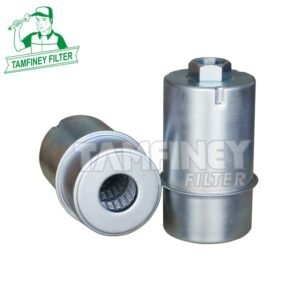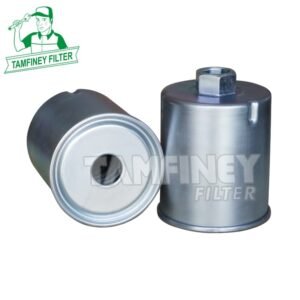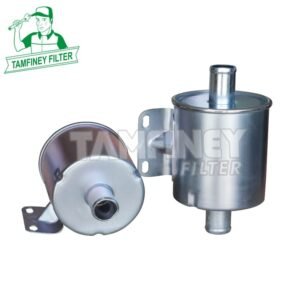

| Hydraulic Filter 14X-60-31150 423-60-45461 HF35482 H-56650 HD11001 Parameter: | |
| Part Number | 14X-60-31150 423-60-45461 HF35482 H-56650 HD11001 |
| Brand | Tamfiney |
| Weight | 800 g |
| Height | 205 mm |
| Outer Diameter | 110 mm |
| Inner Diameter | 60 mm |
| Material | Metal & Glass fiber |
| Filter Media | Glass fiber with Strainless steel blend |
| Typical Working Pressure | Up to approx. 6–10 bar |
| Filtration | Approx. 5–10 micron |
| Temperature Rating | Up to approx. 100–120°C |
| Minimum Order | 100 PCS |
| Place of Region: | Zhejiang, China |
| Payment Terms: | T/T |
| Price Terms: | FOB |
| Lead Time: | 30 to 50 days based on order quantities |
| Market Type: | After Market |
| Current Export Market: | Southeast Asian,North America, South America, Western Europe, Eastern Europe, Africa, Oceania |
Applications:
KOMATSU D 65 EX-15 EOD 65 EX 17D 65 EX-18E0D 65 PX 16D 65 PX 17D 65 PX 18D 65 PX-18D 65 PX/EX 15D 65 PXi-18E0D 65 WX-17DX 65 EX-16GD 705-5PC 118 MR-8PC 118 MR-8PC 138 US-10PC 138 US-2PC 138 US-2PC 138 US-8PC 138 US-8PW 118 MR-8PW 118 MR-8PW 118 MR-8WA 380-6WA 380-6 ZWA 380-8E0WA 430-6
Premium 14X-60-31150 423-60-45461 Hydraulic Filter HF35482 H-56650 HD11001
Q: Should you pre-fill hydraulic filters?
No, No need for pre filling, the vast majority of hydraulic filters can be installed directly, relying on system pressure to allow oil to flow through the filter element to complete the filtration.
Only a few special types (such as certain oil suction filters) may require filling the housing with oil after initial installation or core replacement, in order to evacuate the air and avoid pump suction. But this is not a routine operation. Whether to pre fill and how to fill it depends on the instruction manual of the device in your hand.
A few key points to help you judge:
- Location: The filter installed at the pump suction port is sensitive to suction resistance. If there is air in the housing, it may affect the pump's self-priming. Special attention should be paid to exhaust or pre oil filling for this type of filter; Filters installed in the oil pressure port and return circuit can generally work normally directly by relying on system pressure.
- Refer to the instruction manual: The manufacturer will specify in the manual that "oil injection is required before initial start-up" or "pre filling is not necessary". Just follow the instructions, don't rely on intuition.
- Air exhaust is more important: regardless of whether it is pre filled or not, it is necessary to exhaust before the initial start-up (release the exhaust valve until there are no bubbles in the oil flowing out), otherwise air mixed into the system will cause unstable operation, abnormal noise, and even damage.
Q: How much pressure can a hydraulic filter handle?
The key to how much pressure a hydraulic filter can withstand depends on where it is used, as there are significant differences between different positions. Simply put, high-pressure pipeline filters can withstand 21~42MPa, and even up to 100MPa; And the return oil filter is usually only ≤ 1.6MPa.
Specifically, it can be viewed according to these types:
🛠️ Differentiate by installation location
- High pressure filter: installed on the high-pressure pipeline at the outlet of the oil pump, it can withstand the rated working pressure of the system throughout the entire process. Generally, it can withstand 21-22MPa, and special high-pressure models can reach 450bar (45MPa) or even 1000bar (100MPa).
- Medium pressure filter: The bearing capacity is usually around 210 bar (21 MPa).
- Return oil filter: installed on the system return oil pipeline, with low pressure, typically ≤ 1.6MPa.
- Oil suction filter: installed on the pump suction pipeline, it can withstand the lowest pressure and mainly prevent suction and cavitation.
⚠️ Easily confused points
- There is a key difference to note here:
How much pressure can it withstand "and" filter pressure difference "are two different things. System pressure refers to the working pressure in the pipeline, while the "pressure difference" of the filter element refers to the pressure difference between the inlet and outlet when the filter element is clogged. - For example, the return oil filter element is installed in the low-pressure pipeline, but the filter element itself may be able to withstand a pressure difference of 0.35MPa; The high-pressure filter element is installed on a 42MPa pipeline, but the pressure difference of the damaged filter element may also be at the level of 0.35MPa.
- When selecting, it is necessary to first confirm the installation position (high pressure/medium pressure/oil return/suction), and then check the corresponding pressure level. Mixing is not allowed. Installing the return oil filter element into the high-pressure pipeline may result in shell leakage and filter material damage.