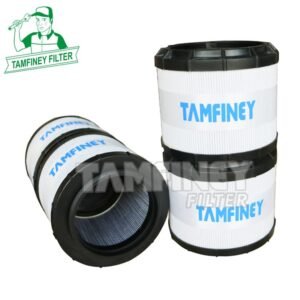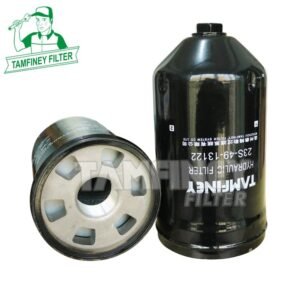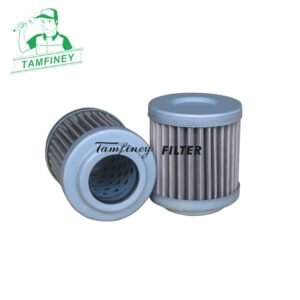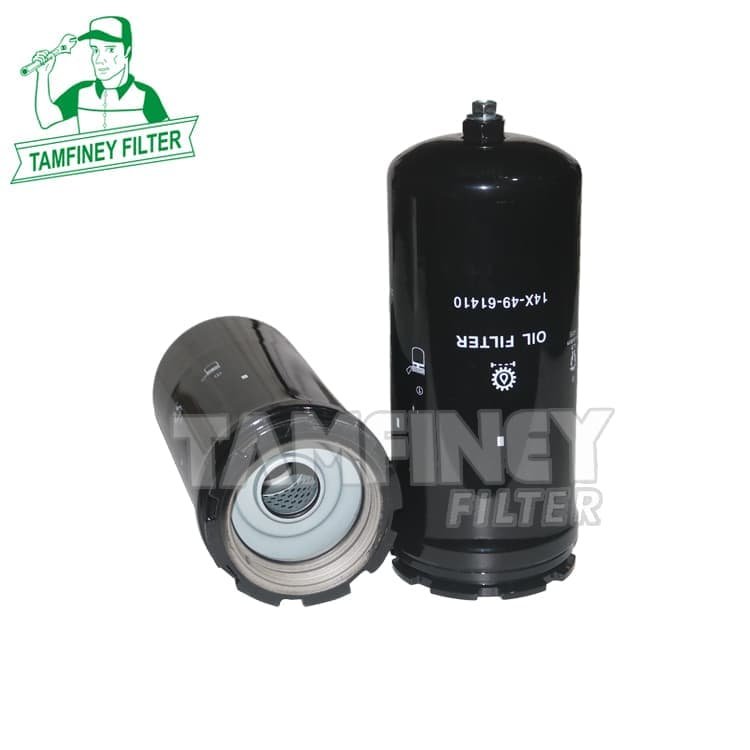



| Hydraulic Filter 14X-49-61410 14X4961410 21T-60-31410 HC-54040 Parameter: | |
| Part Number | 14X-49-61410 14X4961410 21T-60-31410 HC-54040 |
| Brand | Tamfiney |
| Weight | 1685g |
| Height | 257 mm |
| Outer Diameter | 110 mm |
| Inner Diameter/ Thread Size | M80 x 2.0 |
| Material | Metal & Paper |
| Filter Media | Cellulose + synthetic fiber blend |
| Casing | Painted steel outer body with perforated steel internal support |
| Typical Working Pressure | Up to approx. 6–10 bar |
| Filtration | Approx. 5–10 micron |
| Temperature Rating | Up to approx. 100–120°C |
| Minimum Order | 100 PCS |
| Place of Region: | Zhejiang, China |
| Payment Terms: | T/T |
| Price Terms: | FOB |
| Lead Time: | 30 to 50 days based on order quantities |
| Market Type: | After Market |
| Current Export Market: | Southeast Asian,North America, South America, Western Europe, Eastern Europe, Africa, Oceania |
Applications:
KOMATSU D 65 EX 17D 65 EX-18D 65 E PXi-18E0D 65 WX-18E0D71 PXI-24WA 475-10WA 475-10E0WA 500-7WA 500-8WA 500-8WA 600-8
Professional 14X-49-61410 14X4961410 Hydraulic Filter 21T-60-31410 HC-54040
Q: How tight should a hydraulic oil filter be?
The tightening of the hydraulic oil filter needs to be controlled within a moderate range. Being too tight or too loose will directly affect the sealing effect and component service life. The core principle is to follow the standard torque recommended in the equipment manual.
1、 Universal tightening standard
- When there are clear manual parameters: use a torque wrench and tighten strictly according to the recommended torque values indicated in the equipment's original manual. There are differences in torque requirements for hydraulic oil filters of different brands and models, and the recommended torque for conventional hydraulic filters is mostly in the range of 20-40 Nm.
- When there is no clear reference data: first screw the filter in by hand until the sealing ring is completely attached to the installation base, then use the tool to rotate an additional 1/4 turn without excessive force to tighten.
2、 The hazards of being too tight
- Directly damaging the threaded structure of the filter, and even causing the housing to rupture, leading to oil leakage.
- Causing permanent deformation of the sealing ring, which in turn damages the sealing effect and leads to oil leakage issues.
- The difficulty of disassembling the filter element significantly increases during subsequent replacement, and in severe cases, destructive disassembly is required to damage the filter mounting seat.
- Additional increase in fluid flow resistance affects the normal circulation efficiency of hydraulic oil.
3、 The hazards of being too loose
- The overall looseness and displacement of the filter may cause it to fall off directly under high-pressure conditions, leading to a large amount of oil leakage in the system
- The sealing surface is not tightly adhered, and unfiltered oil with impurities directly enters the hydraulic circuit, accelerating component wear.
- During operation, oil leakage occurs, polluting the surrounding environment of the equipment and causing abnormal fluctuations in system pressure.
4、 Precautions for installation operation
- Before installing the new filter element, apply a layer of clean hydraulic oil evenly on the surface of the sealing ring to reduce the frictional resistance during rotation and ensure the sealing effect.
- Clean the contact surface of the filter mounting seat before installation to avoid residual impurities affecting the fitting accuracy of the sealing ring.
- After tightening, start the hydraulic system and run it for 3-5 minutes. Check if there is any oil leakage at the installation position of the filter and confirm that the sealing state is normal.
Q: How to bleed a hydraulic filter?
Bleeding the hydraulic filter involves removing any air mixed into the filter element and chamber to prevent system noise, vibration, or unstable operation. The operation should follow standard procedures to ensure stable operation of the hydraulic system.
1、 Standard operating steps for manual deflation
- Preparation in advance: Prepare the appropriate wrench, transparent hose, and oil container, and replenish the hydraulic oil tank to the specified level in advance to avoid inhaling new air when the liquid level is too low during the exhaust process.
- Positioning the air release component: Find the air release plug/valve on the top of the hydraulic filter. For some models of filters, the air release position is at the highest point of the housing. You can refer to the equipment maintenance manual for accurate positioning.
- Perform deflation operation: first loosen the deflation plug by 1/4~1/2 turn, do not completely unscrew it; Subsequently, jog the hydraulic pump or operate the system to circulate low pressure, allowing the oil to slowly push the internal air out.
- Complete exhaust closing: Observe the oil flowing out of the exhaust port. When the oil flow is continuous and stable without any bubbles, immediately tighten the exhaust plug to prevent air from being sucked back into the filter chamber again.
2、 Backup filter switching deflation operation
- Confirm that the drain valve and vent valve of the backup hydraulic filter are initially fully closed.
Slowly open the connecting valve between the in use filter and the spare filter, and flush oil into the spare filter chamber. - Open the vent valve of the backup filter and continue to exhaust until there is a continuous and stable flow of oil from the vent port, then close the vent valve.
- After completing the switch, observe the hydraulic pressure of the system and confirm that the pressure difference indicator is within the normal range, and that the filter is stably put into operation.
3、 Key precautions for air release
- The operation must be slow and cautious to avoid personnel injury or environmental pollution caused by high-speed oil spraying.
- During the entire exhaust process, pay attention to the oil tank level and promptly replenish hydraulic oil of the same model to prevent the level from falling below the minimum mark.
- After the exhaust is completed, check the position of the vent plug to confirm that there is no oil leakage and ensure that the overall sealing performance of the filter is intact.
- The operating environment should be kept clean to avoid dust and impurities from entering the hydraulic oil through the vent, causing secondary pollution.