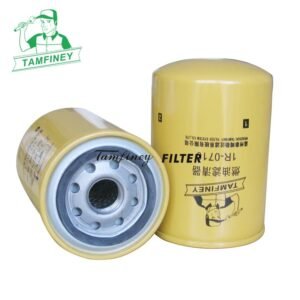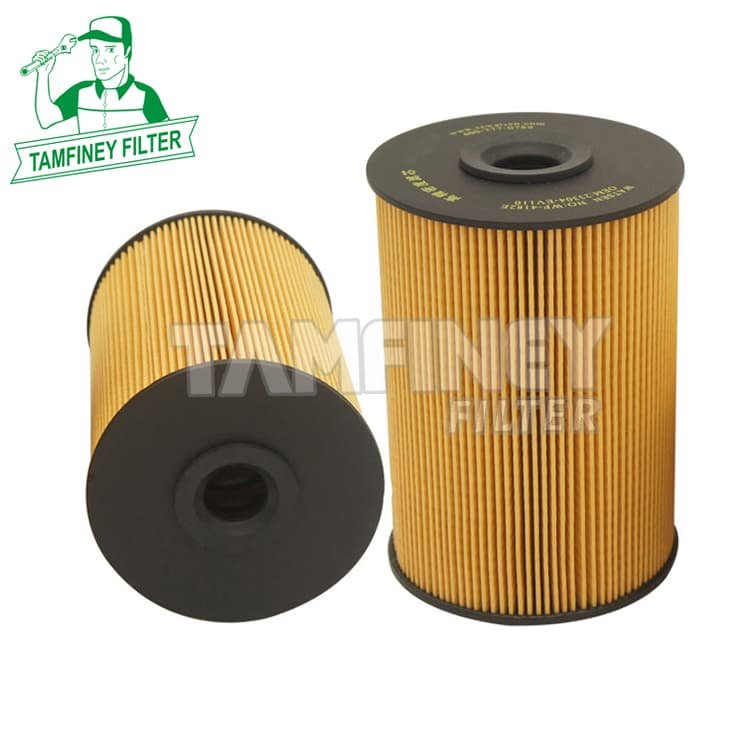


| Fuel Filter S2340-11690 5865118450 EF-1301 Parameter: | |
| Part Number | S2340-11690 5865118450 EF-1301 |
| Brand | Tamfiney |
| Weight | 163 g |
| Height | 130 mm |
| Outer Diameter | 91 mm |
| Inner Diameter/ Thread Size | 19 mm |
| Minimum Order | 100 PCS |
| Place of Region: | Zhejiang, China |
| Payment Terms: | T/T |
| Price Terms: | FOB |
| Lead Time: | 30 to 50 days based on order quantities |
| Market Type: | After Market |
| Current Export Market: | Southeast Asian,North America, South America, Western Europe, Eastern Europe, Africa, Oceania |
Applications:
• ISUZU GXD 77GXR 77
• KOBELCO CKE 2500-2
• SINOTRUK ZZ 1257 M4648W
Professional 10 micron fuel filter S2340-11690 5865118450 EF-1301
Q: How to fix fuel filter warning?
The fuel filter warning light is on, usually indicating that there is an abnormality in the fuel system, and corresponding measures should be taken according to the specific vehicle model and alarm type. The following are the repair steps based on authoritative public information:
Determine the type of alarm
• Flashing alarm: It is often a serious malfunction (such as excessive moisture or severe blockage), and the vehicle should be stopped immediately to turn off the engine and avoid continuing to drive.
• Always on alarm: It is mostly a general blockage or sensor prompt, and can be driven at low speed to a safe area for further processing.
Common reasons and handling steps
1. Check for water content in the fuel (especially for diesel vehicles)
If it is an alarm from the oil-water separator, find the drain valve (usually at the bottom of the filter), unscrew the drain valve until dry fuel flows out, and the alarm will usually automatically turn off when the liquid level drops.
2. Replace the fuel filter
The filter element may become clogged after long-term use (usually every 10000 to 20000 kilometers or according to the maintenance manual), resulting in insufficient fuel supply.
Attention when replacing:
Use original or matching model filters;
During installation, tighten by hand and then use a wrench to turn about 1/4 turn;
After replacement, a system reset is required.
3. Check the fuel system seal and fuel pump
Check for oil leakage, aging sealing rings, or stuck check valves in the manual oil pump;
If the oil pump pressure is abnormal, professional testing is required.
4. Reset the alarm light
Some car models can be reset through the following methods:
Long press the "OK" button on the dashboard for 5 seconds;
Reset by entering "Maintenance Settings" through the steering wheel menu;
If it is ineffective, use an OBD diagnostic tool to connect the vehicle, enter the engine system to clear the fault code and reset.
5. Check the sensors and wiring
If the alarm still lights up after replacing the filter element, it may be a fault in the oil-water separator sensor or a wiring problem;
The sensor voltage can be measured with a multimeter (normally 5V or 12V).
Q: How many mm is a 10 micron filter?
10 micrometers (μ m) is equal to 0.01 millimeters (mm).
Microns (μ m) are commonly used to describe the pore size of fine filters. 0.01 mm is a very small aperture that can effectively filter out tiny particles such as bacteria and dust.
Q: What is the difference between 10 micron and 40 micron fuel filter?
The main differences between 10-micron and 40-micron fuel filters lie in their filtration precision, applicable scenarios, and engine protection capabilities.
• Different filtration precision
10-micron filter: capable of intercepting particles with a diameter ≥10 microns, classified as high-precision filtration.
40-micron filter: Can only intercept particles with a diameter ≥40 microns, classified as low-precision or coarse filtration.
• Applicable to different engine types
10-micron filter: Suitable for engines with high fuel cleanliness requirements, such as:
High-performance gasoline engines (especially direct-injection models)
Diesel engines (especially high-pressure common rail systems)
Modern engines requiring protection for precision fuel injectors (with clearance between paired parts as small as 1.5–3.7 micrometers)
40-micron filter: Commonly used for:
The primary filtration stage of ordinary passenger cars (e.g., the initial filter in the fuel tank)```
Models with older carburetor or fuel injection systems that do not have high requirements for fuel cleanliness
• The impact on the fuel system varies
10-micron filter element: Effectively prevents fuel injector clogging and wear, enhances combustion efficiency, and extends engine lifespan by 38%.
40-micron filter element: Unable to filter out fine impurities (such as carbon deposits and rust), prolonged use may lead to reduced injector precision, insufficient power, or even engine failure.
• Circulation Resistance and Replacement Cycle
10-micron filter element: Due to its smaller pore size, it is more prone to clogging and requires more frequent replacement (typically every 10,000 to 20,000 kilometers).
40-micron filter element: Low flow resistance, resistant to clogging, but with limited protection capability, often used as a pre-filter.
Actual recommendations
• For diesel vehicles, high-pressure common rail, direct-injection, or high-performance models, prioritize the selection of a 10-micron or lower precision filter 38.
• For ordinary household gasoline vehicles, the original factory often uses filters with a pore size of around 20 microns, while 40 microns is already relatively coarse and may not provide sufficient protection.
• Do not use a 40-micron filter element for vehicle models that require a 10-micron one to avoid damaging the precision fuel system.
Note: Some vehicles employ multi-stage filtration (e.g., coarse filter + fine filter), where 40 microns may serve as the coarse filter and 10 microns as the fine filter, working in a division of labor.