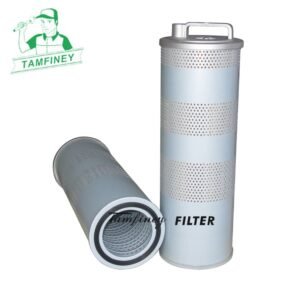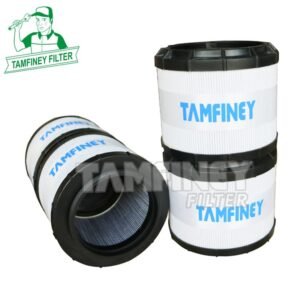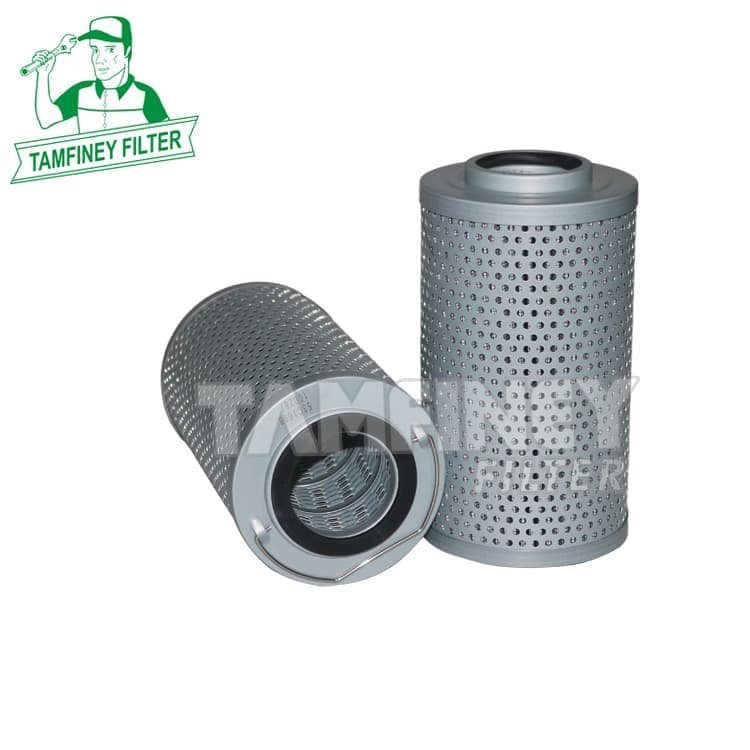



| Hydraulic Filter 53C1696 Parameter: | |
| Part Number | 53C1696 |
| Brand | Tamfiney |
| Weight | 778 g |
| Height | 169/182 mm |
| Outer Diameter | 100 mm |
| Inner Diameter | 50/46 mm |
| Material | Metal & Glass Fiber |
| Filter Media | High-efficiency pleated synthetic fiber |
| Typical Working Pressure | Up to approx. 6–10 bar |
| Filtration | Approx. 5–10 micron |
| Temperature Rating | Up to approx. 100–120°C |
| Minimum Order | 100 PCS |
| Place of Region: | Zhejiang, China |
| Payment Terms: | T/T |
| Price Terms: | FOB |
| Lead Time: | 30 to 50 days based on order quantities |
| Market Type: | After Market |
| Current Export Market: | Southeast Asian,North America, South America, Western Europe, Eastern Europe, Africa, Oceania |
Applications:
LIUGONG
- Excavators: CLG9055E, CLG906D, CLG906E, CLG906F, CLG907D, CLG9075E, and CLG908E.
- Wheel Loaders: CLG9075EES.
Premium Return Oil Filter 53C1696 for Excavator
Q: How often should return filters be changed?
There is no unified fixed replacement cycle for the return oil filter, and it needs to be comprehensively judged based on working conditions, equipment requirements, and real-time status. The conventional reference standards are as follows:
Basic cycle under normal operating conditions
- Ordinary industrial hydraulic system: Mandatory replacement every 500~1000 working hours or 6~12 months, subject to equipment manual requirements.
- Precision hydraulic equipment: The replacement cycle is shortened by 40% compared to conventional equipment, avoiding damage to precision components caused by oil impurities.
- After new equipment testing and hydraulic system overhaul and oil change, it is necessary to replace the return oil filter element in advance within 1-3 months to intercept impurities generated during the system running in stage.
Priority trigger signal for replacement
If any of the following situations occur, there is no need to wait for a fixed cycle, and the filter element must be replaced immediately:
- The built-in pressure difference indicator of the equipment turns red and the electric signaling device triggers an alarm, indicating that the filter element is severely clogged.
- The hydraulic system exhibits slow movement, abnormal heating, and increased noise, resulting in poor oil return.
- The oil sample test shows that the oil contamination level has risen from NAS level 7 to NAS level 9, indicating that the filter element has lost its filtering ability.
Adjustment rules for special working conditions
- Severe working conditions with high dust, high temperature and high humidity: maintenance frequency increased by 50%, significantly reducing replacement intervals.
- Scenario of long-term use of inferior hydraulic oil: The clogging speed of the filter element will increase by 2.3 times, and it is necessary to increase the inspection frequency and replace the filter element in advance.
Q: What is the purpose of the return filter in a hydraulic system?
The purpose of the return oil filter in hydraulic systems is to intercept pollutants in the return oil, keep the oil clean, ensure stable system operation, and extend component life.
- Filter various impurities: effectively filter out solid pollutants such as metal particles, rubber debris, sand particles, and oxides generated by hydraulic component wear, avoiding these impurities from entering the system circulation again after oil reflux and causing secondary pollution.
- Protecting precision components: preventing impurities from scratching the mating surfaces of key components such as hydraulic pumps, valve cores, and hydraulic cylinders, reducing component wear, and significantly extending the service life of system core components.
- Maintain system stability: Avoid blockages in pipelines, valve ports, and other locations caused by impurities, to prevent malfunctions such as lagging and abnormal pressure, and to ensure the continuous and reliable operation of the hydraulic system.
- Improving operational efficiency: Clean hydraulic oil can reduce frictional resistance between components, minimize energy loss, facilitate smoother pressure transmission, and enhance overall system efficiency.
- Ensure the cleanliness of the oil tank: As the "end filtration" link of the hydraulic system, all oil returning from the actuator to the oil tank is filtered to control the pollution level of the oil in the tank from the source.
Some return oil filters with bypass valves can also automatically open when the filter element is clogged or the cold start pressure difference is too large, avoiding abnormal situations such as system interruption and further improving operational safety.