Get a Free Quote

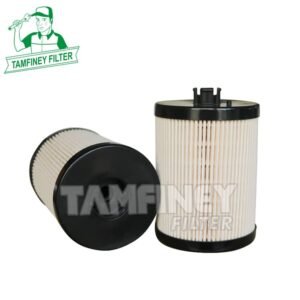
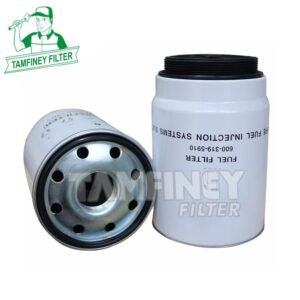
Professional Cummins Fuel Water Separator FF202 FC5703 FC5703 12000206 BF596 6003117110
Your Best Cummins Fuel Water Separator FF202 FC5703 FC5703 12000206 BF596 6003117110 Fuel filter manufacturer in China.
FLEETGUARD-FF202 ,FF5346
KOMATSU-299202 6003117110 ,6003117111 ,6003117130 ,6003117131 6003197111 600-311-7131 600-311-7130 600-311-3310 600-319-3510 600-311-7152 600-311-3510 NAVISTAR-1214921H1 ,3563465C1 NORTHERN LIGHTS-2455001 PARKER-PER134 KS590-3 MANN WK12111 SAKURA FC-5703


| Fuel Filter FF202 FC5703 FC5703 12000206 BF596 6003117110 Parameter: | |
| Part Number | FF202 FC5703 FC5703 12000206 BF596 6003117110 |
| Brand | Tamfiney |
| Weight | 1526 g |
| Height | 288 mm |
| Outer Diameter | 119 mm |
| Inner Diameter/ Thread Size |
1 1/4-12 |
| Minimum Order | 100 PCS |
| Place of Region: | Zhejiang, China |
| Payment Terms: | T/T |
| Price Terms: | FOB |
| Lead Time: | 30 to 50 days based on order quantities |
| Market Type: | After Market |
| Current Export Market: | Southeast Asian,North America, South America, Western Europe, Eastern Europe, Africa, Oceania |
Application:
• CUMMINS KT 2300KTA 2300KTA 3067KTA 38 M-1KTA 38 M-2KTA 50-G4KTA 50 M-1KTA 50 M-2KTTA 38KTTA 50V 28 MVTA 28 G3VTA 28 G5VTA 28 M
• CUMMINS POWER GENERATION GRPE ELECT VTA 28-G3
• DENYO DCA 400DCA 400 SPKDCA 600 SPK
• EUCLID R 65
• GOTTWALD HMK 280
• KOMATSU D 155 AX-3D 155 AX-5D 575 A-3GD 825 A-2HD 325-5HD 325-6HD 325-6HD 325-6HD 405-6HD 785-5HD 985PC 1800PC 360-3PC 650S 6 D 140-1WA 500-1WA 500-3WA500-3
• LETOURNEAU L 1000L 800
• LIEBHERR R 994 LITRONIC
• SDMO MS 1000MS 700MS 910
Professional Cummins Fuel Water Separator FF202 FC5703 FC5703 12000206 BF596 6003117110
Effective fuel water separation is crucial for maintaining engine health. Therefore, choosing a quality filter like the FF202 ensures reliable performance for your fleet. TAMFINEY proudly offers advanced filtration solutions, including the FF202, trusted by professionals worldwide.
FF202: The Core of Reliable Filtration
The FF202 fuel water separator serves as the primary defense against fuel contamination. Equipped with advanced separation technology, the FF202 removes water and particulates seamlessly. Moreover, its robust construction stands up to demanding conditions, keeping fuel lines clean and efficient.
Because the FF202 is designed with precision, it ensures consistent fuel flow. This means your engine operates smoothly, with fewer risks of injection system damage. As a result, equipment downtime is drastically reduced.
Cummins Fuel Water Separator: Safeguarding Engine Performance
A quality Cummins Fuel Water Separator is essential for protecting critical engine components. Water and debris are more than just nuisances—they can cause severe damage. Fortunately, TAMFINEY’s selection of Cummins-compatible separators, including the FF202, delivers outstanding protection for your machines.
Additionally, our separators are easy to install and service, enhancing maintenance efficiency. For fleets operating in harsh environments, this advantage becomes especially important. Clean fuel ensures long-term engine reliability.
FC5703: Trusted Alternative for Advanced Filtration
The FC5703 is a reliable cross-reference for the FF202. Not only does it match the FF202’s performance, but it also fits seamlessly into existing systems. Furthermore, operators choose FC5703 for its durable build and efficient water removal capabilities.
As the FC5703 meets stringent quality standards, customers enjoy peace of mind. It helps maximize filter life and maintain peak engine operation. In busy fleets, reduced maintenance means increased productivity and cost savings.
Why Choose TAMFINEY for Fuel Water Separation?
TAMFINEY understands that quality filters are vital for your business. That’s why we stock a wide range of proven separators, including the FF202 and FC5703. Our filters undergo extensive testing for consistency, durability, and fitment.
On top of product quality, TAMFINEY provides expert support to ensure you find the correct separator for every application. Quick shipping and responsive service make TAMFINEY the preferred partner for fuel water separator solutions.
Conclusion
In summary, the FF202 stands as a benchmark for dependable fuel water separation. With cross-reference options like FC5703 FC5703 12000206 BF596 6003117110 and expert guidance from TAMFINEY, your engines remain protected from contaminants. For quality, reliability, and top-notch support, trust TAMFINEY with all your filtration needs.
Q: How often should I change the fuel water separator filter on my 6.7 Cummins RAM?
For RAM pickups with 6.7-liter Cummins engines, it is recommended to replace the oil-water separator filter every 10000 kilometers or so. However, this is not fixed and the actual replacement time needs to be flexibly adjusted based on various factors to ensure the optimal performance and lifespan of the engine.
Key influencing factors
• Fuel quality: If high-quality fuel (with low impurities and moisture content) is frequently used, the replacement cycle can be appropriately extended to 12000-15000 kilometers; On the contrary, if the fuel quality is average or poor, it may need to be shortened to 8000 kilometers or even shorter.
• Operating environment: In humid, dusty or heavily sandy areas (such as coastal or arid zones), moisture and particulate matter in the air are prone to mix into the fuel system. It is recommended to shorten the cycle to around 9000-8500 kilometers.
• Vehicle usage frequency: For vehicles that are frequently used (such as taxis and commercial vehicles), due to their high workload, they may need to be replaced within 10000 kilometers; If the mileage of a private car increases slowly, it is recommended to check it at least once a year and replace it if necessary.
• Manufacturer's recommendation: The most reliable way is to refer to the specific guidance in the vehicle manual, as the manufacturer may have special requirements for different vehicle models or operating conditions.
• Extreme situation: If low-quality fuel has been added or if the vehicle has been driven in harsh road conditions for a long time, the replacement cycle may need to be further shortened to 5000-6000 kilometers.
Practical advice
Replacing the oil-water separator together with the oil and filter replacement cycle (usually every 8000-10000 kilometers) can simplify the maintenance process and ensure system cleanliness.
Regularly check the amount of water and impurities separated from the oil-water separator. If any abnormal increase is found, it should be replaced in a timely manner.
In short, regular maintenance can effectively reduce the risk of fuel injector failure and engine corrosion. It is recommended to dynamically adjust the replacement plan based on actual usage.
Q: How to maintain a fuel water separator?
Maintaining the fuel water separator in a car is a crucial step in ensuring efficient engine operation and extending its lifespan. The following methods combine general maintenance principles with the specificity of automotive scenarios.
Daily inspection and cleaning
Check the appearance of the water separator daily or regularly for leaks, loose components, or aging pipelines, especially paying attention to whether the connections are tight. Cleaning work requires careful operation to avoid damaging precision components; According to the vehicle manual, internal impurities can be disassembled and cleaned at the appropriate time, but it must be handled gently. It is recommended to rinse the inlet filter with hot water every week to prevent blockage and affect the inlet flow rate.
Regularly replace the filter element
The filter element is the core filtering component of the water separator, and its service life is limited. When the filter element turns yellow or reaches the manufacturer's recommended replacement cycle (such as every 6 months or a specific mileage), a new filter element should be replaced in a timely manner to maintain the separation efficiency of moisture and impurities. When replacing, it is necessary to confirm that the filter element model matches to avoid poor sealing.
Maintenance operation precautions
• Drainage and sewage: Regularly discharge separated water and sediment to prevent overload. If the device has an automatic sewage discharge function, it is necessary to check whether it is working properly; When manually draining, ensure that the valve is tightly closed to avoid oil reflux.
• Anti clogging and anti freezing: To prevent large solid substances from entering the equipment, a pre filtration device can be added at the inlet. In cold environments, it is necessary to drain the accumulated water in the equipment or activate the heating function to prevent freezing and cracking.
• Electronic control and pressure inspection: For vehicles with electronic control systems, regularly test the insulation performance; Pressure regulation should be maintained within the standard range (such as 0.3-0.4 megapascals) to ensure stable operation of the system.
The impact of maintenance on engine performance
Regular maintenance can effectively prevent moisture and impurities from entering the engine combustion chamber, reduce wear on components such as fuel injectors and pumps, improve fuel combustion efficiency, thereby reducing fuel consumption and exhaust emissions, and avoiding issues such as engine stalling or power reduction caused by moisture.
Q: What are the common problems with separators?
The common problems of separators vary depending on their types and application scenarios. The following summarizes the main fault categories and typical manifestations based on the common types of fuel water separators.
• Poor separation effect: The processed medium still contains a high proportion of target substances (such as oil in water or water in oil), which may be caused by improper equipment selection, inflow exceeding treatment capacity, water quality changes (such as high oil content or emulsified oil), internal component blockage or damage.
• Equipment blockage: Poor water intake or exhaust, manifested as abnormal water level rise or pressure increase. Common reasons include solid impurity accumulation, oil solidification at low temperatures, accumulation of dirt in pipelines, and insufficient pre-treatment.
• Leakage or oil leakage: Liquid or oil leakage from connection points, seals, or equipment bodies may be caused by aging seals, unstable installation, loose pipeline connections, or equipment corrosion.
• Abnormal operation: including excessive noise, vibration, motor failure or control system malfunction, which may be caused by loose internal parts, improper installation position, power supply problems, sensor failure or control program errors.
• Oil or drainage function failure: such as poor oil drainage, abnormal oil level, or insufficient water flow, may be caused by blocked oil drainage pipes, damaged oil drainage valves, malfunctioning liquid level control, or water pump problems.