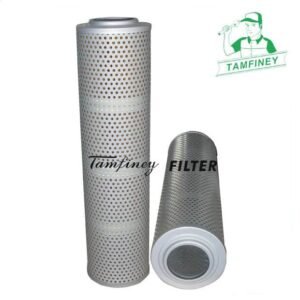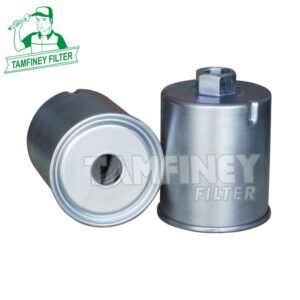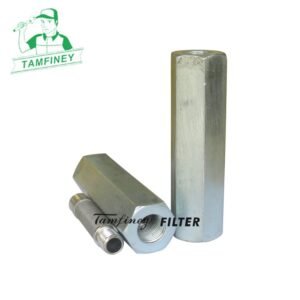


| Hydraulic Filter 53C0011 R010050 H-85720 SH60364 9F20-586000 Parameter: | |
| Part Number | 53C0011 R010050 H-85720 SH60364 9F20-586000 |
| Brand | Tamfiney |
| Weight | 1189 g |
| Height | 295/300 mm |
| Outer Diameter | 120 mm |
| Inner Diameter | 69 mm |
| Material | Metal & Glass Fiber |
| Filter Media | High-efficiency pleated synthetic fiber |
| Typical Working Pressure | Up to approx. 6–10 bar |
| Filtration | Approx. 5–10 micron |
| Temperature Rating | Up to approx. 100–120°C |
| Minimum Order | 100 PCS |
| Place of Region: | Zhejiang, China |
| Payment Terms: | T/T |
| Price Terms: | FOB |
| Lead Time: | 30 to 50 days based on order quantities |
| Market Type: | After Market |
| Current Export Market: | Southeast Asian,North America, South America, Western Europe, Eastern Europe, Africa, Oceania |
Applications:
LIUGONG CLG 835CLG 835CLG 835CLG 835 HCLG 835 IICLG 836CLG 842CLG 842CLG 842 IICLG 856CLG 862CLG 877 III
Premium 53C0011 Hydraulic Return Filter R010050 H-85720 SH60364 9F20-586000
Q: What is a return filter?
Return oil filter is a filtering device on the hydraulic system return oil pipeline, used to block metal particles, dust and other pollutants in the oil, keep the oil flowing back to the oil tank clean, and protect precision components such as hydraulic pumps and valves.
It is usually installed on the return oil pipeline or oil tank, with a working pressure usually not exceeding 1.6MPa. The filtration accuracy can be customized according to needs, such as glass fiber filter cartridges that can achieve 3-20 μm.
🔧 Its structure and working principle
The return oil filter is mainly of a filter head, filter cartridge, filter element, and differential pressure indicator. Some models also come with bypass valves, check valves, magnets, and liquid flow diffusers. When the oil returns to the tank from the actuator, it passes through it first, and pollutants are blocked by the filter element. The clean oil then flows back to the tank.
After the filter element becomes clogged, the pressure difference between the inlet and outlet will increase. When the pressure reaches 0.35MPa, the transmitter will sound an alarm to remind to replace the filter element; If not dealt with in a timely manner, the bypass valve will automatically open, allowing the oil to take another path to avoid damaging the filter or affecting system operation.
🛠️ How to choose filter material
- Fiberglass: High filtration accuracy, large oil flow capacity, and large pollutant capacity, suitable for precision systems, but cannot be cleaned and reused. If it gets clogged, it needs to be replaced.
- Paper: Low in price and widely used, but overall performance is weaker than glass and cannot be cleaned or reused.
⚠️ What should be care in selection and maintenance
- The return oil flow rate should be less than the rated flow rate of the filter, the system pressure should not exceed the pressure resistance value of the filter, and the filtration accuracy should be determined according to the system cleanliness target. If there are precision components, it is recommended to choose a filter element with a precision of 10 μm or higher
- The core of maintenance is to regularly check the differential pressure indicator and replace the filter element in a timely manner when it alarms. When replacing the filter element, it is also necessary to confirm that the model is consistent, and after installation, check the sealing components to prevent oil leakage.
- Return oil filters are widely used in hydraulic systems such as metallurgical steel rolling, petrochemical refining, engineering machinery, aerospace, etc.
Q: What causes a hydraulic return filter to collapse?
The hydraulic return oil filter collapsed, primarily due to excessive pressure differential between the filter's inner and outer sides, exceeding its structural strength. Simply put, it was "sucked flat" or "crushed under pressure". Specifically, there are primarily the following paths:
Common Causes of Excessive Pressure Differential
- Filter element clogging: This is the most common scenario. Impurities and sludge in the oil block the filter paper or screen, causing poor oil return. This leads to a sharp rise in pressure difference between the inlet and outlet sides of the filter element, resulting in the collapse of the central tube or end cover due to excessive pressure.
- The return oil system is not functioning properly: for instance, an improperly designed return oil pipeline with bends or blockages can also lead to high back pressure, causing deformation of the filter element.
- Internal negative pressure: If the check valve flap on the filter ages and fails to close properly, combined with low ambient temperature and prolonged equipment shutdown, oil inside the filter element will flow back to the tank, creating internal negative pressure, which may cause the housing to collapse.
- Overdue Service: Prolonged failure to replace the filter element leads to increasingly accumulated pollutants, significantly amplifying the risk of collapse.
The immediate consequences of collapse
- The filtration function has failed, allowing impurities to enter the system directly and accelerating the wear of hydraulic components.
- In severe cases, the center pipe is crushed, leading to abnormal system pressure, rising oil temperature, and even component "locking up.".